
How Mass Protests Shape National Attention?
Gusti Ayu Tita P
1 September 2026
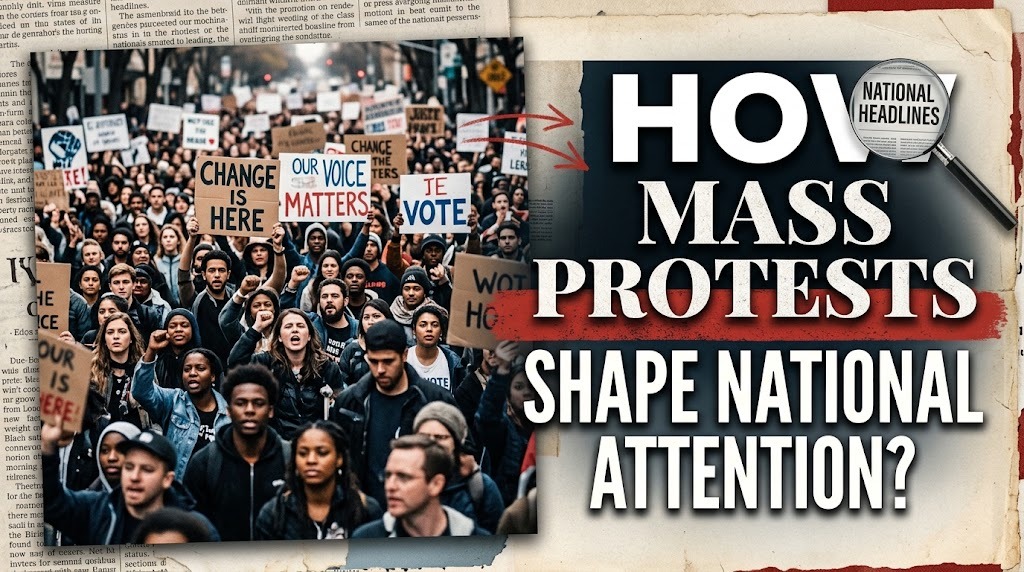
Mass protests can turn local or group-specific concerns into issues discussed across a country. When large numbers of people gather around a shared demand, the event can attract attention from media organizations, public institutions, policymakers, and ordinary citizens. The visibility of a protest can make an issue more difficult to ignore, especially when the topic affects many communities. However, national attention does not always mean public agreement with the protesters. Understanding how protests gain attention helps explain their broader role in modern democratic life.
PROTESTS TURN LOCAL ISSUES INTO NATIONAL TOPICS
Many public issues begin within a particular community or social group. A concern may initially receive attention only from people directly affected by it. When a large demonstration takes place, the issue can reach audiences far beyond its original location. Mass participation can signal that a concern has developed into a wider public issue. This can encourage journalists and institutions to examine the matter more closely.
The transition from a local concern to a national topic usually involves several factors. The importance of the issue, number of participants, location, public response, and media coverage can all influence its visibility. A protest involving a highly relevant national issue may receive greater attention than a smaller demonstration about a more limited concern. Public relevance therefore plays an important role in determining how widely an issue is discussed.
MEDIA COVERAGE AMPLIFIES PUBLIC ATTENTION
News media can significantly expand the reach of a mass protest. Reports may explain the protesters' demands, describe the situation at the location, and present responses from authorities or other groups. People who are not physically present can therefore learn about the event. Media coverage can transform a physical gathering into a national conversation.
The way media organizations present an event also matters. Different reports may emphasize the protesters' demands, public disruption, political responses, or specific incidents. Audiences should therefore compare reliable sources when trying to understand a complex protest. Balanced information allows people to evaluate the issue rather than relying on a single interpretation.
SOCIAL MEDIA SPEEDS UP NATIONAL DISCUSSIONS
Social media allows information about demonstrations to spread almost instantly. Participants and observers can share photographs, videos, statements, and updates with large audiences. A protest in one city can therefore become visible to people throughout the country. Digital communication has made the process of gaining national attention faster than traditional communication alone.
Social media can also encourage people to discuss an issue even when they are not participating directly. Hashtags, short videos, and online discussions can create a wider sense of public involvement. However, digital information can also be inaccurate or incomplete. Digital literacy is essential for checking sources and context before sharing protest-related information.
LARGE CROWDS ATTRACT GREATER VISIBILITY
The size of a protest can influence the amount of attention it receives. A large gathering can create strong visual evidence that many people are concerned about a particular issue. Images of crowded streets or public spaces can become widely shared through news and social media. Visual impact can therefore contribute to the national visibility of a protest.
Nevertheless, crowd size alone does not determine the importance or legitimacy of a demand. A smaller demonstration can also raise significant issues that deserve public attention. The substance of the demands, supporting evidence, and social context remain important. Public attention should not be measured only by numbers. The quality and relevance of the message also matter.
PUBLIC FIGURES AND INSTITUTIONS RESPOND
When a protest gains national attention, political leaders and public institutions may be encouraged to respond. Statements, press conferences, policy explanations, or consultations can become part of the national conversation. These responses may generate additional media coverage and keep the issue visible. Institutional reactions can therefore reinforce the attention created by a protest.
However, public attention does not guarantee that protesters' demands will be accepted. Institutions may agree with some concerns, reject others, or propose alternative solutions. The response can also develop over time as more information becomes available. Public dialogue is important because it creates opportunities for different sides to explain their positions.
PUBLIC OPINION CAN BECOME MORE ACTIVE
National attention can encourage citizens to form or reconsider opinions about an issue. People who previously knew little about a topic may begin searching for information after seeing reports about a protest. Others may become more confident in opinions they already held. Public opinion can therefore become more active as an issue receives wider attention.
Not everyone responds positively to a protest. Some people may support its goals while criticizing its methods, while others may oppose the movement entirely. These different reactions can increase public debate. Diverse opinions are a normal part of democratic discussion. What matters is whether people can express their positions through informed and respectful communication.
PROTESTS CAN CREATE POLITICAL PRESSURE
A protest that receives sustained national attention can create pressure for policymakers to address the underlying issue. Public discussions may lead to requests for policy reviews, consultations, explanations, or other institutional actions. The level of pressure depends on how widespread the concern is and how long public attention remains strong. Political pressure can therefore develop gradually rather than immediately.
Long-term influence often requires continued civic engagement. Citizens and organizations may continue monitoring policies after a demonstration ends. They can also use formal channels to communicate concerns and evaluate institutional responses. Sustained participation helps prevent important issues from disappearing once media attention declines.
NATIONAL ATTENTION CAN ALSO CREATE POLARIZATION
While protests can encourage awareness, they can also deepen divisions between groups. Strong disagreement may cause people to interpret the same event in completely different ways. Social media algorithms and selective information sources can reinforce existing beliefs. Social polarization can make constructive discussion more difficult.
This challenge can be addressed through responsible communication. Citizens can compare different sources and distinguish facts from opinions. Protest participants and critics can also focus on arguments rather than attacking individuals. Respectful disagreement allows national debates to remain productive even when opinions are strongly divided.
THE IMPORTANCE OF CLEAR PROTEST MESSAGES
A protest is more likely to receive meaningful attention when its demands are clear and understandable. Participants can communicate specific concerns rather than relying only on general slogans. Clear messages help journalists, institutions, and the public understand what protesters want to change. Clear demands can make public discussions more focused.
Clarity is especially important when an issue is complex. A simple message may attract attention, but deeper explanations are needed to help the public understand the underlying problem. Evidence, credible information, and realistic proposals can strengthen the quality of the discussion. Public understanding becomes more valuable when attention is connected to substantive information.
CONCLUSION
Mass protests can shape national attention by transforming specific concerns into wider public discussions. Large participation, media coverage, social media, public reactions, and institutional responses can all contribute to the process. Once an issue gains national visibility, it may influence public opinion and encourage policymakers to respond. However, attention does not automatically produce agreement or policy change.
Ultimately, the lasting influence of a protest depends on what happens after the crowd disperses. Clear demands, accurate information, peaceful participation, continued civic engagement, and meaningful dialogue can help turn temporary attention into constructive public discussion. When citizens and institutions respond responsibly, mass protests can contribute to greater awareness and potentially encourage meaningful social change.
Tentang Penulis
Gusti Ayu Tita P
Penulis — Universitas STEKOM
Penulis aktif yang berfokus pada isu-isu akademik, teknologi pendidikan, dan pengembangan sumber daya manusia di lingkungan kampus.