How Nuclear Power Plants Generate Electricity?
Gusti Ayu Tita P
1 September 2026
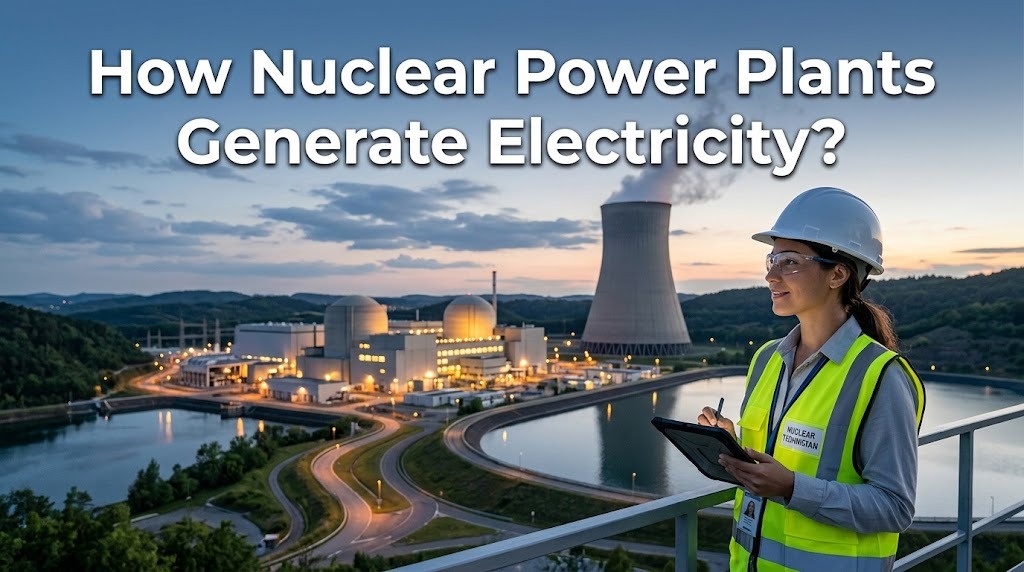
Nuclear power plants generate electricity by using heat produced through nuclear fission. Unlike fossil fuel plants, nuclear plants do not burn coal, oil, or gas to create this heat. Instead, they use nuclear fuel, usually uranium, inside a reactor to produce a controlled chain reaction. The heat is then used to produce steam, which turns a turbine connected to an electrical generator.
Understanding how nuclear power plants generate electricity helps explain why nuclear energy can provide large amounts of reliable electricity while producing very low direct carbon emissions during operation.
NUCLEAR FISSION PRODUCES HEAT
The process begins inside the nuclear reactor, where nuclear fuel is placed in the reactor core. When a neutron strikes the nucleus of a uranium atom, the nucleus can split into smaller nuclei through a process called nuclear fission. This reaction releases a large amount of heat along with additional neutrons. The new neutrons can cause further fission, creating a controlled chain reaction.
The reactor uses control systems to regulate the rate of this reaction. Control rods, for example, can absorb neutrons and help reduce or stop the chain reaction when necessary. The heat produced in the reactor becomes the main energy source for the electricity generation process. This makes the reactor the central component of a nuclear power plant.
HEAT WARMS THE COOLANT
The heat generated by fission is transferred to a coolant that circulates through the reactor system. Water is commonly used as a coolant because it can efficiently transfer heat and, in many reactor designs, also acts as a neutron moderator. The exact process depends on the type of reactor being used. Pressurized Water Reactors, for example, keep the primary water under high pressure so it does not boil inside the reactor core.
The heated coolant then transfers its thermal energy to another part of the plant in designs that use separate circuits. In a Pressurized Water Reactor, this heat is transferred to a secondary water system through steam generators. The secondary water turns into steam without directly passing through the reactor core. This steam then moves toward the turbine.
STEAM TURNS THE TURBINE
High-pressure steam is directed toward a turbine containing multiple blades. As the steam flows through the turbine, it pushes the blades and causes the turbine shaft to rotate. This converts thermal energy from the steam into mechanical energy. The rotating shaft is connected directly to an electrical generator.
Some nuclear reactor designs produce steam in a different way. In a Boiling Water Reactor, for example, water boils inside the reactor vessel and the resulting steam is sent directly to the turbine. Although reactor designs differ, the basic goal remains the same: convert heat from nuclear fission into mechanical energy that can be used to generate electricity.
THE GENERATOR PRODUCES ELECTRICITY
The rotating turbine drives an electrical generator. Inside the generator, mechanical rotation causes a magnetic field to move relative to electrical conductors. This process, known as electromagnetic induction, produces an electric current. The electricity is then transferred through electrical equipment before entering the power grid.
The amount of electricity produced depends on the plant's design, reactor capacity, and operating conditions. Monitoring and control systems continuously track important operating parameters. These systems help operators maintain stable power production while keeping the reactor within its required safety limits. Electricity can then be distributed through the grid to homes, businesses, and other users.
STEAM IS COOLED AND RECYCLED
After passing through the turbine, the steam loses much of its energy and enters a condenser. The condenser removes heat from the steam and changes it back into liquid water. This water can then be pumped back into the system for another cycle. Recycling the water allows the plant to use the same basic steam cycle repeatedly.
The heat removed during condensation must be transferred away from the plant. Depending on the design and location, a nuclear power plant may use cooling towers, a large body of water, or another cooling system. Cooling is essential because it allows the steam cycle to continue efficiently. It also helps maintain appropriate operating conditions for the plant's equipment.
SAFETY SYSTEMS CONTROL THE REACTOR
Nuclear power plants use multiple safety systems to control the reactor and protect workers, the public, and the environment. These systems can include automatic reactor shutdown mechanisms, emergency cooling systems, containment structures, monitoring equipment, and backup power supplies. Modern nuclear safety relies on multiple layers of protection rather than a single safety feature. The goal is to prevent abnormal conditions from developing into serious accidents and to limit their consequences if they occur.
Safety also depends on trained personnel, operating procedures, inspections, maintenance, and regulatory oversight. Operators receive specialized training to manage both normal and abnormal operating conditions. Nuclear facilities are also subject to regulatory requirements and regular safety assessments. Together, these measures support safe and controlled electricity generation.
WHY NUCLEAR POWER CAN PROVIDE RELIABLE ELECTRICITY
Nuclear reactors can operate continuously for extended periods, making them suitable for providing a stable supply of electricity. Unlike solar and wind power, nuclear generation does not depend directly on sunlight or wind conditions. This can make nuclear power useful as part of a diverse electricity system. However, nuclear plants still require planned shutdowns for maintenance and, depending on reactor design, refueling.
Nuclear power also produces very low greenhouse gas emissions during electricity generation because there is no fossil fuel combustion in the reactor. Its full life-cycle emissions still include activities such as uranium mining, fuel processing, plant construction, and decommissioning. Therefore, nuclear energy should be evaluated across its entire life cycle rather than only during plant operation.
CONCLUSION
Nuclear power plants generate electricity by converting energy from nuclear fission into electrical energy. First, fission produces heat inside the reactor, and the heat is transferred to a coolant to create steam. The steam spins a turbine, while the turbine drives a generator that produces electricity. Afterward, the steam is cooled back into water and reused in the cycle.
The process is supported by cooling, monitoring, control, and multiple safety systems. Because nuclear plants can produce large amounts of electricity with low operational carbon emissions, nuclear energy remains an important option in discussions about reliable and lower-carbon electricity systems.
Tentang Penulis
Gusti Ayu Tita P
Penulis — Universitas STEKOM
Penulis aktif yang berfokus pada isu-isu akademik, teknologi pendidikan, dan pengembangan sumber daya manusia di lingkungan kampus.