How Only Children Can Develop Independence from an Early Age?
Gusti Ayu Tita P
7 September 2026
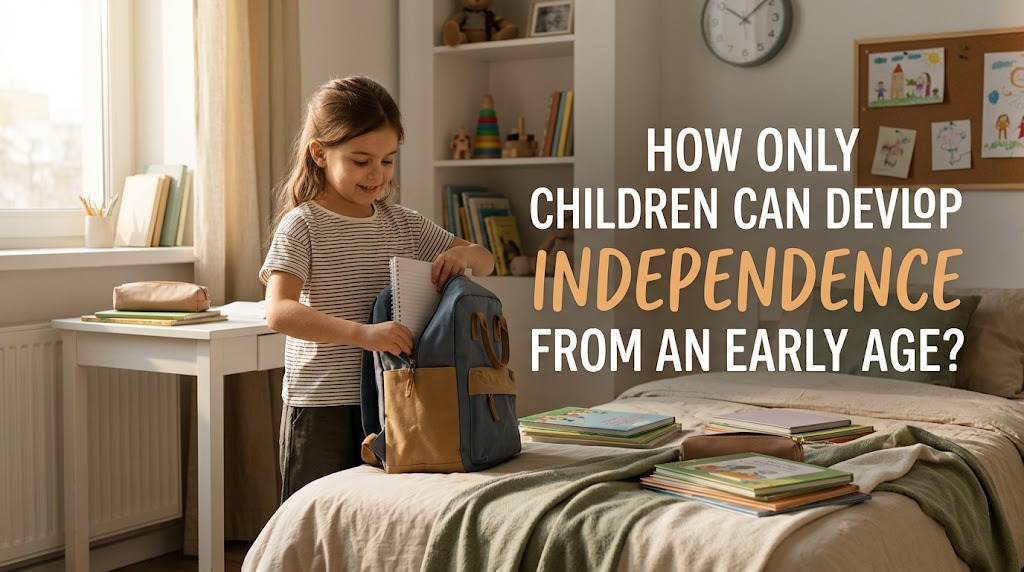
Developing independence from an early age is an important part of a child's growth. For an only child, learning to handle simple tasks independently can be especially valuable because there is no sibling at home to share everyday responsibilities with. Independence does not mean that children must solve every problem alone. Instead, it means gradually learning how to make decisions, complete tasks, and take responsibility with appropriate guidance from parents.
Parents have an important role in creating opportunities for an only child to become more self-reliant. A supportive environment can help children develop confidence, responsibility, problem-solving skills, and decision-making abilities. The process should happen gradually according to the child's age and abilities rather than through excessive demands.
TEACHING SIMPLE RESPONSIBILITIES AT HOME
One of the easiest ways to develop independence is by giving children age-appropriate responsibilities at home. Young children can begin with simple tasks such as putting away toys, organizing books, or keeping their personal belongings in the right place. As they grow older, their responsibilities can gradually become more complex.
Parents should avoid doing everything for their child simply because it is faster or easier. Allowing children to participate in household activities teaches them that they can contribute to family life. These small responsibilities can gradually build self-confidence and a sense of accountability.
ALLOWING CHILDREN TO MAKE SIMPLE CHOICES
Giving an only child opportunities to make appropriate choices can strengthen their independence. Parents might allow children to choose between two suitable outfits, decide which book to read, or select an extracurricular activity based on their interests. These simple decisions help children understand that their opinions matter.
At the same time, parents should provide reasonable boundaries. Children do not need complete freedom to become independent. Instead, parents can offer limited and age-appropriate choices while explaining the possible consequences of each decision. This approach allows children to practice decision-making in a safe environment.
ENCOURAGING PROBLEM-SOLVING SKILLS
Children naturally encounter small problems as they grow, and these situations can become valuable learning opportunities. Instead of immediately providing an answer, parents can ask questions such as what the child thinks should be done or which solution might work. This encourages the child to think rather than simply depend on adults.
Allowing children to solve manageable problems can develop critical thinking and problem-solving skills. Mistakes should be treated as opportunities to learn rather than reasons for harsh criticism. When children discover that mistakes can be corrected, they may become more confident about trying new things independently.
LETTING CHILDREN EXPERIENCE NATURAL CONSEQUENCES
Independence also involves understanding that actions can have consequences. If an only child forgets to prepare school materials, for example, parents can help the child understand what happened instead of immediately fixing everything. Experiencing reasonable consequences can teach responsibility and planning.
However, natural consequences should always be appropriate and safe. Parents should step in when a situation could harm the child or create serious problems. The goal is not to punish children but to help them understand the connection between choices, actions, and outcomes.
PROVIDING OPPORTUNITIES FOR SOCIAL EXPERIENCES
Although an only child does not have siblings at home, they can still develop independence through interactions with other children. School, sports, clubs, hobbies, and community activities provide opportunities to communicate and cooperate with peers. These experiences can teach children how to manage situations without always relying on their parents.
Social activities can also strengthen communication, teamwork, empathy, and confidence. Children learn that independence does not mean avoiding other people. Instead, a truly independent person understands how to manage personal responsibilities while also knowing how to cooperate and ask for help when necessary.
BALANCING INDEPENDENCE WITH PARENTAL SUPPORT
Parents should remember that independence develops gradually. An only child may be capable of completing one task independently but still need assistance with another. Providing support when necessary helps children feel secure while they continue developing their abilities.
A healthy balance involves guidance without excessive control. Parents can demonstrate how to complete a task, allow the child to try it, and provide assistance when needed. As the child's skills improve, parents can gradually reduce their involvement and allow greater responsibility.
BUILDING CONFIDENCE THROUGH DAILY PRACTICE
Independence becomes stronger through regular practice rather than through one major experience. Parents can encourage an only child to manage small parts of their daily routine, such as preparing school items, organizing personal spaces, or following a simple schedule. Each successful experience can reinforce the belief that the child is capable of handling responsibilities.
Parents should also recognize effort rather than demanding perfection. Positive feedback can help children develop self-confidence and motivation while learning new skills. Over time, consistent opportunities to practice independence can prepare an only child to handle more complex responsibilities during adolescence and adulthood.
CONCLUSION
Helping an only child develop independence from an early age does not require parents to leave them completely on their own. The most effective approach is to provide age-appropriate responsibilities, reasonable choices, problem-solving opportunities, and supportive guidance. Children need enough freedom to learn while knowing that their parents are available when they genuinely need help.
With consistent practice, an only child can gradually develop confidence, responsibility, self-reliance, decision-making skills, and emotional maturity. Independence is not about refusing help; it is about knowing what you can handle and when to seek support. With the right parenting approach, these abilities can become valuable foundations for a child's future.
Tentang Penulis
Gusti Ayu Tita P
Penulis — Universitas STEKOM
Penulis aktif yang berfokus pada isu-isu akademik, teknologi pendidikan, dan pengembangan sumber daya manusia di lingkungan kampus.