How Regents Can Build Transparent and Accountable Governments?
Gusti Ayu Tita P
12 Agustus 2026
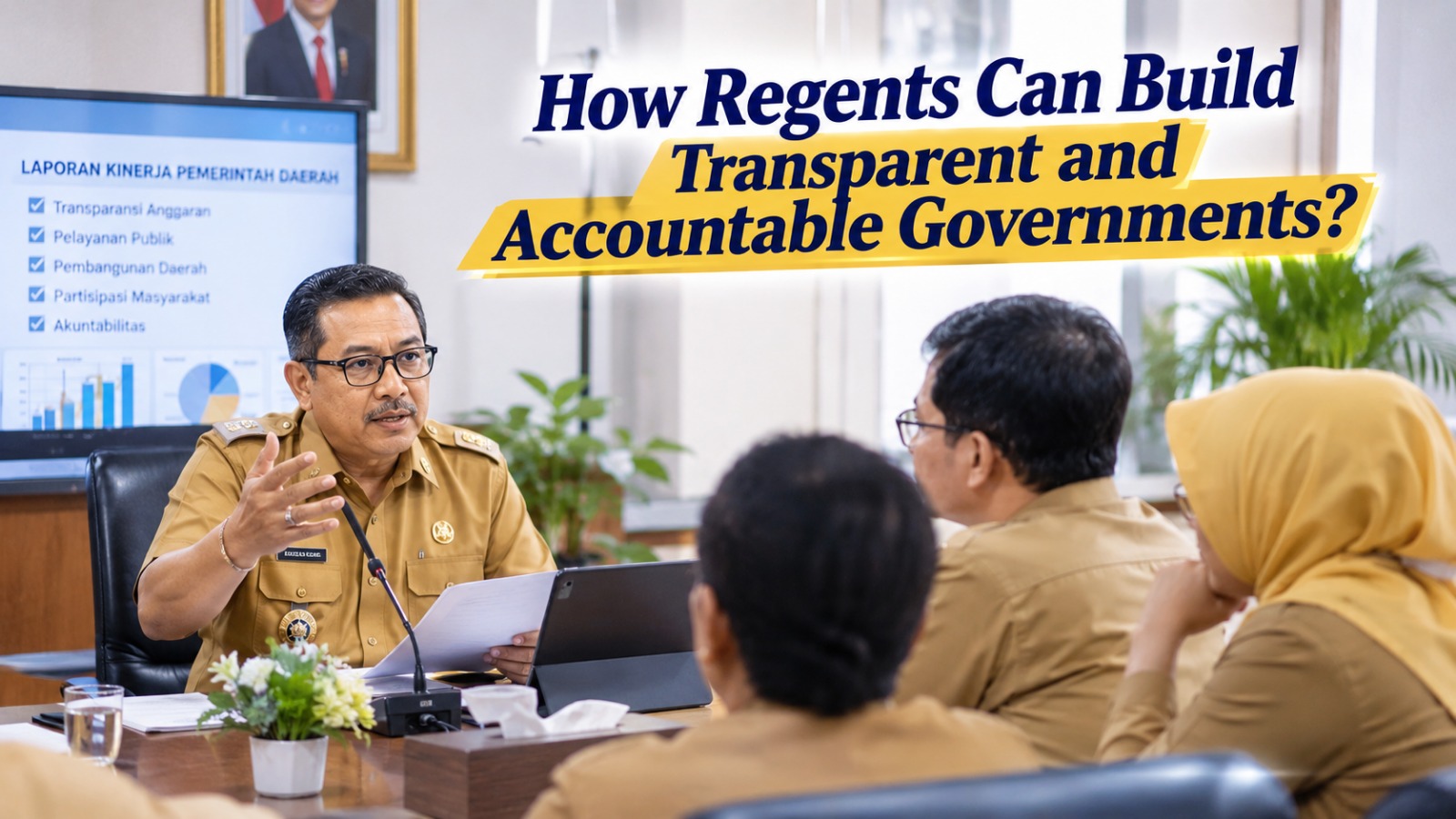
Transparent and accountable government is essential for building public trust and improving the quality of regional administration. Citizens want to know how government decisions are made, how public resources are managed, and whether development programs actually benefit the community. A regent has an important leadership role in encouraging transparency and accountability within the regional government, while operating according to applicable laws and regulations. Strong governance can reduce misunderstandings, improve public participation, and encourage better government performance. Through transparent regional governance, regents can help create a government that is more trustworthy, responsive, and responsible.
UNDERSTANDING TRANSPARENCY AND ACCOUNTABILITY
Transparency means that government information and processes are made available to the public in an appropriate, clear, and accessible manner. Accountability means that government institutions and officials are responsible for their decisions, actions, and performance. Both principles are important parts of good governance. A regent needs to ensure that regional government agencies understand these principles and apply them consistently.
Transparency and accountability are closely connected. When citizens can access reliable information, they can better understand government programs and evaluate their implementation. When officials are responsible for their decisions, they are encouraged to manage public resources carefully. Together, these principles can strengthen public trust in government.
PROVIDING CLEAR PUBLIC INFORMATION
Citizens need accurate information to understand government activities. Regional governments can provide appropriate information about development programs, public services, regulations, budgets, procedures, and other matters through official channels. A regent can encourage government agencies to make information easier to find and understand. Public information transparency can help reduce confusion and improve communication between government and citizens.
Information should be updated and presented in clear language. Complex administrative information can be explained through summaries, guides, announcements, or other accessible formats where appropriate. Government agencies should also provide clear information about where citizens can request additional information. Reliable communication can strengthen government transparency.
STRENGTHENING PUBLIC FINANCIAL ACCOUNTABILITY
Public funds must be managed responsibly because they are intended to support community needs and regional development. A regent should encourage proper budgeting, implementation, reporting, monitoring, and evaluation according to applicable regulations. Public financial accountability helps ensure that government spending is directed toward legitimate and beneficial purposes.
Financial management should also consider efficiency and long-term sustainability. Government agencies need appropriate internal controls to reduce the risk of errors, misuse, or ineffective spending. Regular reporting and oversight can help identify problems at an early stage. Responsible financial management can strengthen public confidence in regional government.
IMPROVING GOVERNMENT REPORTING
Government reporting provides an important way to demonstrate performance and accountability. Regional agencies should document their programs, activities, achievements, challenges, and relevant performance indicators. A regent can encourage reporting systems that are accurate, timely, and consistent with applicable requirements. Government performance reporting can help leaders and citizens understand whether regional programs are achieving their objectives.
Reports should not become merely administrative documents. Government officials should use the information to identify weaknesses and improve future programs. Where appropriate, key information can be communicated to the public in a form that is easy to understand. Effective reporting can support evidence-based decision-making.
ESTABLISHING CLEAR PERFORMANCE INDICATORS
Accountability is difficult to measure when government programs do not have clear objectives. A regent can encourage agencies to establish appropriate performance indicators for development programs and public services. Clear performance indicators can help government officials determine whether their activities are producing the expected results.
Indicators should focus on meaningful outcomes rather than simply measuring how many activities were conducted. For example, a program should be assessed based on the benefits it creates for the community, not only on the number of meetings or events held. Regular monitoring can reveal whether targets are being achieved. This approach can improve regional government performance.
STRENGTHENING INTERNAL CONTROLS
Internal controls help government organizations manage risks and maintain reliable administrative processes. They can include appropriate authorization procedures, documentation, supervision, separation of responsibilities, and regular monitoring. A regent can encourage regional agencies to strengthen internal government controls according to applicable standards.
Strong controls can reduce the possibility of errors and improve the reliability of government operations. Employees should understand their responsibilities and follow established procedures. Managers should also monitor whether procedures are being implemented correctly. Effective internal controls support responsible public administration.
USING DIGITAL TECHNOLOGY FOR TRANSPARENCY
Digital technology can make government information easier to access. Official websites, digital information platforms, online service systems, and other appropriate technologies can help citizens obtain information without visiting government offices. A regent can support digital transparency as part of broader government modernization.
However, digital platforms should be reliable, secure, and easy to use. Information should be updated regularly so citizens do not rely on outdated data. Digital services should also consider residents who have limited internet access or digital skills. Combining digital platforms with appropriate offline communication can support inclusive transparency.
PROVIDING EFFECTIVE COMPLAINT MECHANISMS
Citizens need appropriate channels to report problems with government services or programs. A regent can encourage regional agencies to maintain clear complaint and feedback mechanisms. Public complaint systems can provide valuable information about service problems, administrative weaknesses, or issues that require attention.
Complaints should be recorded, reviewed, and handled according to established procedures. Repeated complaints can indicate broader problems that require policy or operational improvements. Citizens should also receive appropriate information about how their complaints are handled. An effective complaint system can strengthen government responsiveness and accountability.
ENCOURAGING COMMUNITY PARTICIPATION
Transparency becomes more meaningful when citizens have opportunities to participate in regional development. Public consultations, community discussions, surveys, and other lawful participation mechanisms can help residents communicate their needs and opinions. A regent can encourage community participation in appropriate stages of planning and evaluation.
Participation should involve meaningful communication rather than simply informing citizens after decisions have already been made. Government agencies should explain development priorities and consider relevant public input. Community participation can also help identify local problems that may not be visible in official data. Strong participation can improve regional policy quality.
STRENGTHENING ETHICAL LEADERSHIP
Leadership has a strong influence on organizational culture. A regent can demonstrate ethical behavior through responsible decision-making, professional communication, compliance with regulations, and respect for public interests. Ethical regional leadership can encourage government employees to follow similar standards.
Leaders should also make clear that integrity is an important part of public service. Employees need to understand their responsibilities and the importance of avoiding conflicts of interest and improper conduct. Appropriate training and internal mechanisms can support ethical behavior. A strong integrity culture can contribute to trustworthy regional government.
DEVELOPING CAPABLE PUBLIC SERVANTS
Transparent and accountable government requires competent employees. Public servants need knowledge of administrative procedures, public service standards, regulations, data management, communication, and professional ethics. A regent can support public servant capacity development through relevant training and professional development.
Training should be connected to actual responsibilities and organizational needs. Employees should understand how their work affects public services and regional development. Performance evaluation can help identify areas where additional support is needed. A capable workforce can improve both government efficiency and accountability.
MONITORING AND EVALUATING GOVERNMENT PROGRAMS
Government programs need regular monitoring to determine whether they are being implemented properly. A regent can encourage agencies to track progress, identify obstacles, and evaluate results. Government program evaluation can help determine whether public resources are producing meaningful benefits.
Evaluation should lead to action. If a program is ineffective, government officials should identify the causes and make appropriate improvements. Successful approaches can be strengthened or expanded when suitable. Continuous evaluation can create a culture of learning and improvement within regional government.
CONCLUSION
Regents can build more transparent and accountable governments by strengthening public information, financial management, performance reporting, internal controls, digital transparency, complaint systems, community participation, ethical leadership, and employee capacity. These efforts should be implemented consistently and in accordance with applicable laws and regulations. Transparency is not simply about publishing information, while accountability is not limited to producing reports. Both require responsible leadership, measurable performance, public participation, and a willingness to improve when problems are identified. By applying these principles consistently, regents can help create a more trustworthy, responsive, efficient, and accountable regional government.
Tentang Penulis
Gusti Ayu Tita P
Penulis — Universitas STEKOM
Penulis aktif yang berfokus pada isu-isu akademik, teknologi pendidikan, dan pengembangan sumber daya manusia di lingkungan kampus.