How Regents Can Improve the Quality of Education in Their Regions?
Gusti Ayu Tita P
12 Agustus 2026
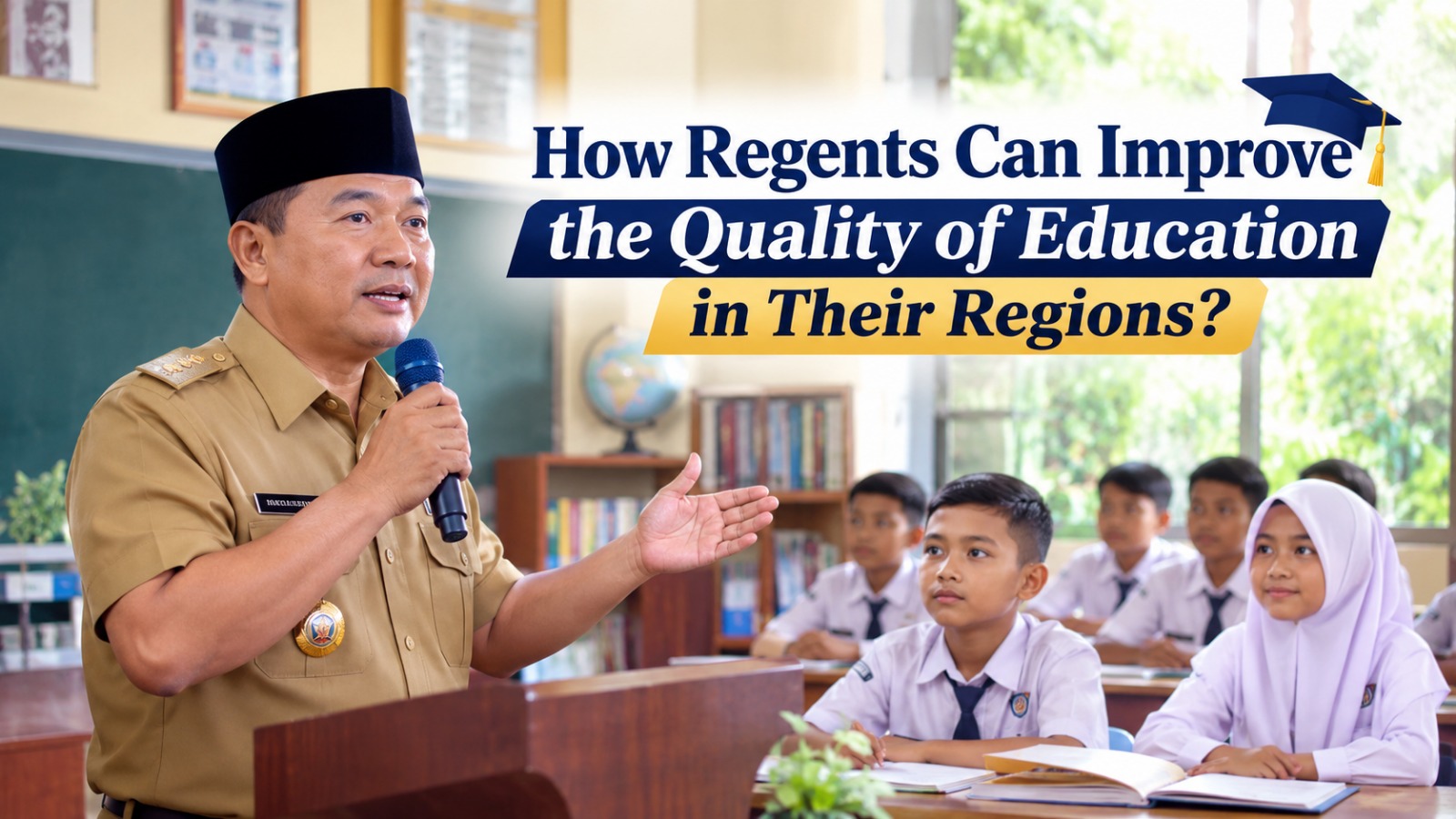
Education is one of the most important foundations for building a successful and prosperous region. A regent has an important role in supporting education quality through policies, programs, coordination, and the responsible management of regional resources within the government's authority. Good education can improve people's skills, expand employment opportunities, and strengthen the region's future workforce. However, improving education requires more than building schools because learning quality also depends on teachers, facilities, technology, student support, and community involvement. With effective strategies, a regent can help create an education system that is more accessible, inclusive, and responsive to local needs.
UNDERSTANDING THE REGENT'S ROLE IN EDUCATION
A regent leads the regional government and can support educational development through responsibilities assigned by applicable laws and regulations. The regional government can contribute to areas such as educational facilities, supporting programs, teacher-related initiatives within its authority, and access to education. A regent should coordinate with education offices, schools, communities, and other relevant institutions to identify major educational challenges. Evidence-based education planning can help ensure that programs respond to actual conditions rather than assumptions. Clear priorities are important because regional resources are limited.
Education policies should also consider differences between communities. Urban schools may have different needs from schools in rural, remote, or geographically challenging areas. A regent needs to understand these differences when establishing regional priorities and allocating available resources. Regular communication with schools and communities can provide useful information about problems that may not appear in official statistics. This can help create more targeted education programs.
IMPROVING SCHOOL FACILITIES
A safe and appropriate learning environment is essential for students and teachers. A regent can support the improvement and maintenance of school buildings, classrooms, sanitation facilities, libraries, laboratories, sports facilities, and other infrastructure within regional authority. Schools in underserved areas may require particular attention because inadequate facilities can create disadvantages for students. Quality school facilities can make learning more comfortable and support better educational activities.
Infrastructure programs should focus not only on construction but also on long-term maintenance. Damaged classrooms, poor sanitation, or inadequate learning spaces can negatively affect the school environment. Regional authorities should assess facility conditions regularly and establish priorities based on urgency and available resources. Schools and local communities can also provide valuable information about maintenance needs. Proper facility management can make public investment in education more sustainable.
SUPPORTING TEACHER QUALITY
Teachers have a direct influence on students' learning experiences. Improving educational outcomes therefore requires attention to teacher capacity, professional development, teaching resources, and appropriate working conditions. A regent can support relevant training and professional development programs within the regional government's responsibilities. Teacher development can help educators improve their teaching methods and adapt to changing educational needs.
Training should be practical and connected to challenges faced by teachers in their classrooms. Digital teaching skills, classroom management, assessment methods, inclusive education, and subject-specific development can all be useful. Teachers should also have opportunities to share experiences and learn from one another. Collaboration with universities, training institutions, and education organizations can expand professional development opportunities. Strong teacher capacity can contribute significantly to better learning quality.
EXPANDING ACCESS TO EDUCATION
Quality education should be accessible to students from different social and geographical backgrounds. Some children may face barriers related to poverty, distance, transportation, disability, or family circumstances. A regent can support programs that address these barriers within regional authority and coordinate with other levels of government when responsibilities overlap. Equal access to education can help reduce long-term social and economic inequality.
Remote areas may require additional strategies because transportation and infrastructure can make school access more difficult. Appropriate support may include improved transportation arrangements, better facilities, community-based initiatives, or other locally suitable solutions. Programs should be based on reliable data about school attendance and local conditions. Ensuring that children can remain in education is an important part of community development.
STRENGTHENING DIGITAL EDUCATION
Digital technology has become increasingly important in modern education. Computers, internet access, digital learning platforms, and online educational resources can provide students and teachers with additional learning opportunities. A regent can support appropriate digital education initiatives while considering local infrastructure and available resources. Digital education can be particularly useful when students need access to learning materials beyond traditional classrooms.
However, digital transformation can also create inequality if some students have limited internet access or devices. Regional programs should therefore consider the digital divide and provide appropriate alternatives where necessary. Teachers also need training to use technology effectively rather than simply introducing devices without instructional support. Digital safety and responsible technology use should also be part of education. A balanced strategy can help technology strengthen rather than widen educational inequality.
PROVIDING STUDENT SUPPORT PROGRAMS
Students may face different challenges that affect their ability to learn. Economic difficulties, transportation problems, family circumstances, health issues, and social pressures can influence attendance and academic performance. A regent can support programs that help vulnerable students remain in education through appropriate coordination and regional services. Student support programs should be designed according to actual local needs.
Schools can work with families, communities, and relevant government agencies to identify students who need additional support. Guidance and counseling services can also help students manage academic and personal challenges. Programs should respect student privacy and follow applicable regulations. Early identification of problems can prevent smaller difficulties from becoming larger barriers to education. Supporting students as individuals can contribute to better educational outcomes.
DEVELOPING VOCATIONAL AND PRACTICAL SKILLS
Education should prepare students for different paths after graduation. Academic learning is important, but vocational and practical skills can also help young people enter the workforce or start businesses. A regent can support cooperation between schools, vocational institutions, businesses, and training organizations to develop relevant skills programs. Vocational education can help connect education with regional economic opportunities.
Training should reflect actual labor market needs. Local industries can provide information about skills that are in demand, while educational institutions can adapt learning programs accordingly within their authority. Students can benefit from practical projects, internships, entrepreneurship activities, and career guidance. These experiences can help young people understand how classroom knowledge applies to real situations. Stronger career preparation can support youth employment and regional economic development.
PROMOTING INCLUSIVE EDUCATION
Education should provide opportunities for students with different abilities and backgrounds. Students with disabilities and other learners who require additional support may need appropriate facilities, teaching approaches, and assistance. A regent can encourage inclusive education through relevant policies, infrastructure improvements, staff development, and coordination with schools and families. Inclusive education can help ensure that students are not excluded because of circumstances beyond their control.
Inclusion also involves creating a respectful and safe school environment. Teachers and school staff need awareness of different student needs and appropriate strategies for supporting them. Schools can work with parents and relevant organizations to develop suitable support systems. Students should have opportunities to participate in school activities and learning according to their abilities. An inclusive education system can strengthen social equality and student development.
USING DATA TO IMPROVE EDUCATION POLICIES
Reliable data can help regional governments understand educational problems more accurately. Information about enrollment, attendance, school facilities, teacher availability, learning outcomes, and other relevant indicators can help identify priorities. A regent can encourage education agencies to use data when planning, monitoring, and evaluating programs. Data-driven education policy can make public spending more targeted and measurable.
Data should not be used only to produce reports. Government officials should analyze the information and use it to improve programs. If a particular area has high absenteeism or inadequate facilities, authorities can investigate the causes and design appropriate responses. Regular evaluation can show whether interventions are producing improvements. Evidence-based decision-making can make regional education development more effective.
INVOLVING PARENTS AND THE COMMUNITY
Parents and communities play an important role in supporting children's education. A regent can encourage collaboration between schools, families, community organizations, and local institutions. Parents can provide information about challenges faced by students outside school, while communities can contribute to creating supportive learning environments. Community participation in education can strengthen cooperation and shared responsibility.
Public involvement should be constructive and focused on improving student welfare and learning quality. Schools can establish appropriate communication channels for parents to provide feedback and receive information. Community organizations and businesses can also contribute through mentoring, skills programs, scholarships, or other lawful forms of support. Strong cooperation can make education a shared regional priority. This can contribute to a stronger education ecosystem.
CONCLUSION
Regents can improve the quality of education by focusing on several interconnected areas. These include school facilities, teacher development, equal access, digital education, student support, vocational skills, inclusive learning, data-based policies, and community participation. Educational programs should be planned according to local conditions and implemented through strong coordination with schools and other stakeholders. Long-term improvement also requires regular evaluation and responsible use of public resources. By strengthening education in a comprehensive way, regional governments can help develop skilled, confident, and adaptable young people who contribute to the future prosperity of their regions.
Tentang Penulis
Gusti Ayu Tita P
Penulis — Universitas STEKOM
Penulis aktif yang berfokus pada isu-isu akademik, teknologi pendidikan, dan pengembangan sumber daya manusia di lingkungan kampus.