
How Should Students Interpret College so It Is Not Only Focused on Degrees?
Gusti Ayu Tita P
19 Februari 2026
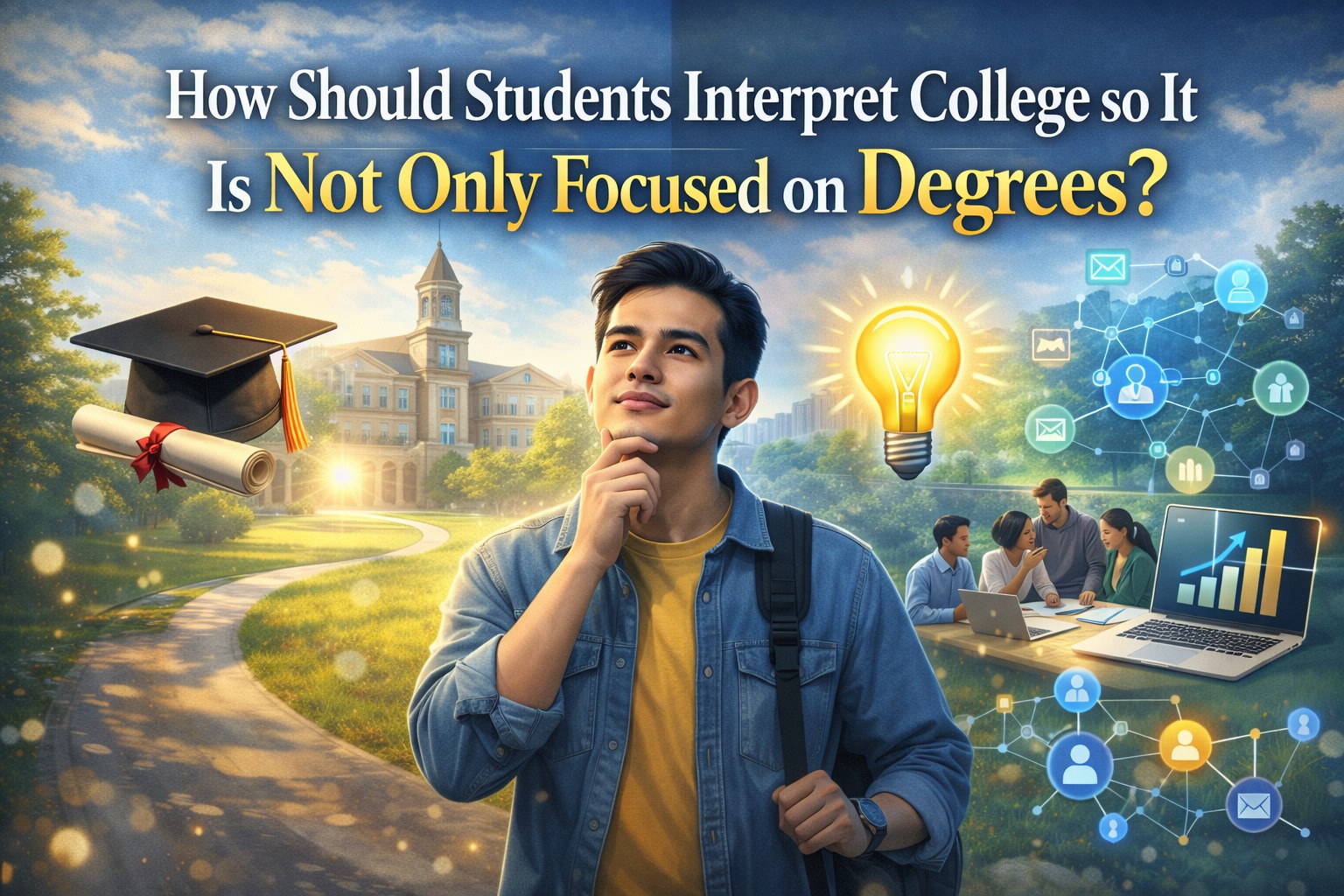
For many students, college is often seen primarily as a pathway to earning a degree. While diplomas are important for career opportunities and professional recognition, limiting the college experience to merely obtaining a certificate can reduce its long-term value. To truly benefit, students need to interpret college as a holistic environment for learning, growth, and skill development.
SEEING COLLEGE AS A LEARNING JOURNEY
College is more than just exams, grades, or graduation ceremonies.
It is an opportunity to:
- Explore subjects in depth
- Develop critical thinking skills
- Engage in problem-solving and research
- Apply theoretical knowledge in real-life contexts
By focusing on learning rather than just credentials, students can build skills that will serve them beyond their academic years.
BALANCING GRADES WITH KNOWLEDGE ACQUISITION
Grades are important indicators of progress, but they should not overshadow actual understanding.
Students should aim to:
- Go beyond memorizing for exams
- Connect concepts across disciplines
- Seek deeper comprehension rather than shortcuts
- Learn from mistakes and challenges
This approach ensures that learning becomes meaningful and practical, preparing students for professional and personal challenges.
TAKING ADVANTAGE OF EXTRACURRICULAR OPPORTUNITIES
College provides countless ways to gain experience outside the classroom.
Clubs, internships, research projects, volunteer work, and student organizations offer opportunities to develop:
- Leadership and teamwork skills
- Communication and interpersonal abilities
- Time management and organizational skills
- Real-world problem-solving experience
These experiences complement academic learning and enhance a student’s overall development.
NETWORKING AND MENTORSHIP
Relationships formed during college can be just as valuable as academic achievements.
Networking with peers, professors, and industry professionals can help students:
- Gain guidance and mentorship
- Discover career paths and opportunities
- Build long-term professional connections
Viewing college as a place for building a professional network ensures students gain both knowledge and social capital.
EMBRACING LIFELONG LEARNING
College should be seen as the starting point of continuous personal and professional growth.
Students can:
- Cultivate curiosity
- Stay updated with industry trends
- Pursue additional courses, certifications, or workshops
- Reflect on and refine career and life goals
Interpreting college as a foundation for lifelong learning ensures that education extends far beyond graduation.
CONNECTING MOTIVATION WITH PURPOSE
Students who enter college with clear intentions, whether for personal development, career preparation, or intellectual exploration, tend to achieve better outcomes. Motivation influences engagement, skill acquisition, and long-term satisfaction. Even students without initial direction can maximize benefits by actively seeking opportunities to learn, explore, and grow.
CONCLUSION
College is not solely about earning a degree. By interpreting it as a comprehensive learning experience, students can develop critical skills, expand knowledge, build networks, and prepare for a fulfilling career and life. Balancing formal education with curiosity, purpose, and engagement ensures that the college experience has lasting impact.
Tentang Penulis
Gusti Ayu Tita P
Penulis — Universitas STEKOM
Penulis aktif yang berfokus pada isu-isu akademik, teknologi pendidikan, dan pengembangan sumber daya manusia di lingkungan kampus.



