How Significant Is the Role of Academic Competitions in Improving Student Quality?
Gusti Ayu Tita P
27 Februari 2026
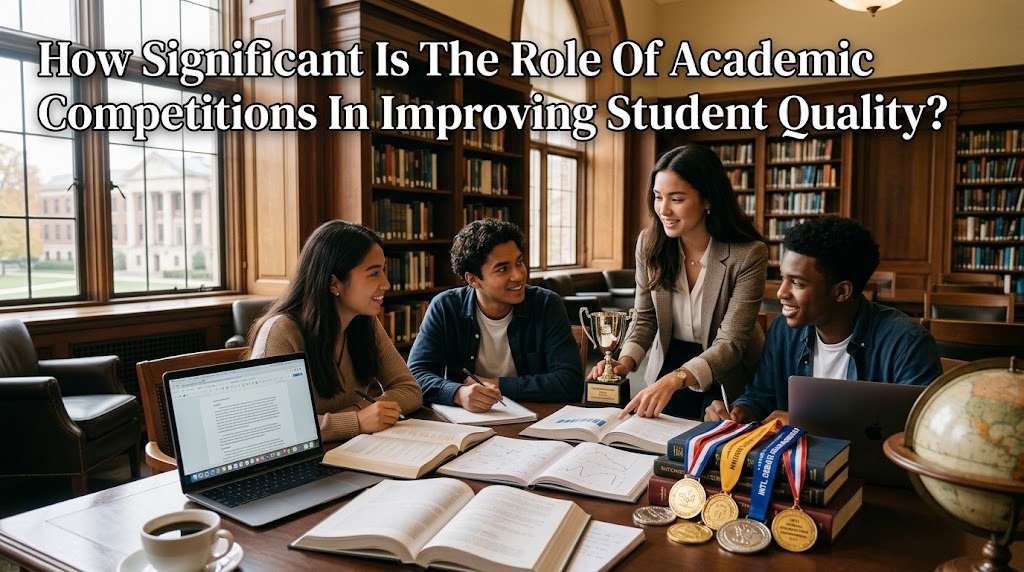
Academic competitions have become a common part of university life. Activities such as research contests, scientific writing, debates, business case competitions, innovation challenges, and academic presentations give students opportunities to apply their knowledge beyond regular classes. These activities can encourage students to explore subjects more deeply and challenge themselves to achieve better results. However, the importance of academic competitions should be viewed from a broader perspective than simply winning awards.
The real value of academic competition lies in the skills and experiences students gain during the process. Participants may develop critical thinking, creativity, problem solving, communication, teamwork, and resilience. These abilities can contribute to student quality when competition is supported by proper guidance and reflection. Therefore, academic competitions can be significant, but their impact depends on how they are designed and experienced.
THE ROLE OF ACADEMIC COMPETITIONS IN STUDENT DEVELOPMENT
Academic competitions encourage students to use knowledge in challenging situations. Unlike ordinary assignments, competitions often require participants to develop original ideas and respond to specific problems within a limited period. This process can push students to study more carefully and explore information from different sources. As a result, competitions can support deeper learning and intellectual development.
Students also learn how to work toward a specific objective. They need to plan their preparation, manage deadlines, and evaluate the quality of their work. These habits can improve discipline and responsibility. When students consistently use competition experiences as opportunities to learn, they can develop stronger academic and personal skills.
DEVELOPING CRITICAL THINKING SKILLS
Critical thinking is one of the most important skills that academic competitions can develop. Students are often required to examine information, identify problems, compare arguments, and make decisions based on evidence. These activities require more than memorizing information. They encourage students to understand why a particular answer or solution is appropriate.
Critical thinking is also useful beyond competitions. University students need this ability when conducting research, writing academic papers, evaluating information, and making decisions. In the workplace, employees are also expected to analyze problems and determine practical solutions. Therefore, competitions can provide valuable practice for academic and professional situations.
ENCOURAGING CREATIVITY AND INNOVATION
Many academic competitions require students to produce ideas that are original or useful. Participants may need to design a product, propose a business strategy, create a research solution, or develop an innovative project. This encourages them to look at familiar problems from different perspectives. Creativity and innovation can therefore become important outcomes of competition.
Competitions can also make students more confident in expressing their ideas. Presenting an original concept to judges requires preparation and courage. Even when an idea does not win, the process can teach students how to improve it. This creates an environment where experimentation and learning from failure become valuable experiences.
IMPROVING PROBLEM SOLVING ABILITIES
Academic competitions often present problems that do not have simple answers. Students must identify the main issue, gather relevant information, and consider possible solutions. They may also need to work within limitations involving time, resources, or available data. These conditions provide opportunities to develop practical problem solving skills.
Students can learn that solving a problem requires more than finding the first possible answer. They need to evaluate the strengths and weaknesses of different approaches. If their initial strategy fails, they may need to modify it. This process develops flexibility and decision making, which are important qualities for future professionals.
BUILDING COMMUNICATION AND PRESENTATION SKILLS
Academic knowledge becomes more valuable when students can communicate it effectively. Many competitions require participants to present their ideas in front of judges or audiences. Students need to organize information, explain complex concepts clearly, and respond to questions. This can strengthen communication and presentation skills.
Public speaking experience can also increase confidence. Students gradually become more comfortable expressing opinions and defending their ideas. They learn how to respond to criticism without losing focus. These abilities can be useful in interviews, meetings, presentations, and other professional situations.
STRENGTHENING TEAMWORK AND LEADERSHIP
Not all competitions are individual activities. Team based competitions require students to coordinate with other participants who may have different abilities and opinions. They need to divide responsibilities and communicate effectively to achieve a common goal. This can develop teamwork and collaboration skills.
Students may also have opportunities to take leadership roles. A team leader must coordinate tasks, manage disagreements, and make decisions when necessary. Leadership in this context is not simply about giving instructions but also about listening and supporting team members. These experiences can help students develop responsibility and leadership confidence.
TEACHING RESILIENCE AND HOW TO HANDLE FAILURE
Winning is not guaranteed in any competition. Students may invest significant time and effort but still receive results that do not match their expectations. Such experiences can be disappointing, but they can also teach valuable lessons about resilience. Learning to handle failure is an important part of personal development.
Students can use feedback from judges or mentors to identify areas that need improvement. Instead of viewing failure as proof of inability, they can treat it as information for future preparation. This mindset encourages continuous improvement. Over time, competition can help students become more persistent and emotionally prepared for challenges.
HOW SIGNIFICANT ARE ACADEMIC COMPETITIONS?
Academic competitions can have a significant role in improving student quality, particularly when they are designed around meaningful learning objectives. They provide students with opportunities to practice critical thinking, creativity, problem solving, communication, teamwork, and resilience. These skills can complement the knowledge students gain through regular university courses.
However, their impact should not be exaggerated. Academic competitions are only one component of student development, alongside classroom learning, research, internships, organizations, community service, and independent learning. The greatest benefits occur when students use competition experiences to improve themselves rather than focusing exclusively on awards. The process of learning and growing is more important than the competition result alone.
CONCLUSION
Academic competitions can make an important contribution to student quality by providing challenging experiences that encourage students to apply knowledge and develop practical skills. Through these activities, students can strengthen critical thinking, creativity, problem solving, communication, teamwork, leadership, and resilience. These competencies are valuable for both academic achievement and future professional life.
Nevertheless, competition should not become the sole standard for measuring student success. A high quality university environment should provide various opportunities for students to develop according to their abilities and interests. When academic competitions emphasize learning, fair assessment, constructive feedback, and personal growth, they can become a powerful tool for developing capable and adaptable graduates.
Tentang Penulis
Gusti Ayu Tita P
Penulis — Universitas STEKOM
Penulis aktif yang berfokus pada isu-isu akademik, teknologi pendidikan, dan pengembangan sumber daya manusia di lingkungan kampus.