How to Apply the Values of Pancasila in Everyday Life?
Gusti Ayu Tita P
4 Agustus 2026
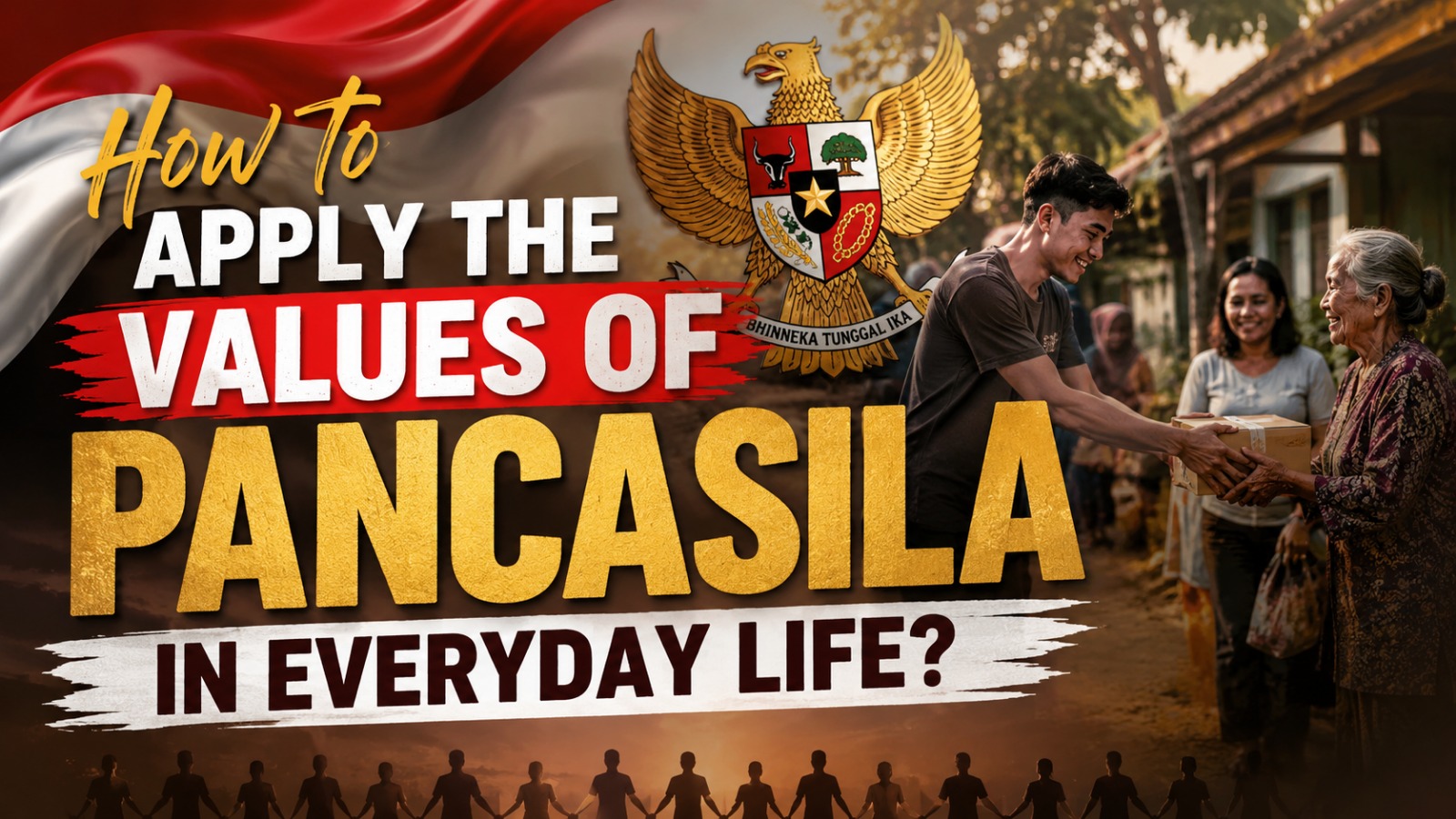
Pancasila is the foundation of Indonesia that contains important values for building a peaceful, united, and fair society. As the national ideology of Indonesia, Pancasila provides guidance on how citizens should behave and interact with others. The five principles of Pancasila represent important values such as belief in God, humanity, unity, democracy, and social justice. These values are not only written in national documents but also need to be practiced in everyday activities.
Applying Pancasila values in daily life is important because society continues to face various challenges, including social conflicts, technological changes, and cultural influences from globalization. By understanding and implementing Pancasila principles, Indonesian people can create a more respectful and responsible environment. Simple actions in family, school, workplace, and community life can become meaningful examples of practicing Pancasila.
SEO Keywords: Pancasila Values, Daily Life Application, Indonesian Ideology, National Character, Unity in Diversity
UNDERSTANDING THE FIVE PRINCIPLES OF PANCASILA
The five principles of Pancasila represent the fundamental values that guide Indonesian society. The first principle emphasizes belief in God Almighty, encouraging citizens to respect religious beliefs and practice tolerance. The second principle focuses on just and civilized humanity, teaching people to treat others with respect and fairness. The third principle highlights the importance of Indonesian unity despite differences in culture, ethnicity, and background.
The fourth principle teaches about democracy through discussion and representation, where decisions should be made through mutual agreement. Meanwhile, the fifth principle promotes social justice for all Indonesian people, encouraging equal opportunities and concern for others. Understanding these five principles is the first step toward applying Pancasila in real-life situations.
APPLYING THE FIRST PRINCIPLE THROUGH RELIGIOUS TOLERANCE
The first principle of Pancasila teaches Indonesian citizens to believe in God Almighty while respecting different religions and beliefs. Indonesia has diverse religious communities, making tolerance an essential value for maintaining harmony. Practicing this principle does not only mean performing religious activities but also respecting other people’s rights to practice their beliefs.
In everyday life, the application of the first principle can be shown by respecting religious celebrations, avoiding discrimination, and helping others regardless of their faith. Religious tolerance creates a peaceful environment where everyone feels accepted. Through mutual respect, society can prevent conflicts caused by differences in beliefs.
IMPLEMENTING HUMANITY VALUES IN SOCIAL INTERACTIONS
The second principle of Pancasila encourages people to apply humanitarian values in their relationships with others. Every person deserves respect, kindness, and fair treatment regardless of social status, ethnicity, or background. This principle reminds citizens that human dignity must always be protected.
Examples of applying humanity values include helping people in need, showing empathy, avoiding bullying, and respecting others’ opinions. In schools, students can practice this value by supporting their friends and creating a positive learning environment. In society, humanitarian attitudes help build stronger relationships among citizens.
STRENGTHENING UNITY AMONG INDONESIAN PEOPLE
The third principle, The Unity of Indonesia, teaches citizens to maintain national togetherness despite differences. Indonesia’s diversity is a valuable strength that must be protected. Unity can only be achieved when people appreciate different cultures, traditions, and perspectives.
Applying the value of unity can be done through cooperation, respecting diversity, and prioritizing common interests. Activities such as community service, teamwork, and helping neighbors are examples of implementing Pancasila values in society. Strong unity allows Indonesia to overcome challenges and continue developing as a nation.
PRACTICING DEMOCRACY AND SOCIAL JUSTICE
The fourth and fifth principles of Pancasila encourage citizens to practice democracy and social responsibility. Democracy in Pancasila is not only about expressing opinions but also about listening to others and making decisions through discussion. Respecting different perspectives is an important part of democratic behavior.
Social justice can be applied by treating everyone equally and supporting people who need assistance. Citizens can contribute by being fair, following rules, and participating in activities that benefit society. The practice of social justice values helps create a balanced community where everyone has opportunities to grow
APPLYING PANCASILA VALUES IN THE DIGITAL ERA
Technology has changed the way people communicate and access information. In the digital era, Pancasila values remain important to guide responsible online behavior. Social media users need to consider honesty, respect, and responsibility when sharing information or interacting with others.
Applying Pancasila online can be done by avoiding misinformation, preventing cyberbullying, respecting different opinions, and using technology for positive purposes. Digital platforms should become tools for education, creativity, and collaboration. By applying Pancasila values in digital spaces, Indonesian society can create a safer and more respectful online environment.
THE IMPORTANCE OF PRACTICING PANCASILA FOR YOUNG GENERATIONS
Young people have a major role in preserving Indonesia’s national values. As future leaders, students and young generations need to understand that Pancasila is not only a subject learned in school but also a guide for building character. Practicing Pancasila helps young people develop responsibility, tolerance, and social awareness.
The involvement of young generations in applying Pancasila can be seen through participation in social activities, respecting differences, and contributing positively to society. When young people understand the meaning of Pancasila ideology, they can help maintain Indonesia’s unity and identity in the future.
CONCLUSION
Applying Pancasila values in everyday life is an important step to create a harmonious and responsible society. The principles of Pancasila provide guidance for building good relationships, respecting diversity, and creating social justice. These values remain relevant because they help Indonesian people face modern challenges while maintaining national identity.
Every citizen has a role in practicing Pancasila through simple actions. By consistently applying Pancasila principles, Indonesia can continue to become a strong nation based on unity, tolerance, and mutual respect.
Tentang Penulis
Gusti Ayu Tita P
Penulis — Universitas STEKOM
Penulis aktif yang berfokus pada isu-isu akademik, teknologi pendidikan, dan pengembangan sumber daya manusia di lingkungan kampus.