How to Avoid Harmful Online Loan Scams?
Gusti Ayu Tita P
6 Agustus 2026
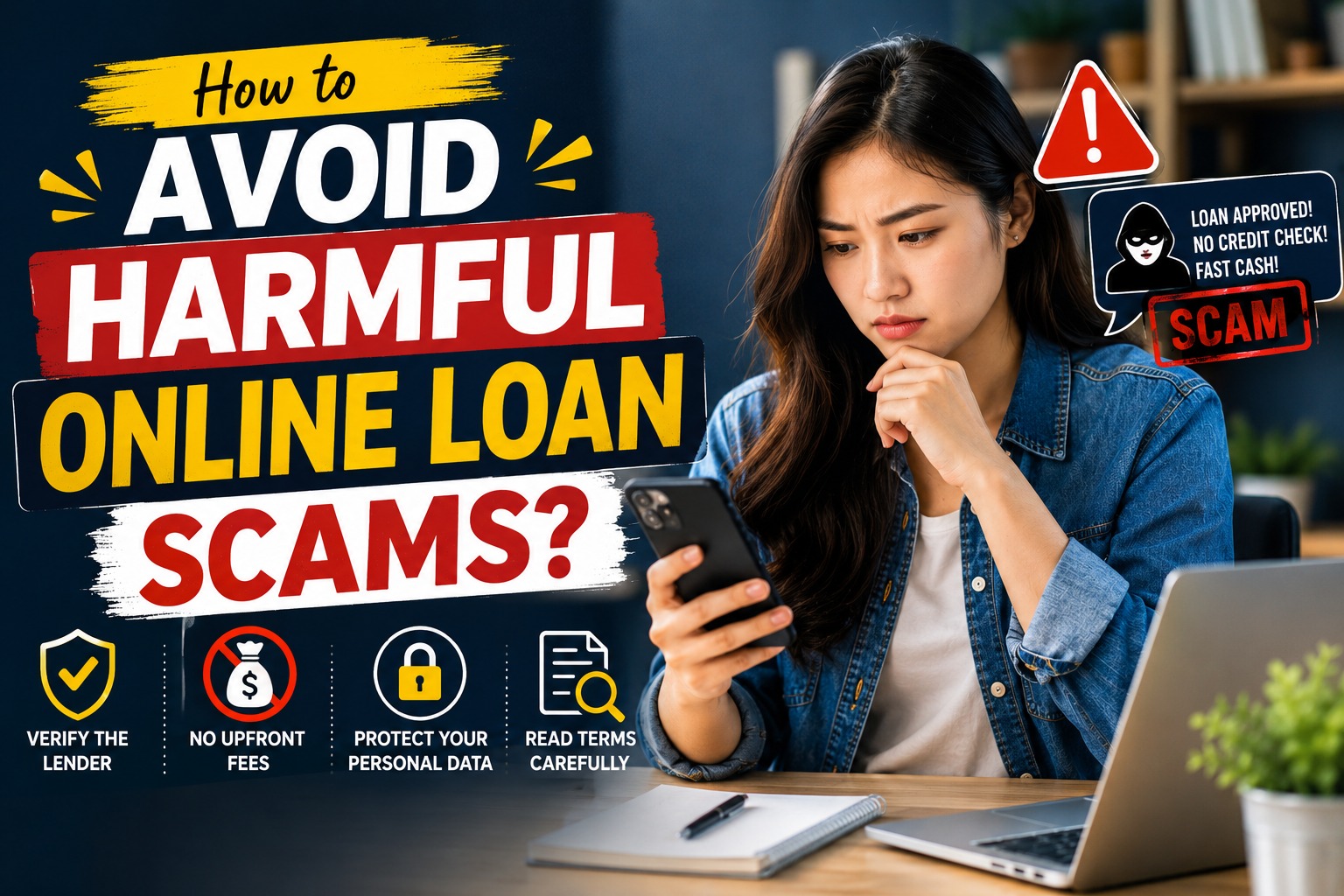
Online loans can provide quick access to money when unexpected expenses arise. However, the growing popularity of online lending has also created opportunities for scammers to target people who urgently need financial assistance. Fake loan providers may promise easy approval, low costs, or instant cash while secretly attempting to steal money or personal information. Knowing how to avoid harmful online loan scams can help borrowers make safer financial decisions.
Online loan scams can cause more than financial losses. Victims may also face identity theft, misuse of personal data, hidden charges, or threats from fraudulent collectors. Before applying for any online loan, it is important to verify the provider and understand the terms. Careful checking can reduce the risk of becoming a victim of illegal lending activities.
VERIFY THE ONLINE LOAN PROVIDER
The first step to avoid an online loan scam is checking whether the provider is legally authorized to operate. In Indonesia, consumers can verify financial service providers through official information provided by the Financial Services Authority or Otoritas Jasa Keuangan OJK. Do not rely only on advertisements, social media posts, or claims made by the provider. Always compare the company's identity with information available through official OJK channels.
Scammers can create professional-looking websites and applications to make their services appear legitimate. Some may even copy the names or logos of real financial companies. Therefore, checking the provider through an official source is more reliable than judging its appearance. If the provider cannot be verified, avoid submitting an application or sending personal information.
BE CAREFUL WITH UNREALISTIC LOAN OFFERS
Extremely attractive offers can be a major warning sign of an online loan scam. Fraudulent lenders may promise guaranteed approval, very low costs, or large loans without proper verification. They may also claim that applicants do not need to provide documents or meet normal eligibility requirements. Such promises should be treated carefully, especially when they are accompanied by pressure to apply immediately.
A responsible lender normally provides clear information about eligibility, repayment obligations, fees, and other important conditions. Borrowers should compare the offer with their actual financial needs and ability to repay. Do not let an urgent financial situation push you into accepting an offer without reading the terms. If an offer seems too good to be true, take time to verify it first.
NEVER PAY SUSPICIOUS UPFRONT FEES
Scammers may ask applicants to transfer money before receiving a loan. They can describe the payment as an administration fee, insurance fee, security deposit, verification charge, or loan activation fee. Although some legitimate financial services may have fees, an unexplained payment request is a serious reason to stop and investigate. Never transfer money simply because someone claims your loan will otherwise be cancelled.
Pay particular attention when the money must be sent to a personal bank account or an unrelated payment service. Verify payment instructions through the provider's official communication channels before making any transaction. If someone pressures you to pay immediately, this can be another warning sign. Taking time to verify the request is safer than losing money to a fraudulent lender.
PROTECT YOUR PERSONAL INFORMATION
Online loan applications may request personal information for identification and financial assessment. However, borrowers should understand why specific information is needed before submitting it. Avoid giving passwords, PINs, one-time verification codes, or other highly sensitive security information to anyone claiming to represent a lender. Legitimate financial services should not require you to casually disclose confidential authentication information.
Be careful with applications that request excessive access to your device or personal files. Read privacy policies and application permissions before proceeding. Keep copies of important documents and records related to your application. Protecting personal information is essential because scammers can use stolen data for identity theft or other fraudulent activities.
AVOID LOANS PROMOTED THROUGH RANDOM CONTACTS
Be cautious when receiving unexpected loan offers through text messages, social media, messaging applications, or random phone calls. Scammers often contact potential victims directly and create a sense of urgency. They may say that the offer is available only for a short time or that immediate action is required. This pressure can prevent people from conducting proper verification.
Do not click suspicious links or download unknown loan applications sent by strangers. Instead, find the provider's official website or application independently and verify its identity. Never assume that a message is legitimate just because it contains a company name or logo. Independent verification is one of the simplest ways to reduce the risk of online loan fraud.
READ THE LOAN AGREEMENT CAREFULLY
Before accepting an online loan, read the agreement from beginning to end. Pay attention to the loan amount, repayment schedule, interest or other charges, administrative fees, penalties, and total repayment amount. Understanding these details can help you identify unusual or hidden costs. Never accept terms that you do not understand.
Borrowers should also consider whether monthly repayments are affordable based on their regular income and expenses. A loan can become harmful when repayments create excessive financial pressure. Do not borrow more than you can reasonably repay. A careful assessment before signing can prevent financial problems later.
DO NOT TRUST GUARANTEED APPROVAL CLAIMS
Guaranteed loan approval can be attractive to people who have difficulty accessing traditional financial services. However, scammers may use guaranteed approval as bait to obtain personal information or upfront payments. They may claim that everyone qualifies regardless of income, credit history, or financial situation. Such claims deserve additional scrutiny.
A legitimate lender generally has its own assessment process and eligibility requirements. Approval should not be treated as something that can be guaranteed simply by paying a fee. If a provider promises approval without meaningful assessment, verify its legality before continuing. Remember that fast approval does not automatically mean a safe or trustworthy loan.
REPORT SUSPICIOUS ONLINE LOAN ACTIVITY
If you discover a suspicious online loan provider, avoid further transactions until its status is confirmed. Save relevant evidence such as screenshots, phone numbers, account details, application information, and payment records. These records can be useful when reporting suspected fraud. Do not delete important conversations before documenting them.
Consumers in Indonesia can use official OJK channels to seek information about financial service providers and report or ask about suspicious financial activities. If you have already transferred money or shared sensitive information, take immediate steps to protect your financial accounts and contact the appropriate financial institution. Acting quickly can help limit potential losses. Most importantly, do not send additional money simply because a scammer promises to recover your previous payment.
CONCLUSION
Avoiding harmful online loan scams requires careful verification and responsible borrowing. Always check the provider through official sources, question unrealistic offers, and avoid suspicious upfront payment requests. Protect passwords, PINs, verification codes, and other sensitive personal information from unknown parties. Reading the loan agreement and understanding the total repayment cost are also important before accepting any offer.
A legitimate-looking website or attractive promotion does not automatically prove that an online loan is safe. Take time to verify the provider and never allow financial pressure to force you into a rushed decision. By practicing these simple precautions, borrowers can reduce the risk of scams and make safer choices when considering online loans.
Tentang Penulis
Gusti Ayu Tita P
Penulis — Universitas STEKOM
Penulis aktif yang berfokus pada isu-isu akademik, teknologi pendidikan, dan pengembangan sumber daya manusia di lingkungan kampus.