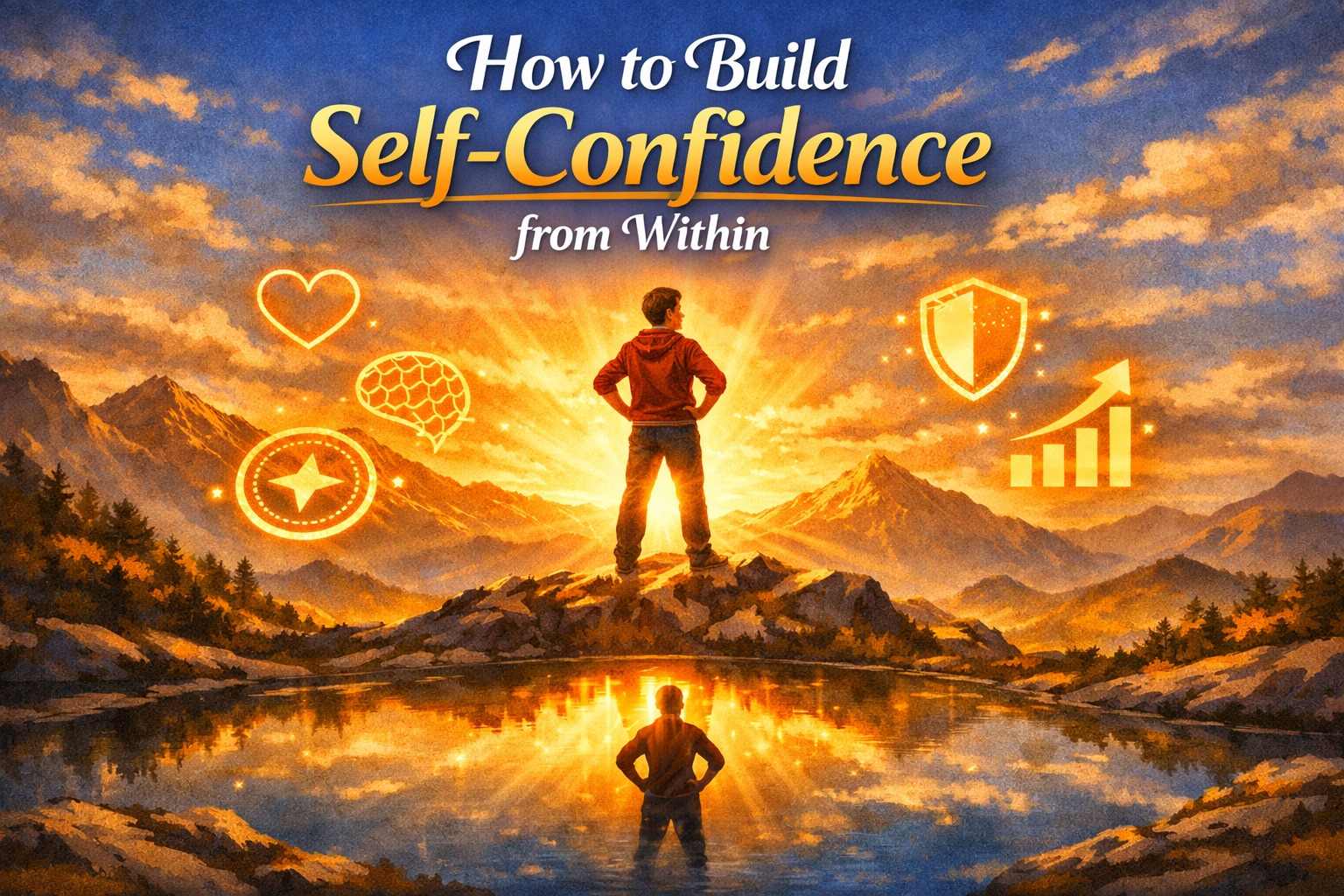
Self-confidence is one of the most valuable qualities a person can develop. It helps individuals face challenges, express opinions, and achieve personal goals without constantly seeking approval from others. In today’s fast-paced world, many people struggle with insecurity due to social pressure, comparison on social media, and fear of failure. Building self-confidence from within is not an instant process, but it is possible through consistent self-awareness and positive habits.
UNDERSTANDING THE MEANING OF SELF-CONFIDENCE
Self-confidence is the belief in your own abilities, values, and decisions. It does not mean thinking you are perfect or better than others. Instead, it means accepting yourself while continuing to grow and improve. People with healthy self-confidence can handle criticism, learn from mistakes, and stay motivated even during difficult situations.
True confidence comes from within, not from external validation. Compliments, achievements, or popularity may increase confidence temporarily, but inner confidence remains stable because it is built on self-acceptance and personal growth.
STOP COMPARING YOURSELF TO OTHERS
One of the biggest reasons people lose confidence is constant comparison. Social media often shows only the best moments of someone’s life, making others feel insecure about their own achievements or appearance. Comparing yourself to others can create unnecessary pressure and negative thinking.
Instead of focusing on what others have, focus on your own progress. Everyone has a different journey, talent, and timeline in life. Appreciating your own growth can help you develop a healthier mindset and stronger self-esteem.
DEVELOP POSITIVE SELF-TALK
The way you talk to yourself has a major impact on your confidence. Negative thoughts such as “I am not good enough” or “I always fail” can slowly damage your mental strength. Replacing these thoughts with positive and realistic affirmations can improve your self-image.
Try encouraging yourself with statements like:
- “I am learning and improving every day.”
- “Mistakes are part of growth.”
- “I have strengths that make me unique.”
Positive self-talk helps train the mind to become more optimistic and confident in facing challenges.
IMPROVE YOUR SKILLS AND KNOWLEDGE
Confidence grows when you become better at something. Learning new skills, improving communication abilities, or gaining knowledge in a specific field can increase your sense of competence. The more prepared you are, the more confident you will feel.
For example, practicing public speaking regularly can reduce nervousness during presentations. Small improvements over time can create significant changes in self-confidence.
TAKE CARE OF YOUR PHYSICAL AND MENTAL HEALTH
A healthy lifestyle also affects confidence levels. Regular exercise, enough sleep, and healthy eating habits can improve mood and energy. When people feel physically healthy, they often feel mentally stronger as well.
Mental health is equally important. Taking breaks, managing stress, and surrounding yourself with supportive people can help maintain emotional balance. Avoid toxic environments that constantly make you doubt your worth.
LEARN TO ACCEPT FAILURES
Failure is a natural part of life. Many successful people experienced rejection and setbacks before reaching their goals. Instead of seeing failure as proof of weakness, view it as an opportunity to learn and improve.
Every mistake teaches valuable lessons that can make you stronger and wiser. People who are confident understand that failure does not define their value as a person.
BUILD CONFIDENCE THROUGH SMALL ACTIONS
Confidence is built through consistent action. Start with small challenges, such as speaking up during discussions, trying new activities, or expressing your ideas openly. Completing small goals can create a sense of achievement and motivate you to take bigger steps.
Over time, these small victories strengthen self-belief and help you become more comfortable with yourself.
CONCLUSION
Building self-confidence from within requires patience, self-awareness, and continuous effort. By avoiding comparison, practicing positive self-talk, improving skills, and accepting failures, anyone can develop stronger confidence. Real confidence does not come from perfection or approval from others. It comes from understanding your value and believing in your ability to grow through every experience in life.
Tentang Penulis
Gusti Ayu Tita P
Penulis — Universitas STEKOM
Penulis aktif yang berfokus pada isu-isu akademik, teknologi pendidikan, dan pengembangan sumber daya manusia di lingkungan kampus.