
How to Check Land Legality to Avoid Future Disputes?
Gusti Ayu Tita P
2 September 2026
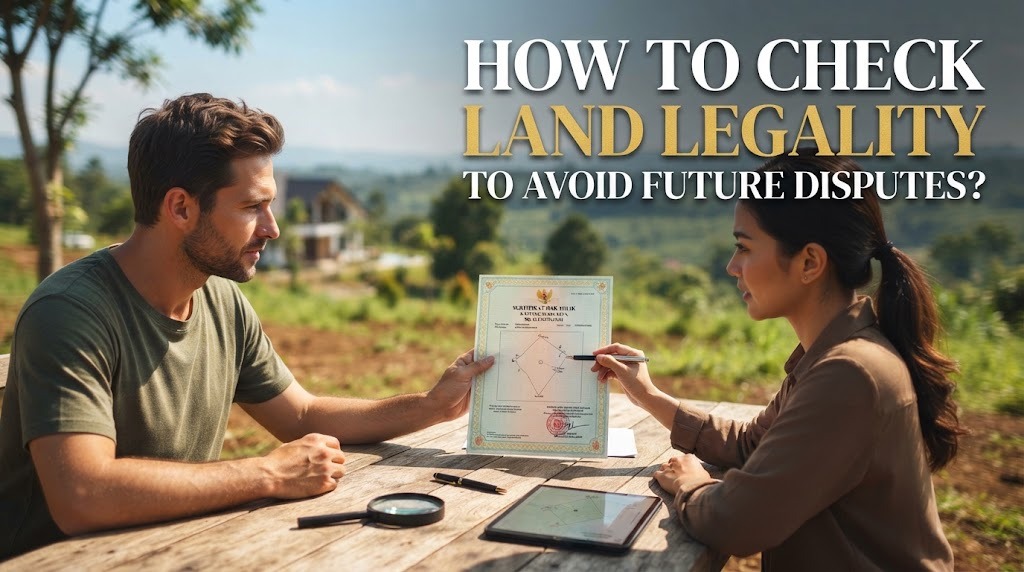
Buying land is a major decision that requires more than checking the location and price. Buyers should also confirm that the land has clear legal status and valid ownership documents. Proper verification can reduce the risk of ownership conflicts, boundary disputes, or problems with previous transactions. Taking these steps before buying can provide greater legal and financial protection.
CHECK THE LAND CERTIFICATE
The first step is to examine the land certificate carefully. Check the registered owner's name, type of land right, land area, location, and other important information. Make sure the information matches the seller's identity and the actual condition of the property. Do not rely only on a photocopy or a document provided without further verification.
The certificate should also be checked through the relevant land authority to confirm its official status. This can help identify potential issues such as restrictions, encumbrances, or conflicting records. A careful certificate check is an important foundation for a safer land transaction.
VERIFY THE SELLER'S IDENTITY
The seller must have the legal authority to transfer the land. Compare the seller's identity documents with the name stated on the land certificate. If the seller is acting on behalf of another person, verify the legal basis for that authority and examine the supporting documents.
Extra attention is needed when the land is inherited or jointly owned. Make sure the relevant parties have the necessary rights or approvals to transfer the property. Confirming the seller's identity and authority can prevent disputes caused by unauthorized transactions.
CONFIRM THE TYPE OF LAND RIGHTS
Land can have different types of legal rights, and each type may have different conditions and periods of validity. Buyers should understand what type of right is registered over the property before completing a transaction. This information is generally stated in the land certificate and can be confirmed through the relevant land office.
Understanding the legal status is especially important for buyers planning to use the land for business, construction, or long-term investment. If the right has a specific validity period or restrictions, these factors should be considered before purchasing. Never assume that every piece of land provides the same ownership rights.
CHECK OFFICIAL LAND RECORDS
Official land records should be checked to determine whether the information provided by the seller matches government records. Depending on the applicable procedures, buyers may request land information or verification through the relevant land authority. A notary or authorized land official may also assist with the transaction process.
This step can help identify potential problems before money changes hands. If there is a block, mortgage, seizure, dispute, or other legal restriction, the buyer should understand its implications first. The transaction should not proceed until significant legal issues have been clarified.
INSPECT THE LAND IN PERSON
Document verification should be followed by a physical inspection. Visit the property and compare its actual location, boundaries, size, and condition with the official documents. Check boundary markers and determine whether neighboring parties are using or claiming any part of the land.
A physical inspection can reveal problems that may not appear in paperwork. For example, access roads may be disputed, boundary markers may be unclear, or another person may occupy the property. These issues should be investigated before completing the purchase.
CHECK THE LAND'S HISTORY
Understanding the property's history can provide important information about potential future disputes. Ask how the seller obtained the land and whether there were previous owners, inheritance transfers, sales, or disagreements involving the property. Supporting documents should be reviewed rather than relying entirely on verbal explanations.
Buyers should also consider whether the land is currently occupied or being used by another party. A property may appear legally documented while still having an unresolved possession issue. Investigating its history can help buyers recognize potential risks before committing to the transaction.
USE PROFESSIONAL ASSISTANCE
Professional assistance can make the verification process safer, especially for high-value or complicated transactions. A qualified land professional or lawyer can help review documents, identify potential legal problems, and explain the risks associated with the transaction. Their assistance can be particularly useful when the property involves inheritance, multiple owners, or complicated documentation.
Buyers should still understand the documents they are signing and keep copies of important records. Professional assistance reduces risk but does not replace the buyer's responsibility to review the transaction carefully. Never sign documents that you do not understand.
AVOID RUSHING INTO THE TRANSACTION
Pressure from a seller to make an immediate payment should be treated carefully. A very low price or urgent offer should not become a reason to skip legal verification. Buyers should have enough time to check documents, inspect the property, and confirm the seller's authority.
If inconsistencies or suspicious information are discovered, pause the transaction until the issue is resolved. It is better to delay a purchase than to deal with a lengthy land dispute afterward. Careful preparation can save significant time, money, and stress in the future.
CONCLUSION
Checking land legality before purchasing is an important way to avoid future disputes. Buyers should verify the land certificate, seller's identity, type of land rights, official records, physical boundaries, and property history. Professional assistance can also provide additional protection when the transaction involves complicated legal issues.
The safest approach is to complete every important verification before making the final payment or signing the final transaction documents. Do not let attractive prices or pressure from sellers prevent proper due diligence. A legally clear property is a stronger foundation for a safe investment.
Tentang Penulis
Gusti Ayu Tita P
Penulis — Universitas STEKOM
Penulis aktif yang berfokus pada isu-isu akademik, teknologi pendidikan, dan pengembangan sumber daya manusia di lingkungan kampus.