How to Check the Legality of Investment and Financial Companies Through OJK
Gusti Ayu Tita P
24 Agustus 2026
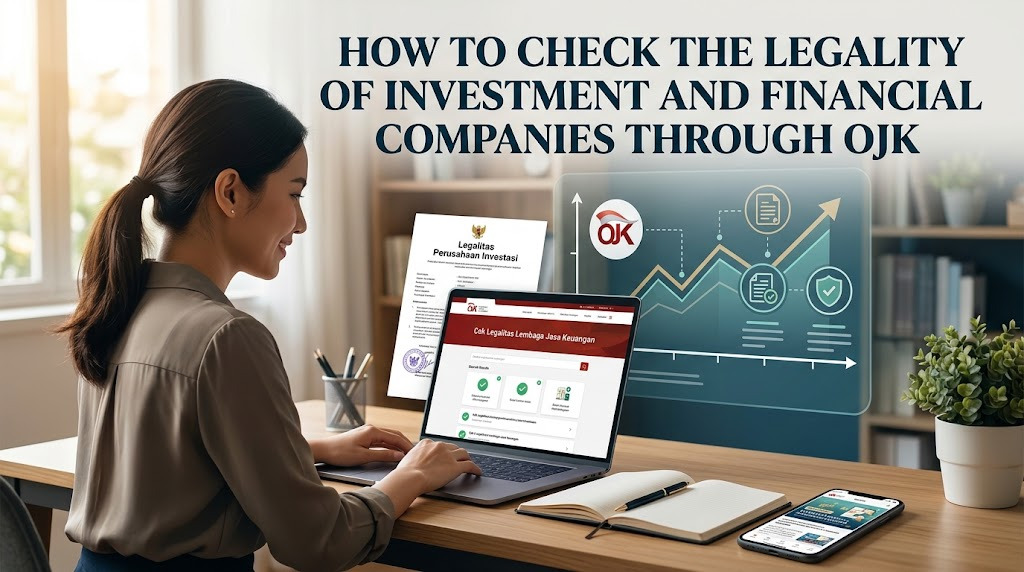
The growth of digital financial services has made it easier for people to find investment products and financial services. Offers can now be found through websites, mobile applications, social media, and messaging platforms. However, not every company offering financial products has the appropriate legal status. Therefore, consumers should understand how to check the legality of investment and financial companies through OJK before investing or using a financial service.
WHY LEGALITY CHECKING IS IMPORTANT
Checking the legality of a financial company helps consumers determine whether the provider has the appropriate authorization or status for the financial activity it conducts. This is particularly important because fraudulent companies can use professional websites, advertisements, and fake documents to gain public trust. A company that looks professional is not necessarily legally authorized.
However, legal status should not be considered a guarantee of profit or the absence of investment risk. Every financial product has its own characteristics and potential risks. Consumers should therefore combine legal verification with product and risk assessment. This approach can help people make more responsible financial decisions.
USE OFFICIAL OJK INFORMATION
The first step is to search for the company through official OJK information channels. Use the complete legal name of the company rather than relying only on its brand name. Compare the information found with the company's website, application, and promotional materials.
If the company cannot be verified, do not immediately transfer money or provide personal documents. Consumers can contact OJK's official information and complaint services when they need clarification. Avoid relying on information from random social media accounts or unofficial websites. Official information should be the primary reference when checking financial companies under OJK's authority.
CHECK THE COMPANY'S LEGAL NAME
A financial company can have a brand name that differs from its legal corporate name. Fraudsters can also deliberately use names that resemble legitimate companies. Therefore, checking only the brand name may not be enough.
Compare the company's legal name with the information available from official sources. Check whether the website, application, contact details, and other information correspond to the verified company. Small differences in company names should not be ignored. Confirm the exact identity before making a financial commitment.
VERIFY WHETHER THE STATUS MATCHES THE BUSINESS
Consumers should also check whether the company's license or registration status corresponds to the financial service being offered. A company should not be assumed to have permission to provide every type of financial product simply because it has some form of legal status.
Identify the actual product being offered and compare it with the company's authorized business activities. If the company cannot explain its regulatory status clearly, proceed carefully. Legal status and business activity should be consistent. This is particularly important for investment and digital financial products.
CHECK THE INVESTMENT PRODUCT
For investment offers, legality checking should be followed by an evaluation of the investment product itself. Understand how the investment works, how returns are generated, what risks exist, and how funds can be withdrawn. Do not invest in a product simply because a company claims to be officially registered.
Be careful with products that promise extremely high returns in a short period. High returns should always be evaluated together with risk. If the company cannot explain where the promised returns come from, consider the offer suspicious. Legal verification should be combined with logical financial analysis.
BE CAREFUL WITH GUARANTEED RETURNS
One of the most common warning signs of an investment scam is a promise of guaranteed high returns without meaningful risk. Financial markets and investment products generally involve uncertainty. Claims that investors cannot lose money should therefore be treated with caution.
Scammers may use testimonials, screenshots, or stories of successful investors to make their offers appear credible. These materials do not prove that an investment is legitimate. Testimonials are not a substitute for official verification. Always investigate the company and product before transferring funds.
CHECK THE OFFICIAL WEBSITE AND APPLICATION
After verifying the company, make sure that the website or application you are using actually belongs to the same company. Fraudsters can copy logos, company profiles, website designs, and promotional materials from legitimate businesses.
Use contact information obtained from verified official sources. Avoid clicking suspicious links sent through unknown WhatsApp accounts, SMS messages, or social media profiles. Do not provide identity documents before verifying the platform. A professional website can still be fraudulent.
PROTECT PERSONAL AND FINANCIAL INFORMATION
Financial services often require consumers to provide personal information. However, passwords, PINs, OTP codes, and other security credentials must remain confidential. No one should be trusted simply because they claim to be a representative of a financial company.
If someone asks for confidential information through a phone call or private message, end the interaction and contact the company independently. Check your account activity regularly and report suspicious transactions quickly. Protecting personal data is part of protecting your finances.
CHECK PAYMENT AND BANK ACCOUNT DETAILS
Before transferring money, verify the payment instructions and recipient account. Make sure they correspond with the official procedures of the financial company. Be particularly cautious when someone suddenly asks you to send money to a personal account or a different account than the one previously provided.
Save transaction receipts and relevant communications. If the payment instructions change unexpectedly, contact the company through its verified official channel before transferring funds. Never transfer additional money simply because someone pressures you to do so.
VERIFY FINANCIAL COMPANIES OTHER THAN INVESTMENT PROVIDERS
The same verification principle applies when choosing other financial service providers. Consumers should understand what type of company they are dealing with and which authority regulates the relevant activity. Different financial sectors can have different regulatory frameworks and requirements.
Do not assume that every company offering financial products falls under exactly the same rules. Check the provider's identity, business activity, and applicable regulatory status. Understanding the type of financial service is an important part of legal verification.
WHAT TO DO IF A COMPANY CANNOT BE VERIFIED
If a company cannot be verified through official information, the safest choice is to postpone the transaction. Do not transfer money, submit identity documents, or provide sensitive financial information until the situation is clarified. Save the company's website, advertisements, phone numbers, and other evidence if the offer appears suspicious.
Consumers can contact official OJK channels to request information or report suspected illegal financial activities within OJK's authority. If the situation involves suspected fraud or other criminal conduct, consumers may also need to report it to the appropriate law enforcement authority. Be cautious of anyone who offers to recover lost investment funds for an upfront payment.
CONCLUSION
Knowing how to check the legality of investment and financial companies through OJK is an important part of protecting yourself from illegal financial activities. Start by checking the company's exact legal identity and current status through official OJK information. Then confirm that the company's regulatory status corresponds to the financial service it offers.
Consumers should also examine the investment product, costs, risks, payment instructions, and data protection practices. Never rely solely on advertisements, testimonials, company logos, or claims made through social media. By verifying information carefully and making decisions based on both legality and financial logic, consumers can reduce risks and use financial services more responsibly.
Tentang Penulis
Gusti Ayu Tita P
Penulis — Universitas STEKOM
Penulis aktif yang berfokus pada isu-isu akademik, teknologi pendidikan, dan pengembangan sumber daya manusia di lingkungan kampus.