How to Check Whether an Online Loan Is Legal and Registered with OJK?
Gusti Ayu Tita P
24 Agustus 2026
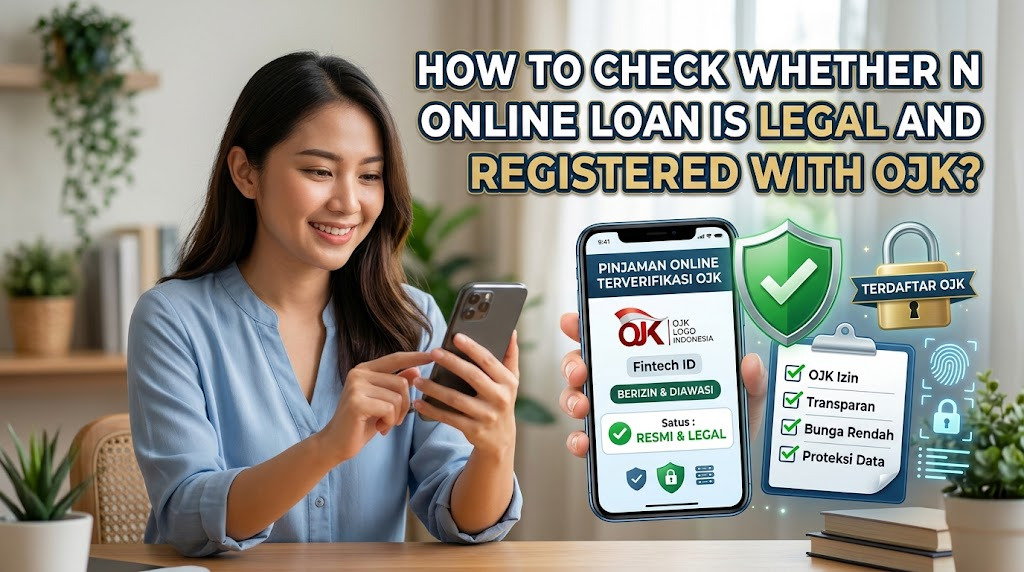
Online loans can provide quick access to financing without requiring customers to visit a physical office. However, the convenience of online lending services also creates opportunities for illegal operators to target people who need money urgently. Before applying for a loan, consumers should verify whether the provider has the appropriate status and authorization. Understanding how to check whether an online loan is legal and registered with OJK can help reduce the risk of fraud, excessive costs, and misuse of personal information.
CHECK THE PROVIDER THROUGH OFFICIAL OJK INFORMATION
The first step is to check the online lending provider through official OJK information channels. Look for the company's legal name and compare it with the information provided on its website or application. Do not rely solely on the brand name because the brand may be different from the company's registered legal name. The identity of the provider should be consistent across the available information.
If you cannot verify the provider's status, do not immediately submit personal documents or transfer money. Consumers can seek clarification through official OJK services when they are uncertain about a provider. Avoid relying on screenshots or certificates sent by sales representatives as the only proof of legality. Independent verification is a safer approach.
MAKE SURE THE PROVIDER'S STATUS MATCHES ITS BUSINESS
A provider's legal status should be considered together with the type of financial activity it conducts. Consumers should not assume that a company is authorized to provide every type of financial service simply because it claims to be registered or regulated. Check whether the provider's status corresponds to the online lending activity being offered.
Pay attention to the company's legal identity and business information. If the information on an application differs from the information available through official sources, stop the application process until the difference is clarified. A legitimate provider should be able to explain its identity and business status clearly. Never make a financial decision based solely on an attractive application design or advertisement.
CHECK THE COMPANY'S IDENTITY CAREFULLY
Illegal online loan operators can use names that resemble legitimate companies. Some may copy company logos, website designs, or official-looking documents to appear trustworthy. This means that simply recognizing a familiar-looking name is not enough. Consumers need to verify the exact identity of the provider.
Compare the legal company name, website, contact details, and other identifying information. Be careful if the provider communicates only through personal messaging accounts without a verifiable corporate channel. Similar names do not prove that two companies are the same. Always verify the information independently before submitting an application.
UNDERSTAND THE COSTS AND LOAN TERMS
A legal online loan should provide information about costs, repayment obligations, terms, and other important conditions. Before accepting a loan, read the agreement carefully. Understand the amount received, repayment schedule, applicable fees, and consequences of late payment. Do not accept a loan simply because the approval process is fast.
Consumers should calculate whether the repayment obligation fits their financial capacity. Avoid focusing only on the amount that can be borrowed. The total financial obligation is more important when deciding whether a loan is affordable. If the provider does not clearly explain the costs, consider stopping the application.
BE CAREFUL WITH REQUESTS FOR EXCESSIVE ACCESS TO PERSONAL DATA
Online lending applications may request certain information during the application process. However, consumers should remain careful about personal data and device permissions. Do not provide unnecessary information or grant access without understanding why it is required. Be especially cautious when an application requests sensitive information that does not appear relevant to the service.
Never share OTP codes, PINs, passwords, or account security credentials with anyone. A person claiming to be a customer service representative should not automatically be trusted. If you receive a suspicious request, contact the provider through its verified official channel. Protecting personal data is an important part of using online financial services safely.
CHECK THE OFFICIAL WEBSITE AND APPLICATION
Consumers should obtain applications only from trusted and official distribution channels whenever possible. Avoid installing loan applications from random links sent through WhatsApp, SMS, social media, or unknown websites. Fraudsters may distribute modified applications designed to collect personal information. An official-looking application does not automatically mean the service is legitimate.
Check whether the application is associated with the company whose status you verified. Compare the developer or company information with the provider's official information. Do not assume that an application is legal simply because it is available online. Verify the company first, then proceed with the application.
WATCH OUT FOR UNREALISTIC LOAN OFFERS
Illegal lenders may attract consumers by offering very large loans with extremely easy requirements. They may claim that no verification is necessary or that funds can be transferred immediately. While legitimate digital lending can be convenient, consumers should still understand the provider's terms and verification process.
Be particularly cautious when someone asks you to pay a fee before receiving a loan without a clear and verifiable explanation. Requests for money through personal accounts should also be examined carefully. Do not transfer money simply because someone promises faster approval. Verify the provider and payment instructions through official channels first.
DO NOT TRUST OJK LOGOS OR CLAIMS WITHOUT VERIFICATION
Some fraudulent operators may display the OJK name or logo on websites, social media accounts, or promotional materials. They may also claim that their services are officially supervised. Such claims should never be accepted without independent verification.
Search for the provider using official OJK information and compare its identity carefully. If the provider's name cannot be verified, treat the offer as suspicious. A logo is not proof of legal status. Consumers should always rely on official information rather than promotional materials provided by the company itself.
WHAT TO DO IF YOU FIND A SUSPICIOUS ONLINE LOAN
If you encounter a suspected illegal online loan, do not continue the application or provide additional personal information. Save relevant evidence such as screenshots, website addresses, application names, phone numbers, and messages. These records may be useful when making a complaint or report.
Consumers can use official OJK complaint and information channels to seek clarification or report suspected illegal financial activities. If the situation involves suspected criminal activity, consumers may also need to contact the appropriate law enforcement authorities. Do not pay people who claim they can remove your debt or recover your money in exchange for an upfront fee.
CONCLUSION
Knowing how to check whether an online loan is legal and registered with OJK is an important step before borrowing money online. Start by verifying the provider's identity and status through official OJK information. Then examine the loan terms, costs, repayment obligations, application source, and data permissions before submitting an application.
Consumers should never rely solely on advertisements, company logos, testimonials, or claims made through social media. Verify first, understand the terms, and protect your personal information before accepting an online loan. By taking these precautions, people can reduce the risk of dealing with illegal lenders and make more responsible borrowing decisions.
Tentang Penulis
Gusti Ayu Tita P
Penulis — Universitas STEKOM
Penulis aktif yang berfokus pada isu-isu akademik, teknologi pendidikan, dan pengembangan sumber daya manusia di lingkungan kampus.