How to Choose the Right Educational Holiday Destination?
Gusti Ayu Tita P
1 September 2026
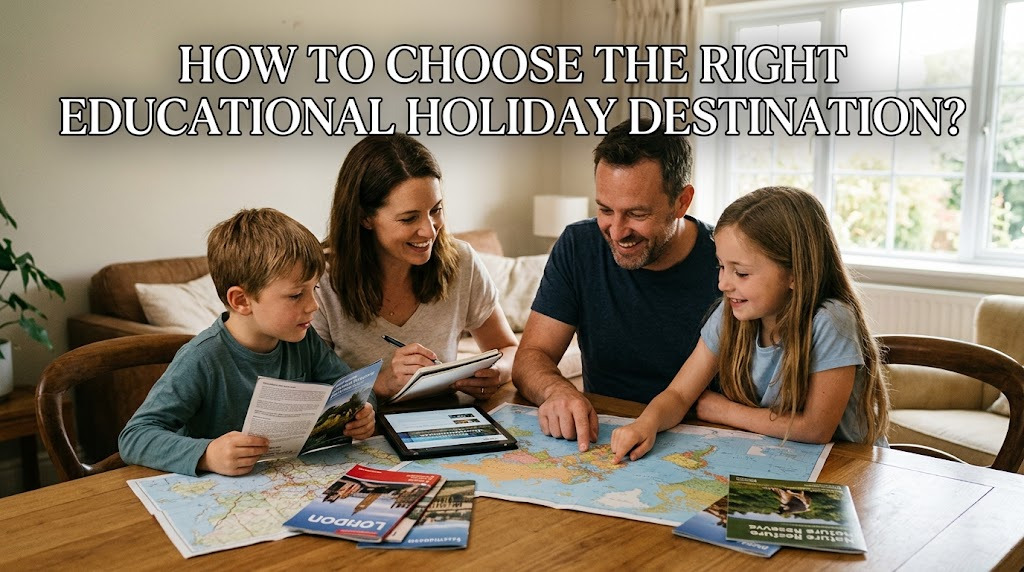
Choosing the right educational holiday destination can make a family trip more enjoyable and meaningful. A good destination should provide opportunities for learning, exploration, and recreation at the same time. Parents need to consider several factors before deciding where to go with their children. The right choice can help children gain new knowledge without making the holiday feel like a regular school activity.
CONSIDER THE CHILD’S AGE
The child's age is an important factor when choosing an educational holiday destination. Young children may enjoy places with simple exhibits, interactive activities, and hands-on experiences, while older children may prefer destinations with more detailed information. Activities that are too difficult can make children lose interest. Therefore, parents should choose a destination that matches the child's ability to understand and participate.
Parents can check the destination's website or information materials before visiting. Look for age recommendations, children's facilities, educational programs, and available activities. It is also useful to consider how long children can comfortably participate in activities. A destination that matches the child's age can make learning more enjoyable and effective.
MATCH THE CHILD’S INTERESTS
Children are more likely to enjoy educational activities when the destination matches their interests. A child who enjoys animals may prefer a zoo, conservation center, or nature park, while a child interested in science may enjoy a science center or planetarium. History enthusiasts may find museums and heritage sites more appealing. Parents can discuss different options with their children before making a decision.
Giving children some choices can make them feel involved in the holiday planning process. However, parents should still consider safety, cost, distance, and the suitability of the destination. The goal is to find a place where children can enjoy themselves while discovering something new. Matching a destination with a child's interests can encourage curiosity and active participation.
CHECK SAFETY AND FACILITIES
Safety should always be a priority when choosing an educational holiday destination. Parents should check safety conditions, rest areas, toilets, food facilities, accessibility, and emergency services when available. Destinations should also have activities that are appropriate for children. Good facilities can make the trip more comfortable for the entire family.
Parents should also review the destination's rules before visiting. Some places may have restrictions regarding certain activities, photography, food, or interaction with exhibits and animals. Children should remain supervised, especially in unfamiliar environments. A safe and comfortable destination allows children to focus more on exploring and learning.
CONSIDER LOCATION AND BUDGET
The location of a destination can affect both travel time and overall expenses. Families should consider transportation costs, entrance fees, meals, accommodation, and additional activities before making a decision. A destination that is closer to home may provide an educational experience without requiring a large travel budget. Comparing several options can help families find a suitable choice.
An expensive destination is not necessarily more educational than an affordable one. Local museums, public libraries, parks, cultural centers, and community programs can also provide valuable learning experiences. Parents should focus on the quality and suitability of the activities rather than the price alone. A realistic budget can make the holiday more comfortable and easier to manage.
LOOK FOR INTERACTIVE ACTIVITIES
Interactive activities can make educational holidays more engaging for children. Parents should look for destinations that allow children to observe, ask questions, experiment, create, or participate directly in activities. These experiences can help children connect information with real situations. Active participation can also make new knowledge easier to remember.
However, parents should avoid planning too many activities in one day. Children need enough time to rest, eat, play, and enjoy the surroundings. Choose the activities that are most relevant to their interests and abilities. A balanced schedule can keep the educational experience fun without making children feel overwhelmed.
CONCLUSION
Choosing the right educational holiday destination requires parents to consider the child's age, interests, safety, facilities, location, budget, and available interactive activities. A suitable destination should provide learning opportunities while still allowing children to relax and enjoy the holiday. Parents can compare several destinations and involve children in the decision-making process. With careful planning, an educational holiday can become a comfortable, enjoyable, and valuable family experience.
Tentang Penulis
Gusti Ayu Tita P
Penulis — Universitas STEKOM
Penulis aktif yang berfokus pada isu-isu akademik, teknologi pendidikan, dan pengembangan sumber daya manusia di lingkungan kampus.