How to Handle Inherited Land Disputes Properly?
Gusti Ayu Tita P
2 September 2026
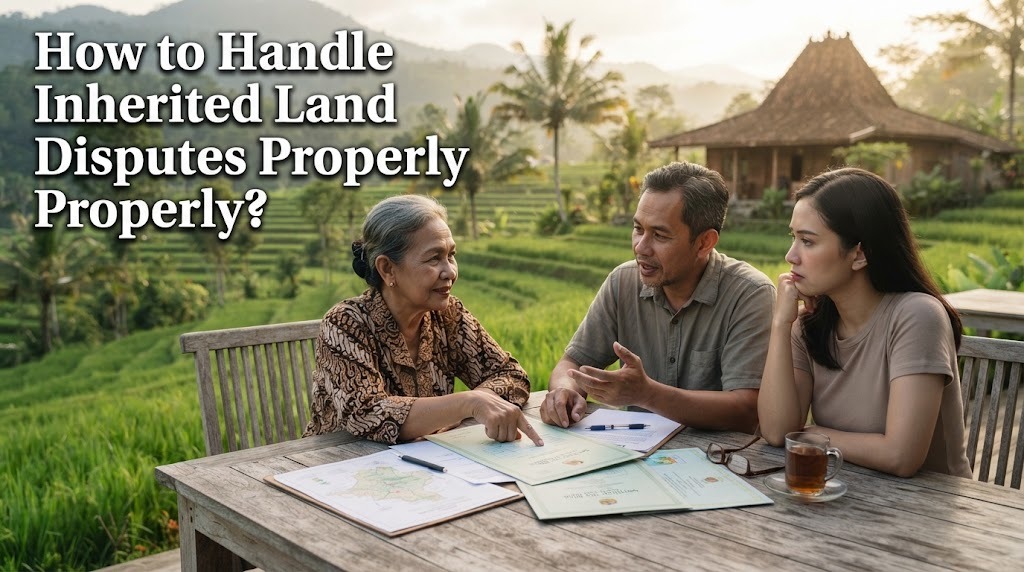
Inherited land disputes can become complicated because they involve both family relationships and legal rights to property. Disagreements may arise over who qualifies as an heir, how much each person should receive, or who has the right to control the inherited land. Problems can also occur when land documents are incomplete, ownership has not been transferred to the heirs, or one heir uses the property without agreement from the others. Handling the dispute carefully is important to protect everyone's rights and prevent the conflict from becoming more serious.
IDENTIFY THE LEGAL HEIRS
The first step is to establish who the legal heirs are. Collect documents such as the deceased person's death certificate, family records, marriage documents, birth certificates, and other documents that establish family relationships. The applicable inheritance law should also be identified because inheritance rules can differ depending on the legal system applicable to the family. For example, inheritance matters involving Muslims in Indonesia may fall within the jurisdiction of the Religious Court.
Do not assume that only the family members who currently occupy the land are entitled to inherit it. The legal status of every potential heir should be verified before the property is divided or transferred. If there are disagreements about the list of heirs, obtaining an appropriate inheritance determination or pursuing the relevant legal procedure may be necessary. Establishing the heirs first creates a clearer foundation for resolving the land dispute.
VERIFY THE STATUS OF THE INHERITED LAND
After identifying the heirs, determine whether the disputed property actually belonged to the deceased. Review the land certificate, purchase deed, grant documents, previous ownership records, and other relevant documents. Check the registered owner's name, land area, location, and boundaries against the actual property. This process can reveal whether the land was individually owned, jointly owned, or subject to another person's rights.
The property's status should be clarified before any division takes place. If the certificate is still registered in the deceased person's name, the heirs may need to complete the applicable inheritance and land registration procedures. If there are conflicting certificates or ownership claims, additional investigation may be required. The more complicated the land history is, the more important it becomes to verify the records before making an agreement.
COLLECT ALL RELEVANT EVIDENCE
Evidence is essential when an inherited land dispute cannot be resolved through discussion. Gather the land certificate, inheritance documents, previous sale and purchase documents, grant records, tax documents, photographs, correspondence, and other records connected to the property. Documents showing how the deceased acquired the land can also help establish the ownership history. Keep both original documents and secure copies.
Witnesses may also provide useful information about the deceased's ownership, previous transactions, boundaries, or long-term possession of the land. However, witness statements should ideally be supported by documentary evidence. Arrange the evidence chronologically so that the history of the property can be explained clearly. This can make it easier to identify where the disagreement actually began.
DISCUSS THE MATTER THROUGH FAMILY NEGOTIATION
Before pursuing formal legal action, the heirs should consider resolving the dispute through family discussion. Each person should have an opportunity to present their understanding of the inheritance and review the available documents. The discussion may result in an agreement concerning the division, use, sale, or management of the inherited land. A voluntary settlement can often reduce both financial costs and damage to family relationships.
Any agreement should be put in writing rather than relying solely on verbal promises. The agreement should clearly identify the heirs, the land, the agreed distribution, and the responsibilities of each party. If the agreement involves transferring or registering land rights, the heirs should also complete the necessary procedures with the relevant land authorities. This helps ensure that the family agreement is properly reflected in the property's legal records.
USE MEDIATION IF FAMILY NEGOTIATION FAILS
If the heirs cannot reach an agreement on their own, mediation can provide a structured way to continue negotiations. A neutral mediator can help the parties identify the actual issues and explore possible solutions. Mediation may address questions such as land division, temporary use, sale of the property, or compensation between heirs. It can be particularly useful when the parties still want to preserve their family relationship.
The parties should bring their relevant documents to the mediation process. If a settlement is reached, its terms should be recorded clearly and implemented through the appropriate legal and administrative procedures. If mediation fails, the parties may still have the option of pursuing formal legal proceedings. Mediation should therefore be viewed as an opportunity to find a practical solution rather than as a determination of ownership.
AVOID SELLING OR CONTROLLING THE LAND UNILATERALLY
One of the most important rules during an inheritance dispute is to avoid taking unilateral action. An heir should not simply sell, transfer, demolish, or permanently occupy disputed inherited land without considering the rights of the other heirs. Such actions can create additional disputes and may expose the person taking the action to further legal consequences. The safest approach is to clarify the legal status of the property and the rights of all relevant parties first.
If one heir is already occupying the property, document the situation and communicate with the other heirs. Avoid using physical force to take possession of the land, even if you believe you have a stronger inheritance claim. Instead, use negotiation, mediation, or appropriate legal procedures. Protecting the existing condition of the property can also help preserve important evidence.
COMPLETE THE INHERITANCE AND LAND REGISTRATION PROCESS
Once the heirs have been determined and the distribution has been agreed upon or established through a legal process, the land records should be updated. The heirs may need to submit inheritance and land documents to the relevant land authority. The exact procedure depends on the type of land right, the available documents, and the circumstances of the inheritance.
Completing the administrative process is important because an informal family agreement may not by itself update the registered land records. Make sure the names, land area, boundaries, and ownership information are recorded correctly. Keep copies of documents submitted and received during the process. Proper registration can reduce the possibility of another dispute arising in the future.
TAKE THE DISPUTE TO COURT WHEN NECESSARY
If negotiation and mediation do not resolve the conflict, formal legal proceedings may be necessary. The appropriate court depends on the parties involved, the applicable inheritance law, and the nature of the dispute. For inheritance matters involving Muslims in Indonesia, certain inheritance disputes fall under the jurisdiction of the Religious Court, while other land-related disputes may involve different legal jurisdictions.
Before filing a case, the claimant should organize evidence and clearly identify the disputed property and relevant parties. A lawyer can help assess the ownership documents, inheritance status, legal claims, and appropriate court procedure. This is particularly important when the dispute involves multiple heirs, disputed certificates, previous land transfers, or unclear boundaries. Careful preparation can reduce the risk of procedural problems and strengthen the presentation of the case.
CONCLUSION
Inherited land disputes should be handled carefully because they involve property rights as well as family relationships. Start by identifying the legal heirs, verifying the deceased's ownership, and collecting documents that establish the history of the land. Family negotiation and mediation should be considered before formal litigation whenever a peaceful settlement remains possible. Avoid selling or controlling disputed land unilaterally, and complete the necessary inheritance and land registration procedures once an agreement or legal determination has been reached. When the dispute cannot be resolved amicably, professional legal assistance can help determine the appropriate legal steps.
Tentang Penulis
Gusti Ayu Tita P
Penulis — Universitas STEKOM
Penulis aktif yang berfokus pada isu-isu akademik, teknologi pendidikan, dan pengembangan sumber daya manusia di lingkungan kampus.