How to Keep Your Belongings Safe During Homecoming?
Gusti Ayu Tita P
10 Agustus 2026
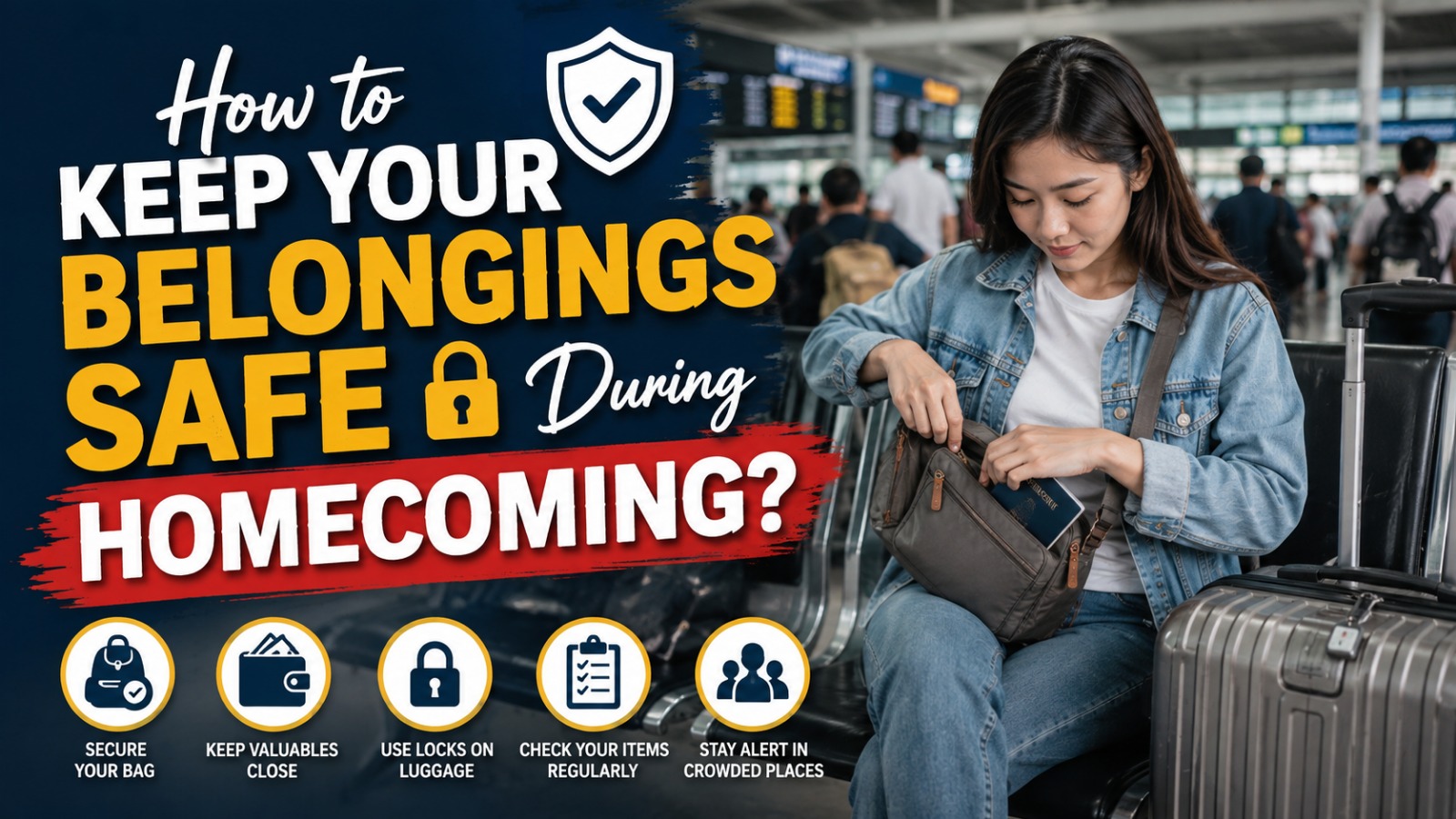
Homecoming is an exciting time for people who travel to their hometown to spend time with family and loved ones. However, crowded roads, busy terminals, rest areas, and public transportation can increase the risk of losing or damaging personal belongings. Keeping your belongings safe during homecoming requires simple but consistent precautions before and throughout the journey. Important items such as money, identification documents, mobile phones, and electronic devices should receive extra attention. With proper preparation, travelers can enjoy a more comfortable and worry-free trip.
MAKE A LIST OF IMPORTANT BELONGINGS
Before leaving home, make a checklist of essential belongings that you need during the journey. The list may include identification documents, wallets, mobile phones, chargers, medication, keys, and other personal necessities. Checking the list before leaving can prevent important items from being forgotten. It also makes it easier to check your belongings again after arriving at rest areas or changing transportation.
Avoid bringing unnecessary valuables if they are not needed during the trip. The fewer valuable items you carry, the easier it is to monitor everything. Organizing belongings carefully can also save time when you need something on the road. Keep frequently used items in an accessible place while storing less important items separately.
KEEP VALUABLE ITEMS CLOSE TO YOU
Money, identification documents, mobile phones, and other valuable items should always be kept within your reach. When using public transportation, avoid placing valuable belongings in an open bag or an easily accessible outer pocket. A small crossbody bag or secure waist bag can make important items easier to monitor. If you are traveling by car, do not leave valuable objects visible inside the vehicle.
Be especially careful when entering crowded areas such as terminals, stations, markets, rest areas, and tourist destinations. Crowded environments can make it difficult to notice when someone touches or moves your belongings. Personal awareness is one of the simplest ways to reduce the risk of loss. Check your important items regularly, especially after moving from one location to another.
USE SECURE BAGS AND LUGGAGE
Choosing the right bag can make a significant difference when traveling long distances. Use luggage with strong zippers, reliable handles, and durable materials to protect your belongings from accidental damage. Backpacks and travel bags should be closed properly whenever you are not accessing them. If possible, use luggage locks for suitcases that contain important or valuable items.
Avoid placing valuable objects in the outer compartments of your luggage. These sections are convenient but may provide easier access to other people. Place important belongings in an inner compartment or a dedicated organizer instead. Secure luggage placement can provide additional protection while you are traveling through crowded locations.
LABEL YOUR LUGGAGE CLEARLY
Luggage can easily be confused with someone else's, especially when many travelers use similar suitcases and bags. Attach a clear luggage tag containing your name and a safe contact method. You can also use a distinctive luggage strap or another simple identifier to make your bag easier to recognize. Avoid displaying unnecessary personal information that could compromise your privacy.
Take a photo of your luggage before starting the journey. A photograph can help you identify the bag quickly and may be useful if the luggage becomes difficult to locate. If traveling with several bags, make a short record of each item. Simple identification methods can make the process easier if luggage is misplaced or accidentally taken by another traveler.
PROTECT YOUR PHONE AND ELECTRONIC DEVICES
Mobile phones, tablets, cameras, and other electronic devices are often used during long journeys. Because these items are valuable and easy to carry, they should receive extra protection. Use a secure phone case and keep electronic devices in a dedicated compartment when they are not being used. Avoid placing your phone on seats, restaurant tables, or public charging areas where it can easily be forgotten.
It is also important to protect the information stored on your devices. Use a screen lock, strong password, or biometric security whenever available. Back up important files before traveling in case a device is lost or damaged. Digital security is just as important as physical security when protecting personal belongings.
BE CAREFUL WHEN USING PUBLIC TRANSPORTATION
Traveling by bus, train, airplane, or other public transportation requires additional attention to personal belongings. Keep small valuables in a secure personal bag rather than placing them far away from your seat. When storing luggage in an overhead compartment or luggage area, remember where it was placed. Check your belongings before leaving the vehicle.
During stops or transfers, avoid becoming distracted by unnecessary activities. Keep your bags close when moving through terminals or waiting areas. If you need to leave your seat temporarily, take valuable items with you whenever practical. Extra attention during transfers can prevent belongings from being accidentally left behind or taken by someone else.
AVOID SHOWING VALUABLE ITEMS IN PUBLIC
Displaying expensive phones, jewelry, large amounts of cash, or other valuable possessions can attract unwanted attention. This does not mean travelers need to hide everything, but they should use discretion in public places. Keep cash in a secure wallet and avoid counting money openly in crowded areas. Expensive accessories can also be stored safely when they are not necessary.
When taking photos or using electronic devices, remain aware of your surroundings. Do not become so focused on your phone that you stop paying attention to your bags. Situational awareness is particularly important in busy travel environments. A calm and observant traveler is generally better prepared to respond to unexpected situations.
PREPARE DIGITAL AND EMERGENCY BACKUPS
Important documents should have secure backups before the journey. Consider keeping digital copies of identification documents, tickets, reservations, and other essential information in a secure location. However, digital copies should not replace original documents when originals are legally required. Backup information can still be useful when you need to verify details or access important information quickly.
It is also wise to keep emergency contact information available. Store important phone numbers separately so they remain accessible if your primary device becomes unavailable. If possible, carry a small amount of emergency money separately from your main wallet. Backup planning can reduce stress when unexpected problems occur during the journey.
CHECK YOUR BELONGINGS BEFORE EVERY STOP AND TRANSFER
One simple habit can prevent many travel-related losses: check your belongings every time you leave a location. Before leaving a vehicle, restaurant, rest area, hotel, or waiting room, look around your seat and surrounding area. Check your phone, wallet, documents, luggage, and other essential items. This habit takes only a few seconds but can prevent significant problems.
Create a quick mental routine before moving to another location. Stop, check, and continue can become a simple travel habit for individuals and families. Parents should also remind children to keep their personal items in a safe place. Consistent checking is especially useful during busy homecoming periods when travelers frequently change locations.
CONCLUSION
Keeping belongings safe during homecoming starts with preparation and continues through every stage of the journey. Make a checklist, use secure bags, protect valuable items, label luggage, and remain alert in crowded places. Travelers should also protect their electronic devices and prepare digital backups of important information. These simple measures can significantly reduce the risk of losing valuable belongings.
Homecoming should be an enjoyable opportunity to reconnect with family rather than a stressful experience caused by lost possessions. By practicing good travel habits and staying aware of your surroundings, travelers can protect their belongings more effectively. Careful preparation does not require complicated equipment or expensive solutions. Consistency, organization, and awareness are the most important parts of safe travel.
Tentang Penulis
Gusti Ayu Tita P
Penulis — Universitas STEKOM
Penulis aktif yang berfokus pada isu-isu akademik, teknologi pendidikan, dan pengembangan sumber daya manusia di lingkungan kampus.