How to Make Educational Holidays More Interesting and Meaningful?
Gusti Ayu Tita P
1 September 2026
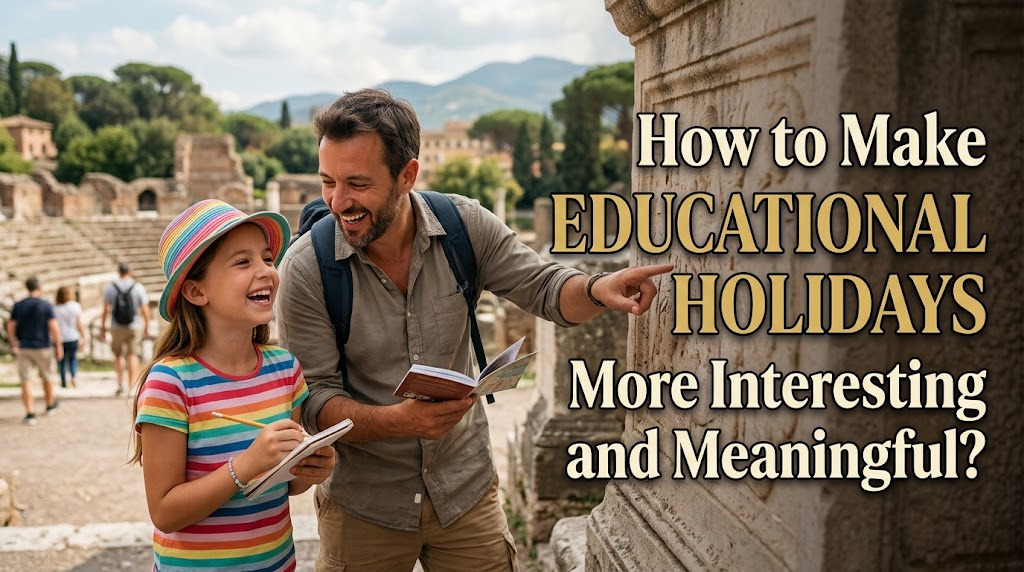
Educational holidays can provide children with valuable opportunities to learn while enjoying time away from school. However, educational activities should be presented in an engaging way so children do not feel like they are attending another classroom lesson. Parents can combine learning, exploration, creativity, and recreation to create a more enjoyable experience. With simple preparation, a holiday can become both interesting and meaningful.
CHOOSE ACTIVITIES BASED ON INTERESTS
The first step is to choose activities that match children's interests. Children who enjoy animals may prefer zoos, conservation areas, or nature parks, while those interested in science may enjoy science centers or planetariums. Children who like history may find museums and historical sites more appealing. When an activity matches their interests, they are more likely to participate enthusiastically.
Parents can discuss several options with children before planning the trip. Allowing them to choose between suitable activities can make them feel involved in the process. Parents should still consider age, safety, cost, and accessibility before making the final decision. Activities that match children's interests can make learning feel more natural and enjoyable.
MAKE LEARNING INTERACTIVE
Interactive activities can make educational holidays more engaging than simply observing exhibits. Children can be encouraged to touch approved interactive displays, conduct safe experiments, solve simple challenges, create projects, or participate in demonstrations. Active participation helps them become involved in the learning process. It can also make new information easier to remember.
Parents can create simple games related to the destination. For example, children can look for specific objects in a museum or identify different plants during a nature walk. These activities should remain fun and suitable for their age. Interactive learning can turn ordinary sightseeing into an exciting discovery experience.
GIVE CHILDREN FREEDOM TO EXPLORE
Children need opportunities to explore according to their own interests. Parents should avoid controlling every activity or explaining everything before children have a chance to observe. Instead, encourage them to look around, ask questions, make observations, and share their opinions. This approach can help develop curiosity and independent thinking.
Parents can provide guidance when children need help while still allowing them to make simple choices. For example, children can choose which exhibit they want to explore first. Appropriate supervision should always be maintained, especially in unfamiliar places. Giving children space to explore can make the holiday feel more personal and meaningful.
BALANCE EDUCATION WITH RECREATION
An educational holiday should still feel like a holiday. Families should include enough time for resting, playing, eating, relaxing, and enjoying the destination without specific learning goals. A schedule that is too full can make children tired and reduce their interest in activities. A balanced itinerary allows everyone to enjoy the trip more comfortably.
Parents do not need to visit every educational attraction in one day. It is better to choose a few activities that are meaningful and suitable for the family. Leave some flexibility in the schedule in case children need additional rest. Balancing education and recreation can keep the holiday enjoyable and stress-free.
REFLECT ON THE EXPERIENCE
After the trip, families can discuss what they experienced and learned. Children can be encouraged to share their favorite activity, explain something new they discovered, or create a drawing, story, or simple travel journal. These activities can help them remember important information. Reflection also gives parents an opportunity to understand which activities interested their children most.
The discussion should be relaxed rather than treated as a test. Parents can ask open-ended questions and listen to children's opinions. This can encourage them to express their thoughts and connect different experiences. Reflecting on the trip can help turn a short holiday into a lasting learning experience.
CONCLUSION
Educational holidays can become more interesting and meaningful by choosing activities based on children's interests, using interactive learning, allowing exploration, balancing education with recreation, and reflecting on the experience afterward. Parents do not need to create complicated educational programs. Simple activities can provide valuable learning opportunities when children are actively involved. With a comfortable and enjoyable approach, educational holidays can create knowledge, curiosity, and memorable family experiences.
Tentang Penulis
Gusti Ayu Tita P
Penulis — Universitas STEKOM
Penulis aktif yang berfokus pada isu-isu akademik, teknologi pendidikan, dan pengembangan sumber daya manusia di lingkungan kampus.