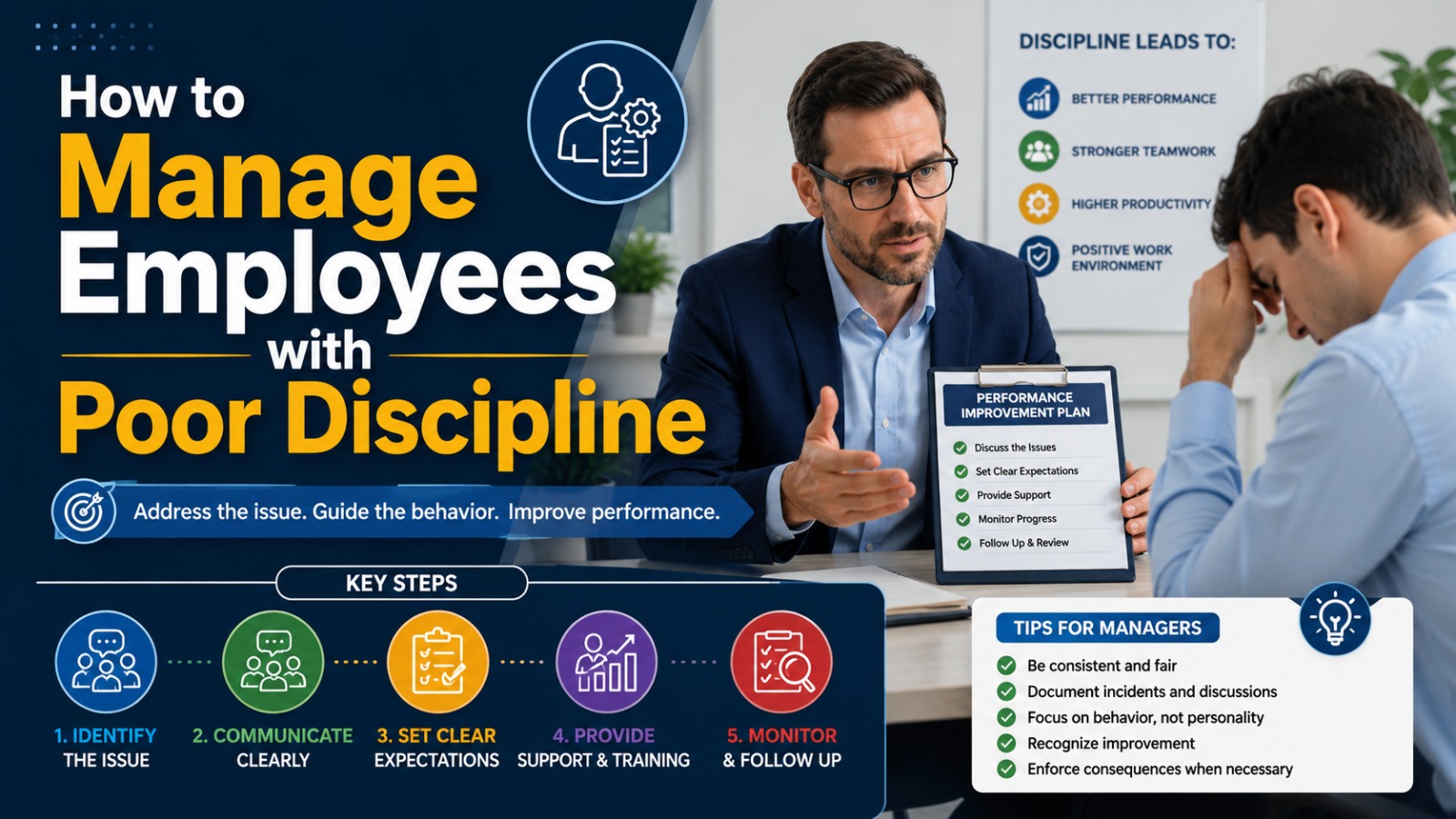
Managing employees with poor discipline can be a challenging task for any organization. Undisciplined behavior in the workplace may reduce productivity, affect team morale, and create conflicts among employees. Common issues include frequent lateness, missed deadlines, lack of responsibility, poor communication, and failure to follow company policies.
However, handling discipline problems effectively requires more than punishment. Managers should focus on understanding the root causes, improving communication, and guiding employees toward positive behavioral changes. A fair and professional approach can help organizations maintain a productive and respectful work environment.
IDENTIFY THE ROOT CAUSE OF THE PROBLEM
Before taking corrective action, managers should first understand why the employee is showing poor discipline. Sometimes workplace behavior is influenced by personal stress, unclear expectations, low motivation, or dissatisfaction with the job.
Managers can schedule private conversations with employees to discuss concerns openly. Listening carefully helps identify the real problem and allows managers to provide more effective solutions.
SET CLEAR RULES AND EXPECTATIONS
Employees cannot follow workplace standards if expectations are unclear. Organizations should establish clear rules regarding attendance, communication, deadlines, and workplace behavior.
Managers should ensure employees understand company policies and their responsibilities from the beginning. Written guidelines and regular reminders can help reinforce discipline standards.
IMPORTANT AREAS TO CLARIFY
- Attendance policies
- Work deadlines
- Communication standards
- Team responsibilities
- Workplace ethics
Clear expectations reduce misunderstandings and encourage accountability.
COMMUNICATE PROFESSIONALLY AND DIRECTLY
When addressing discipline problems, managers should communicate calmly and professionally. Avoid emotional reactions or public criticism because these actions may damage employee confidence and workplace relationships.
Private discussions are more effective for addressing behavioral issues. Managers should explain the problem clearly, provide examples, and discuss how the behavior affects the team or organization.
Constructive communication increases the chance of positive improvement.
PROVIDE CONSTRUCTIVE FEEDBACK
Feedback should focus on behavior rather than personal attacks. Employees are more likely to respond positively when feedback is fair, specific, and solution-oriented.
Managers can explain:
- What behavior needs improvement
- Why the behavior is problematic
- What changes are expected
- How the company can support improvement
Employees who understand expectations are more likely to take corrective action.
APPLY CONSISTENT DISCIPLINARY ACTIONS
Consistency is essential when managing employee discipline. Favoritism or inconsistent treatment can create frustration among team members and damage workplace trust.
Companies should apply disciplinary procedures fairly to all employees. Depending on company policy, disciplinary actions may include:
VERBAL WARNING
Managers discuss the issue informally and remind employees about expectations.
WRITTEN WARNING
A formal notice documents repeated behavioral problems and required improvements.
PERFORMANCE IMPROVEMENT PLAN
Employees receive structured guidance and measurable goals for behavioral correction.
FINAL ACTION
If no improvement occurs after repeated support and warnings, stronger action such as suspension or termination may be necessary.
Consistent enforcement helps maintain workplace professionalism and accountability.
RECOGNIZE POSITIVE IMPROVEMENTS
Employees who improve their behavior should receive recognition and encouragement. Positive reinforcement motivates employees to maintain better discipline and performance.
Simple appreciation, supportive feedback, or acknowledgment during meetings can strengthen employee confidence and engagement.
BUILD A POSITIVE WORK ENVIRONMENT
Poor discipline may sometimes reflect broader workplace problems such as stress, low morale, or weak leadership. Creating a positive work culture can reduce disciplinary issues significantly.
A healthy workplace should encourage:
- Open communication
- Mutual respect
- Team collaboration
- Employee support
- Fair treatment
Employees are more likely to follow workplace rules when they feel respected and motivated.
OFFER TRAINING AND DEVELOPMENT
Some discipline problems result from a lack of skills or understanding. Training programs can help employees improve time management, communication, teamwork, and professional behavior.
Coaching and mentoring may also help employees develop stronger workplace habits.
DOCUMENT ALL DISCIPLINARY ISSUES
Managers should keep accurate records of disciplinary discussions, warnings, and improvement plans. Documentation protects both the organization and employees by ensuring transparency and fairness.
Proper records are also useful if further action becomes necessary in the future.
CONCLUSION
Managing employees with poor discipline requires patience, consistency, and effective communication. Instead of relying only on punishment, organizations should focus on understanding the causes of behavioral problems and supporting employee improvement.
By setting clear expectations, providing constructive feedback, applying fair disciplinary actions, and building a positive work environment, companies can improve employee discipline and maintain a productive workplace culture.
Tentang Penulis
Gusti Ayu Tita P
Penulis — Universitas STEKOM
Penulis aktif yang berfokus pada isu-isu akademik, teknologi pendidikan, dan pengembangan sumber daya manusia di lingkungan kampus.