How to Prepare Effectively for the Madrasah Examination?
Gusti Ayu Tita P
29 Agustus 2026
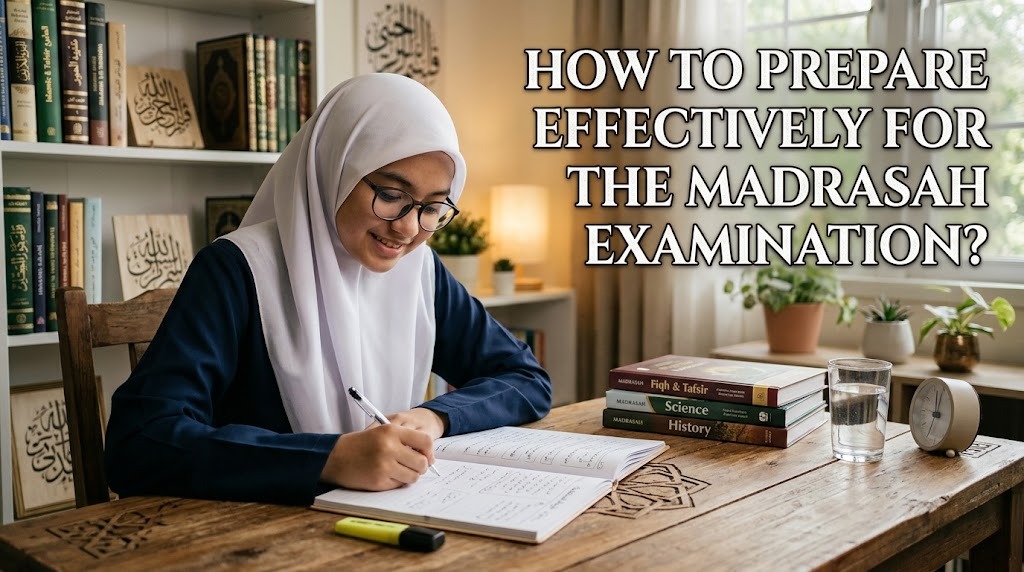
The Madrasah Examination is an important academic assessment for students in Islamic schools. Good preparation can help students understand the material, manage exam pressure, and answer questions more confidently. Studying at the last minute is often less effective because students have limited time to review a large amount of information. For this reason, preparation should begin early and follow a clear study plan.
Effective preparation is not only about studying for long hours. Students also need to use suitable learning methods, practice questions, get enough sleep, and maintain a positive mindset. With consistent preparation, students can face the Madrasah Examination in a more organized and confident way.
UNDERSTAND THE EXAM MATERIAL
The first step in preparing for the Madrasah Examination is understanding the material that may be tested. Students should review their textbooks, class notes, assignments, and learning materials provided by their teachers. If the school provides an examination outline or study guide, use it to identify the main topics that require attention. This can prevent students from spending too much time studying information that is less relevant.
After identifying the material, divide it into smaller topics. Mark the subjects that are already well understood and those that still seem difficult. Give more study time to difficult topics while continuing to review easier ones. This approach makes studying more focused and manageable.
CREATE A REALISTIC STUDY SCHEDULE
A realistic study schedule can make exam preparation more organized. Students should consider the number of subjects, the difficulty of each subject, and the amount of time available before the examination. Avoid creating an overly demanding schedule because it can lead to fatigue and reduce motivation. A simple schedule that can be followed consistently is usually more effective.
Set specific study targets for each session. For example, students can focus on one topic, review a chapter, or complete a set of practice questions. Include short breaks between study sessions to maintain concentration. The schedule should also leave enough time for sleep, meals, worship, and other necessary activities.
USE EFFECTIVE LEARNING METHODS
Every student may have a different learning style, so it is important to find a method that works well personally. Reading notes repeatedly is not always enough to build strong understanding. Students can try summarizing lessons, creating mind maps, explaining concepts in their own words, or using flashcards. Active learning methods can make study sessions more engaging.
Self testing is another useful method. After studying a topic, close the book and try to explain the important points without looking at the notes. This helps students identify which parts they actually understand and which parts require further review. Combining several learning methods can make preparation more effective.
PRACTICE WITH EXAM QUESTIONS
Practice questions are essential for preparing for the Madrasah Examination. They allow students to test their understanding and become familiar with different question formats. Regular practice can also improve accuracy and help students manage their time. Use questions from reliable educational materials that are appropriate for the subjects being studied.
Do not focus only on the number of questions completed. Review every incorrect answer and understand why the mistake happened. Write down difficult concepts and study them again. This process turns mistakes into opportunities for improvement.
REVIEW RELIGIOUS STUDIES
Religious studies are an important part of education in madrasah. Depending on the school and educational level, students may need to review subjects such as Quran and Hadith, Islamic jurisprudence, Islamic creed and ethics, and Islamic cultural history. Understanding the meaning and application of the material is generally more useful than memorizing isolated information. Students should review the topics according to the curriculum and guidance provided by their teachers.
For Quran and Hadith lessons, pay attention to the meaning and main messages of the texts studied. For Islamic jurisprudence, understand the rules and procedures covered in class. For Islamic creed and ethics, review important concepts and examples of good character. For Islamic cultural history, organize important figures, events, causes, and impacts to make the information easier to remember.
STRENGTHEN CORE ACADEMIC SUBJECTS
Students should also review their main academic subjects according to their grade level and curriculum. Subjects may include Indonesian language, mathematics, science, social studies, English, or other subjects taught at the madrasah. Focus on important concepts, formulas, definitions, and problem solving skills. Do not rely only on memorization if the examination requires students to apply concepts.
For subjects such as mathematics and science, regular problem solving is especially useful. For language subjects, practice reading comprehension, vocabulary, grammar, and identifying important information in texts. For social studies, use timelines, tables, or concept maps to connect important ideas. Adjust the learning method to the characteristics of each subject.
STUDY YOUR MISTAKES
Mistakes are a normal part of the learning process. When students get a practice question wrong, they should identify the reason instead of simply memorizing the correct answer. The mistake may happen because of a misunderstanding, lack of knowledge, careless reading, or poor time management. Knowing the cause makes it easier to prevent the same mistake in the future.
Create a small review list containing difficult topics and frequently repeated mistakes. Revisit this list regularly before the examination. Ask a teacher or classmate for help when a concept remains unclear. This habit can gradually strengthen understanding and improve confidence.
REDUCE DISTRACTIONS
A focused study environment can improve the quality of learning. Mobile phone notifications, social media, games, and unnecessary conversations can interrupt concentration. Students should choose a quiet and comfortable place to study whenever possible. Turning off unnecessary notifications can also make it easier to stay focused.
Technology can still be useful when it supports learning. Students can use educational videos, digital notes, online exercises, or other reliable learning resources. However, entertainment should not take over the study session. Set specific times for using social media so it does not interfere with preparation.
GET ENOUGH SLEEP AND REST
Studying for many hours without enough rest can make learning less effective. Students need adequate sleep to maintain concentration and energy. Staying awake all night before an examination may leave the body tired and make it harder to focus. Therefore, students should avoid relying on last minute study sessions.
Take short breaks during longer study periods. Eat regularly, drink enough water, and maintain healthy daily habits. Light physical activity can also help students stay active during the preparation period. A healthy body supports better concentration and learning performance.
PREPARE FOR EXAM DAY
Exam preparation should also include practical arrangements. Students should know the examination schedule, location, rules, and permitted equipment. Prepare necessary items the day before to avoid rushing in the morning. If the examination uses digital devices or a specific technical system, make sure to understand the instructions provided by the school.
Arrive early enough to settle down before the examination begins. Read every instruction carefully and manage the available time wisely. If a difficult question appears, stay calm and move to another question when appropriate. Return to the difficult question later if time allows.
BUILD CONFIDENCE AND STAY CALM
Feeling nervous before an examination is normal. However, excessive worry can make it difficult to concentrate and recall information. Proper preparation can reduce uncertainty and help students feel more confident. Students should focus on the effort they have made rather than constantly worrying about the final result.
Simple relaxation techniques can also help before the examination. Take slow, steady breaths and give yourself a moment to settle down. Avoid comparing your preparation with other students because everyone has different abilities and learning speeds. Enter the examination with the goal of doing your best and applying what you have learned.
CONCLUSION
Preparing effectively for the Madrasah Examination requires more than simply studying for long hours. Students should understand the examination material, create a realistic study schedule, use effective learning methods, practice questions, and review their mistakes. Religious and core academic subjects should be studied according to the curriculum and guidance provided by the madrasah.
Students should also take care of their physical and mental condition throughout the preparation period. Getting enough sleep, reducing distractions, preparing examination equipment, and maintaining confidence can support better performance. With consistent preparation and a balanced approach, students can face the Madrasah Examination in a calmer, more focused, and confident manner.
Tentang Penulis
Gusti Ayu Tita P
Penulis — Universitas STEKOM
Penulis aktif yang berfokus pada isu-isu akademik, teknologi pendidikan, dan pengembangan sumber daya manusia di lingkungan kampus.