
How to Preserve Temples as Valuable Historical Heritage?
Gusti Ayu Tita P
4 September 2026
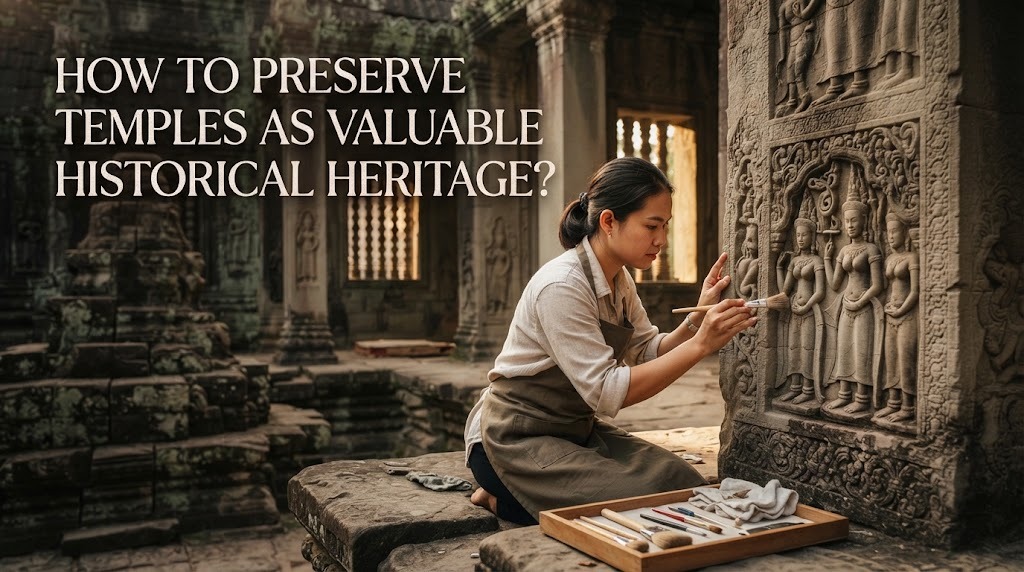
Temples are important historical heritage sites that provide valuable information about the past. They reflect the development of religion, architecture, art, technology, and society in different periods of history. Many ancient temples have survived for hundreds or even thousands of years, but their condition can be affected by natural and human activities. Proper preservation is therefore necessary to protect their physical structure and historical meaning. Everyone, including governments, local communities, researchers, and visitors, can contribute to temple preservation.
FOLLOW PRESERVATION RULES
Following preservation rules is one of the simplest ways to protect historical temples. Visitors should follow instructions provided by site managers and avoid entering restricted areas. Climbing fragile structures or touching ancient carvings can cause gradual physical damage. Visitors should also avoid leaning against walls or sitting on parts of the temple that are not designated for visitors. These simple behaviors can help reduce unnecessary pressure on ancient structures.
Rules may differ from one temple site to another depending on its condition and cultural significance. Some areas may have visitor limits or specific routes designed to protect fragile structures. Visitors should read information boards and follow directions from authorized staff. Respecting these regulations shows appreciation for the historical value of the site.
PREVENT VANDALISM AND DAMAGE
Vandalism is a serious threat to historical heritage because it can permanently affect the appearance and authenticity of ancient structures. Writing names, drawing pictures, attaching stickers, or scratching temple stones should never be done. Removing graffiti can also be difficult because inappropriate cleaning methods may damage the original surface. Even seemingly small marks can reduce the historical value of a heritage site.
Visitors should also avoid moving stones or taking objects from temple grounds. Ancient stones, sculptures, and other archaeological remains may have important historical information. They should remain in their original context whenever possible. If visitors notice vandalism or suspicious activity, they should report it to site staff instead of attempting to handle the situation themselves.
PROTECT RELIEFS AND SCULPTURES
Reliefs and sculptures are among the most valuable elements of many ancient temples. They can provide information about religious beliefs, artistic traditions, clothing, architecture, and daily life in the past. Because many of these details are delicate, they require careful protection. Visitors should avoid touching, climbing, rubbing, or placing objects against carvings. Physical contact can contribute to surface wear over time.
Photography should also be conducted responsibly. Visitors should follow restrictions regarding flash photography, equipment, or access to specific areas when such rules are provided. Researchers and conservation specialists may use specialized methods to document fragile details without damaging them. Protecting reliefs and sculptures helps preserve important historical information for future generations.
KEEP THE TEMPLE ENVIRONMENT CLEAN
Preservation should include not only the temple structure but also its surrounding environment. Visitors should never leave food packaging, plastic bottles, tissues, or other waste around the site. Waste can make the area unattractive and may create environmental problems that affect the heritage landscape. Use designated waste facilities whenever available. If no bin is nearby, keep the waste until it can be disposed of properly.
The surrounding landscape should also be treated with care. Visitors should avoid damaging plants, removing stones, or disturbing archaeological areas. A temple is often part of a larger cultural landscape, so preserving its surroundings can be just as important as protecting the main structure. Clean and well-maintained surroundings support both conservation and responsible tourism.
SUPPORT PROFESSIONAL CONSERVATION
Ancient temples require professional conservation because their materials and structures can be extremely complex. Conservation specialists may monitor changes in stone surfaces, structural stability, moisture, biological growth, and other factors. Any repair or restoration should be based on careful research and documentation. Using unsuitable materials or methods can cause additional damage to historical structures. Professional conservation therefore requires knowledge of archaeology, architecture, materials, and heritage management.
Governments and heritage institutions have an important role in providing resources for conservation programs. Regular inspections can help identify problems before they become more serious. Documentation also helps researchers understand changes in the condition of a temple over time. Long-term conservation planning is essential for protecting ancient sites.
EDUCATE THE PUBLIC ABOUT HERITAGE
Education can encourage people to understand why historical temples need protection. Schools, museums, cultural institutions, and tourism programs can introduce students and visitors to the history of temple sites. People who understand the cultural value of a monument are more likely to treat it responsibly. Educational information can explain why touching carvings, climbing structures, or removing stones can cause lasting damage. This knowledge can help build a stronger culture of heritage preservation.
Temple tourism can also include educational activities that encourage responsible behavior. Information boards, guided tours, exhibitions, and digital resources can explain the significance of different parts of a temple. Clear information makes preservation rules easier for visitors to understand. Education is therefore an important part of long-term conservation.
INVOLVE LOCAL COMMUNITIES
Local communities can play an important role in protecting historical temples. People who live near heritage sites often have valuable knowledge about local traditions, history, and environmental conditions. Their involvement can support monitoring, tourism management, cultural activities, and heritage education. Conservation programs are generally stronger when local communities understand their benefits and participate in decision-making.
Responsible tourism can also provide economic opportunities for nearby communities. Local guides, artisans, food businesses, and other services can benefit from visitors when tourism is managed sustainably. Economic benefits can encourage greater community support for heritage protection. However, tourism development should always be balanced with the need to protect the temple and its surroundings.
REPORT DAMAGE TO AUTHORIZED STAFF
Visitors can help conservation efforts by reporting damage as soon as they notice it. Problems may include broken stones, unstable structures, graffiti, damaged barriers, or other unusual conditions. Visitors should not attempt to repair or move historical objects themselves. Untrained intervention can make the problem worse or destroy important archaeological evidence. Instead, report the issue to authorized staff or the organization responsible for managing the site.
Quick reporting can help conservation teams investigate problems before they become more serious. Photographs may be useful when they are permitted and can be taken without entering restricted areas. Visitors should always prioritize their own safety and follow staff instructions. Public awareness can therefore become an additional layer of protection for historical heritage.
CONCLUSION
Preserving temples as valuable historical heritage requires cooperation between authorities, conservation experts, local communities, and visitors. Simple actions such as following site rules, preventing vandalism, protecting reliefs, and keeping the environment clean can make a meaningful difference. Professional conservation, regular monitoring, research, and proper restoration are also essential for protecting ancient structures. Public education can further encourage responsible attitudes toward cultural heritage. By working together, society can help ensure that historic temples remain valuable sources of knowledge and culture for future generations.
Tentang Penulis
Gusti Ayu Tita P
Penulis — Universitas STEKOM
Penulis aktif yang berfokus pada isu-isu akademik, teknologi pendidikan, dan pengembangan sumber daya manusia di lingkungan kampus.















