How to Recognize Risky Online Arisan Schemes?
Gusti Ayu Tita P
10 September 2026
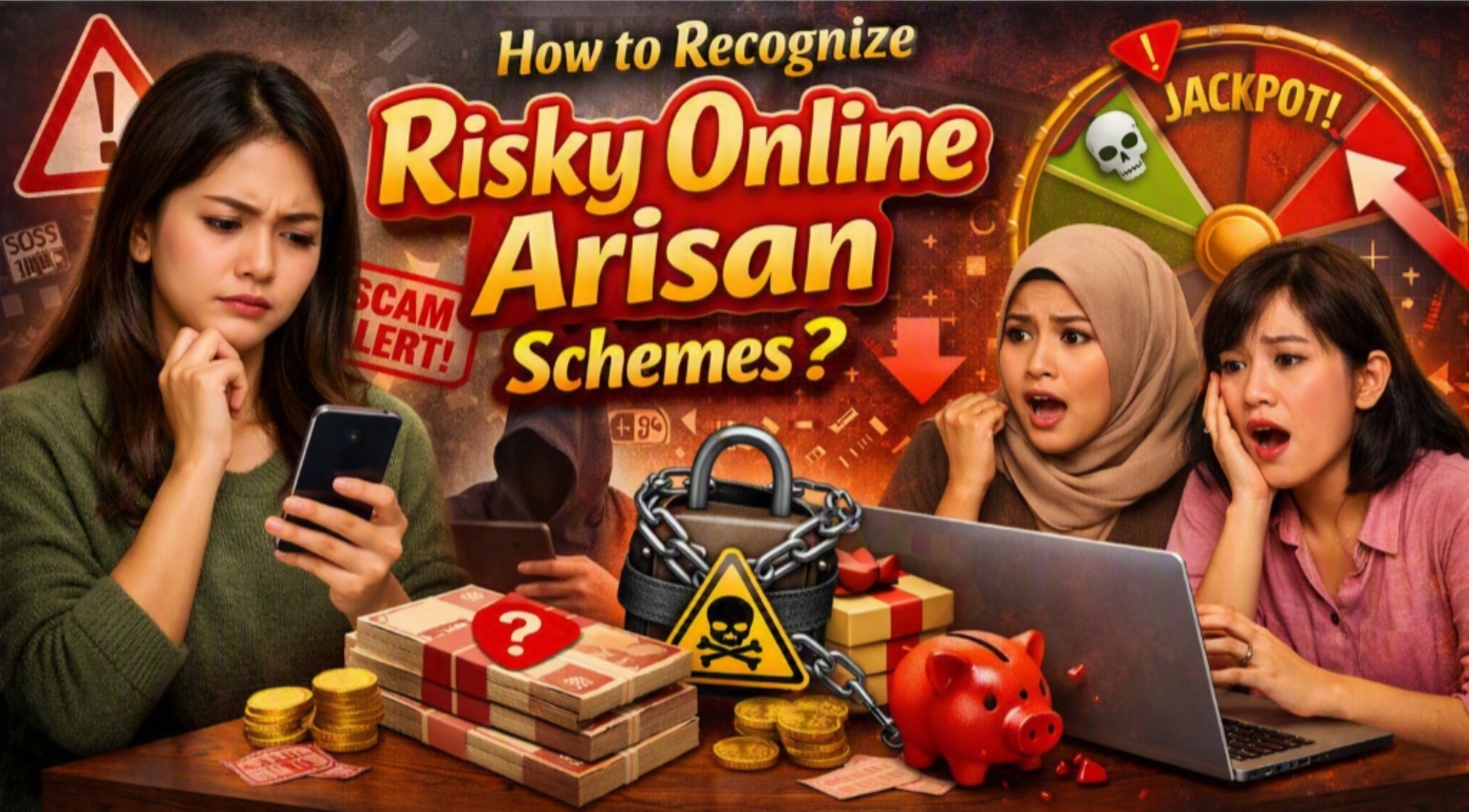
Online arisan has become a convenient way for people to organize group savings and receive money according to an agreed schedule. However, not every online arisan is safe, especially when the organizer uses unclear rules, unrealistic promises, or pressure tactics. Because transactions are often handled through social media and digital payments, participants may find it difficult to verify who is managing the funds. Understanding the warning signs can help people make more careful decisions before sending money. This article explains how to recognize risky online arisan schemes, what signs should be avoided, and what steps can reduce financial risks.
UNDERSTAND HOW ONLINE ARISAN WORKS
An online arisan generally involves a group of participants who agree to contribute a certain amount of money on a regular basis. The collected funds are then distributed to participants based on a predetermined schedule, draw, or agreed order. A legitimate arrangement should clearly explain the contribution amount, payment dates, participant obligations, and distribution process. Participants should also know who manages the group and how the collected money is handled. Clear rules are important because they reduce misunderstandings and make it easier to identify unusual changes.
The main difference between a normal group savings arrangement and a risky scheme often appears in the source and movement of the money. If an organizer cannot explain how funds are collected, stored, and distributed, participants should be cautious. A scheme may also become more concerning when it depends heavily on recruiting new members to pay earlier participants. Understanding the basic mechanism before joining is therefore an important first step. Do not rely only on testimonials or attractive promotional messages when evaluating an online arisan.
WATCH FOR UNREALISTIC RETURNS
One of the clearest warning signs is a promise of guaranteed or unusually large returns without a reasonable explanation. Traditional arisan is primarily based on pooled contributions, so the amount received by a participant normally relates to the agreed contributions rather than magically increasing through guaranteed profits. Claims such as receiving substantially more money after making a small contribution should be examined carefully. The organizer should be able to explain where any additional money comes from. If the explanation is vague, complicated, or constantly changing, it is safer to avoid the offer.
Be particularly careful when an organizer says that participants cannot lose money under any circumstances. Financial activities generally involve risks, and a promise of effortless high returns can be used to attract new participants quickly. Promotional content showing expensive lifestyles, screenshots of payments, or successful members does not prove that a scheme is financially sound. Some risky schemes may initially make successful payments to build trust before problems appear. Short-term success is not proof of long-term safety.
CHECK THE ORGANIZER AND THE RULES
Before joining, investigate the identity and reputation of the organizer or administrator. Check whether the person provides a consistent name, contact information, clear terms, and a transparent explanation of the arisan process. Be cautious if the organizer refuses to identify themselves properly or keeps changing account names and contact numbers. You should also look for independent information rather than relying entirely on reviews provided by the organizer. A trustworthy arrangement should not discourage reasonable questions about money management.
Read all available rules before making a payment, including contribution amounts, payment deadlines, payout schedules, cancellation policies, and consequences for late payments. Avoid groups that only provide important conditions after you have transferred money. Pay attention to clauses that give the organizer excessive control over participant funds or allow rules to change without agreement. Screenshots of conversations should not replace clear written terms. If the rules are difficult to understand, ask for clarification before participating.
BE CAREFUL WITH RECRUITMENT PRESSURE
A risky online arisan may use aggressive recruitment tactics to keep the system growing. Participants may be encouraged to invite friends, relatives, or coworkers with promises of bonuses, faster payouts, or special positions. Recruitment itself does not automatically mean an arrangement is fraudulent, but it becomes a serious warning sign when new participants are essential for existing members to receive money. This structure can become unstable if recruitment slows down. When the flow of new money stops, promised payments may also become difficult to maintain.
Pressure can also appear through limited-time offers and emotional persuasion. For example, an organizer may claim that only a few positions remain or that someone will lose a special benefit if they do not transfer money immediately. These tactics are designed to reduce the time available for careful consideration. A legitimate financial decision should allow participants enough time to review the rules and ask questions. Never transfer money simply because someone pressures you to act quickly.
CHECK PAYMENT AND ACCOUNT DETAILS
The payment method can provide another important clue about the level of risk. Before transferring money, check whether the recipient account matches the stated organizer or organization and whether the payment instructions are consistent with the agreed rules. Be cautious when funds are repeatedly requested through unrelated personal accounts without a clear reason. Frequent changes in payment accounts can make it harder to track transactions. Keep receipts, transfer records, and relevant conversations in case you need to review what happened later.
Avoid sharing banking credentials, one-time passwords, PINs, or other security information with an organizer. Joining an online arisan should not require you to hand over control of your personal banking account. If someone asks you to install an unknown application, click a suspicious link, or provide sensitive security codes to receive a payout, stop and verify the request. Digital payment convenience should never come at the cost of basic account security. Protecting your personal information is just as important as protecting the money you contribute.
RECOGNIZE CHANGES IN THE PAYMENT PATTERN
Another warning sign is a sudden change in the payout schedule or contribution requirements. An organizer may begin delaying payments, asking participants to contribute additional money, or introducing new rules that were not part of the original agreement. Occasional administrative problems can happen, but repeated delays combined with unclear explanations deserve serious attention. Participants should request a clear explanation and supporting information rather than immediately sending more money. Do not assume that an extra payment will automatically solve the problem.
Be especially cautious when an organizer asks participants to make additional deposits to unlock, recover, or accelerate a payout. This can create a cycle in which participants continue sending money because they believe another payment will release the funds already contributed. If the organizer keeps creating new requirements, the financial exposure can grow quickly. At this point, participants should consider stopping further payments and reviewing the situation independently. Keeping detailed records can help identify whether the arrangement is following its original rules.
VERIFY BEFORE YOU TRANSFER MONEY
The safest approach is to verify first and pay later. Search for information about the organizer, examine complaints or warnings from reliable sources, and compare the promised benefits with the actual structure of the arisan. Ask existing participants how payments have worked over a meaningful period rather than relying on recent success stories. If the organizer cannot provide convincing answers to basic questions, there is no reason to take unnecessary financial risks. Remember that refusing an unclear offer is better than trying to recover money after a problem occurs.
You should also consider whether the amount you plan to contribute is affordable to lose. Never use money needed for food, rent, education, emergency expenses, or essential bills simply because an online arisan promises quick financial benefits. If an offer appears to combine group savings with investment-like returns, treat it as a higher-risk financial proposition and investigate the legal and regulatory status of the activity where you live. Transparency, realistic expectations, and proper records are key factors when evaluating any online money arrangement.
WHAT TO DO IF SOMETHING FEELS WRONG?
If you suspect an online arisan is becoming unsafe, stop sending additional money until the situation is clear. Save screenshots of the group, payment instructions, account details, receipts, and conversations with the organizer. Contact your bank or payment provider as soon as possible if you believe a transaction may be connected to fraud. You can also report suspected fraud through the appropriate authorities or official reporting channels in your country. Acting quickly can be important because digital transactions and online accounts may change rapidly.
Most importantly, do not let embarrassment prevent you from seeking help. Fraud can happen to careful people, particularly when a scheme initially appears legitimate or is recommended by someone they trust. Talk to people you trust and explain what happened without hiding important details. Avoid paying additional money simply because someone promises to recover previous losses. If the arrangement cannot provide transparent answers about your funds, treat that uncertainty as a serious warning.
CONCLUSION
Recognizing risky online arisan schemes requires more than checking whether other people have received payments. Participants should examine the organizer, rules, payment process, promised returns, recruitment system, and changes in payout behavior before committing their money. Unrealistic guarantees, aggressive recruitment, unclear identities, unexplained payment delays, and requests for additional deposits are important warning signs. Taking time to verify information can significantly reduce the chance of making a rushed financial decision. Ultimately, a simple rule is useful: if the money flow and rules cannot be explained clearly, do not transfer your money.
Tentang Penulis
Gusti Ayu Tita P
Penulis — Universitas STEKOM
Penulis aktif yang berfokus pada isu-isu akademik, teknologi pendidikan, dan pengembangan sumber daya manusia di lingkungan kampus.