How to Reduce Business Expenses Without Sacrificing Quality
Gusti Ayu Tita P
8 Juli 2026
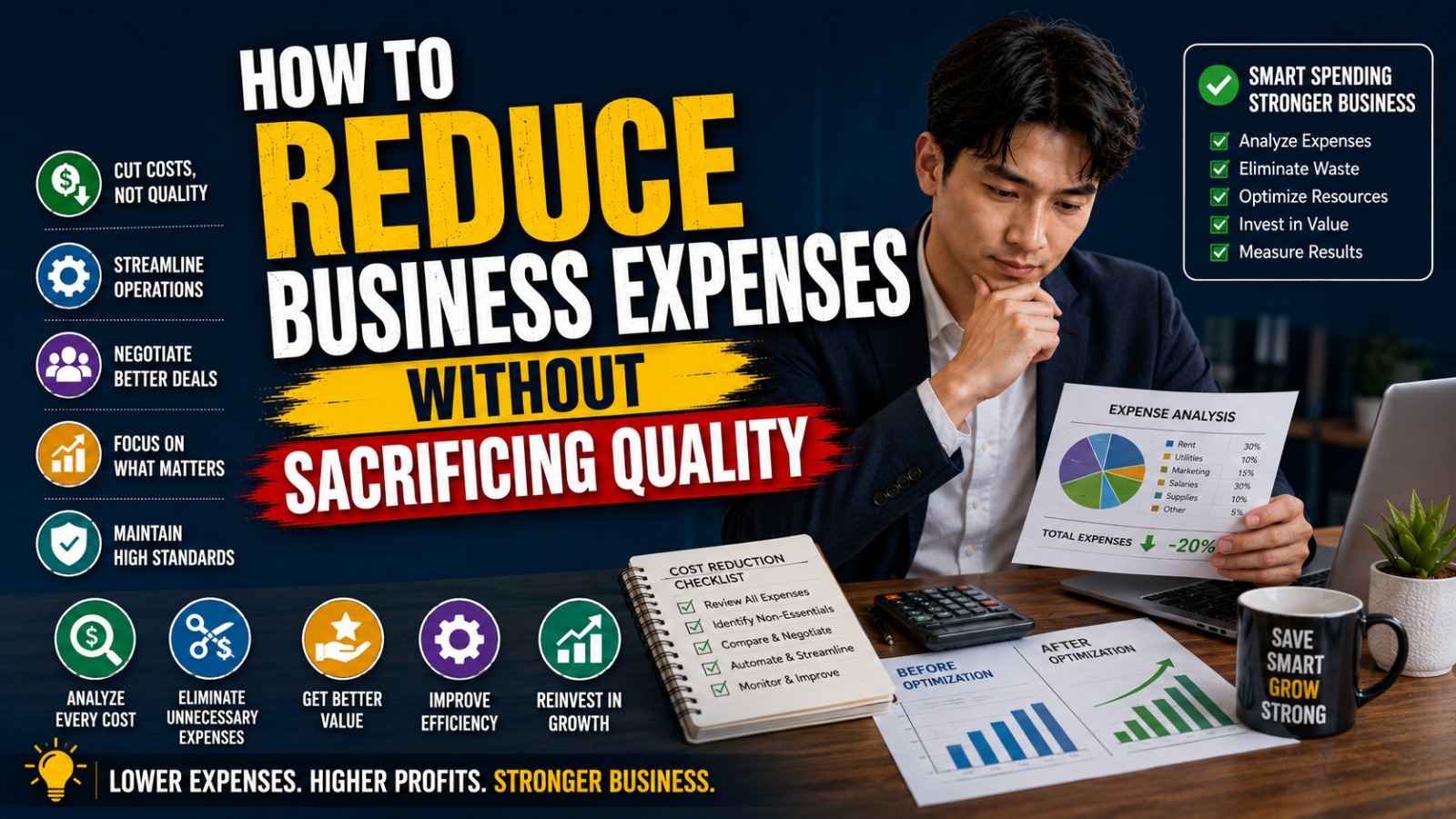
Reducing business expenses is essential for maintaining profitability and improving long-term financial stability. However, many business owners worry that cutting costs may lower product quality, reduce customer satisfaction, or weaken business performance. The good news is that businesses can control expenses strategically without sacrificing the value they provide to customers.
Smart cost management focuses on improving efficiency, eliminating waste, and optimizing operations rather than simply reducing spending blindly. By applying the right strategies, businesses can remain competitive while maintaining high-quality products and services.
WHY COST CONTROL MATTERS
Operating costs continue to rise due to inflation, supply chain disruptions, and increasing labor expenses. Without proper expense management, businesses may experience shrinking profit margins and unstable cash flow.
Effective cost control helps businesses:
- Improve profitability
- Strengthen cash flow
- Increase financial flexibility
- Support long-term growth
- Remain competitive during economic uncertainty
Reducing unnecessary expenses also allows businesses to invest more resources into innovation, customer service, and business development.
IDENTIFY UNNECESSARY EXPENSES
The first step in reducing business costs is understanding where money is being spent. Many companies continue paying for services, tools, or processes that no longer provide significant value.
Business owners should review:
- Monthly subscriptions
- Software licenses
- Marketing expenses
- Utility costs
- Vendor contracts
- Administrative expenses
Regular financial reviews help identify areas where spending can be reduced without affecting product or service quality.
IMPROVE OPERATIONAL EFFICIENCY
Improving efficiency is one of the best ways to lower costs while maintaining performance. Businesses that streamline operations often reduce waste and increase productivity at the same time.
Ways to improve operational efficiency include:
- Automating repetitive tasks
- Simplifying workflows
- Reducing manual paperwork
- Improving communication systems
- Using project management software
Efficient operations save both time and money while allowing employees to focus on higher-value activities.
NEGOTIATE WITH SUPPLIERS
Supplier relationships play a major role in controlling operational expenses. Many businesses overlook opportunities to negotiate better pricing or payment terms.
Businesses can reduce costs by:
- Requesting bulk purchase discounts
- Comparing multiple suppliers
- Negotiating longer payment periods
- Building long-term supplier partnerships
Strong supplier relationships may also improve product consistency and service reliability.
REDUCE ENERGY AND UTILITY COSTS
Utility expenses can become a significant financial burden over time. Implementing energy-saving measures can reduce monthly costs without affecting operational quality.
Simple strategies include:
- Using energy-efficient equipment
- Turning off unused devices
- Improving lighting systems
- Optimizing heating and cooling usage
- Encouraging energy-conscious workplace habits
Small reductions in utility consumption can generate long-term financial savings.
OUTSOURCE NON-CORE ACTIVITIES
Hiring full-time employees for every task may increase payroll costs unnecessarily. Outsourcing selected business functions can reduce labor expenses while maintaining professional quality.
Common outsourced services include:
- Accounting and bookkeeping
- IT support
- Graphic design
- Digital marketing
- Customer support
Outsourcing allows businesses to access specialized expertise without the long-term costs of permanent staffing.
OPTIMIZE INVENTORY MANAGEMENT
Poor inventory management often leads to wasted money through overstocking, damaged products, or unsold inventory.
Businesses can improve inventory efficiency by:
- Monitoring inventory turnover
- Using demand forecasting
- Reducing excess stock
- Improving supplier coordination
- Implementing inventory management software
Efficient inventory control helps improve cash flow and reduce storage expenses.
USE DIGITAL MARKETING STRATEGIES
Traditional advertising methods can be expensive, especially for small businesses. Digital marketing often provides more affordable and measurable alternatives.
Cost-effective digital marketing strategies include:
- Content marketing
- Email campaigns
- Search engine optimization (SEO)
- Social media marketing
- Video marketing
These methods can help businesses reach target audiences more efficiently while maintaining strong brand visibility.
TRAIN EMPLOYEES EFFECTIVELY
Well-trained employees often work more efficiently and make fewer costly mistakes. Investing in employee training can improve productivity, customer service, and operational consistency.
Training programs may focus on:
- Time management
- Customer communication
- Technical skills
- Process improvement
- Financial awareness
Skilled employees contribute to higher-quality performance while reducing operational waste.
MONITOR FINANCIAL PERFORMANCE REGULARLY
Businesses should continuously track financial performance to ensure cost reduction strategies remain effective.
Important financial areas to monitor include:
- Operating expenses
- Profit margins
- Cash flow
- Revenue trends
- Productivity levels
Regular financial analysis helps businesses identify new opportunities for savings while protecting overall quality standards.
AVOID CUTTING COSTS THAT IMPACT CUSTOMER EXPERIENCE
Some cost reductions may harm customer satisfaction and damage business reputation. Businesses should avoid reducing spending in areas that directly affect product quality or customer trust.
Examples include:
- Using low-quality materials
- Reducing customer support standards
- Delaying product delivery
- Ignoring maintenance and quality control
Long-term success depends on balancing cost efficiency with customer satisfaction.
CONCLUSION
Reducing business expenses without sacrificing quality requires strategic planning and careful financial management. Businesses that focus on efficiency, supplier negotiations, digital solutions, and waste reduction can improve profitability while maintaining strong customer satisfaction.
Smart cost control is not about making extreme cuts but about optimizing resources and improving operational performance. Companies that manage expenses effectively are better positioned to remain competitive, financially stable, and prepared for future growth opportunities.
Tentang Penulis
Gusti Ayu Tita P
Penulis — Universitas STEKOM
Penulis aktif yang berfokus pada isu-isu akademik, teknologi pendidikan, dan pengembangan sumber daya manusia di lingkungan kampus.