How to Resolve Land Disputes Safely and Legally?
Gusti Ayu Tita P
2 September 2026
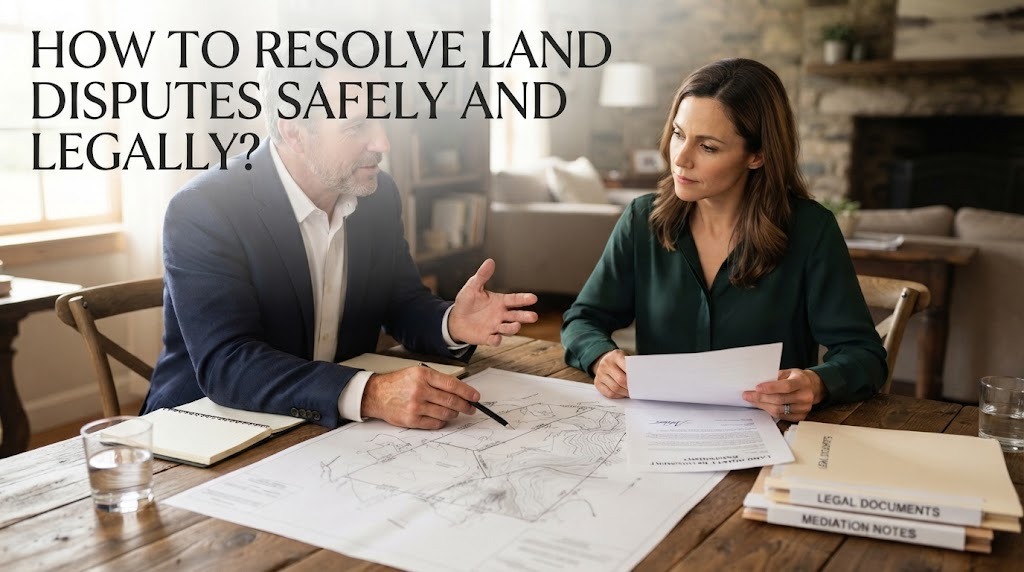
Land disputes can happen because of unclear ownership, overlapping claims, inheritance problems, boundary disagreements, or incomplete documents. If not handled properly, a land dispute can become more complicated and lead to financial losses or lengthy legal proceedings. Therefore, resolving the problem through proper legal procedures is important. Understanding the right steps can help protect your property rights and reduce unnecessary conflict.
UNDERSTAND THE CAUSE OF THE LAND DISPUTE
The first step is to identify exactly why the dispute occurred. Check whether the problem involves ownership, land boundaries, inheritance, property transactions, or conflicting documents. Understanding the source of the conflict helps determine which evidence and legal procedures may be needed. Avoid making decisions based only on verbal claims or assumptions.
Both parties should collect information about the history of the land. Previous sale agreements, inheritance documents, certificates, payment records, and other relevant documents may help clarify ownership. A clear understanding of the dispute makes the next resolution steps more focused.
CHECK LAND OWNERSHIP DOCUMENTS
Ownership documents are among the most important pieces of evidence in a land dispute. Review the land certificate, identity of the registered rights holder, land area, location, and other relevant information. The documents should also be verified with the appropriate land authority when necessary. This helps determine whether the documents match the official land records.
Do not rely solely on photocopies or documents provided by one party. Differences between official records and physical conditions may indicate a problem that needs further investigation. Careful document verification can prevent the dispute from becoming more serious.
VERIFY THE LAND BOUNDARIES
Land disputes often involve disagreements over boundaries. Therefore, the physical location and boundaries of the land should be compared with the information contained in the official documents. Check boundary markers, land measurements, neighboring properties, and access routes. Professional assistance may be useful if the boundaries are difficult to determine.
A proper boundary verification can help identify whether the dispute is caused by an actual ownership problem or simply by differences in land measurements. Any findings should be documented carefully. Photographs, measurement records, and relevant documents can become useful evidence during the resolution process.
TRY NEGOTIATION AND MEDIATION
Negotiation is often a practical first step when both parties are willing to communicate. The parties can discuss the disputed issue and look for a solution that is acceptable to everyone involved. If direct negotiation is unsuccessful, mediation can provide assistance from a neutral third party. Mediation may help reduce tension and avoid unnecessary litigation.
Any agreement reached should be documented clearly and signed by the parties according to the applicable legal requirements. A written agreement provides greater certainty than a verbal promise. If the dispute involves complicated legal rights, professional legal advice should be considered before signing an agreement.
CONSULT A LAND LAW PROFESSIONAL
Some land disputes are too complicated to handle without professional assistance. An attorney experienced in property or land law can help review documents, assess legal positions, and explain available options. Professional advice is particularly important when the dispute involves multiple parties, inheritance, overlapping claims, or potential court proceedings.
A legal professional can also help ensure that communication and settlement efforts do not unintentionally weaken your legal position. However, all information provided to the professional should be complete and accurate. Hiding important documents or facts may make the dispute more difficult to resolve.
CONSIDER COURT PROCEEDINGS WHEN NECESSARY
If negotiation and mediation fail, court proceedings may become necessary. Before filing a case, the parties should organize relevant documents, evidence, witness information, and a clear explanation of their claim. The appropriate type of legal action depends on the specific facts and legal issues involved. Professional legal advice can help determine the proper procedure.
Court proceedings may take considerably longer than an agreement reached through negotiation. They can also involve additional costs and procedural requirements. For that reason, litigation should generally be considered carefully rather than used as the first response to every land disagreement.
AVOID SELF HELP AND ILLEGAL ACTIONS
A land dispute should never be handled through threats, violence, forced eviction, destruction of property, or other unlawful actions. Even if someone believes they are the rightful owner, taking matters into their own hands can create additional legal problems. Property rights should be defended through lawful procedures. Maintaining records of incidents can also be useful if the dispute escalates.
Avoiding confrontation does not mean giving up your rights. Instead, it means protecting those rights through evidence, communication, professional advice, and the appropriate legal process. A calm and documented approach can reduce the risk of further conflict.
KEEP COMPLETE RECORDS OF THE DISPUTE
Every important step should be documented throughout the dispute. Keep copies of certificates, agreements, correspondence, payment records, photographs, meeting notes, and other relevant evidence. Organizing these materials can make it easier to explain the case to a lawyer, mediator, land authority, or court.
Records should be stored safely and arranged chronologically when possible. Do not alter original documents or discard information that may later become relevant. Good documentation can significantly improve the clarity of a land dispute.
CONCLUSION
Resolving a land dispute safely and legally requires patience, proper documentation, and the right legal approach. Start by understanding the cause of the dispute, verifying ownership documents, and checking the actual land boundaries. Negotiation and mediation can be considered before pursuing formal litigation when the circumstances allow.
If the dispute cannot be resolved peacefully, professional legal assistance and court procedures may provide a lawful path forward. Most importantly, avoid threats, violence, forced actions, or other forms of self-help. Protecting property rights through proper evidence and legal procedures is the safest way to handle a land dispute.
Tentang Penulis
Gusti Ayu Tita P
Penulis — Universitas STEKOM
Penulis aktif yang berfokus pada isu-isu akademik, teknologi pendidikan, dan pengembangan sumber daya manusia di lingkungan kampus.