How to Save Waste at a Waste Bank and Earn Extra Income?
Gusti Ayu Tita P
20 Agustus 2026
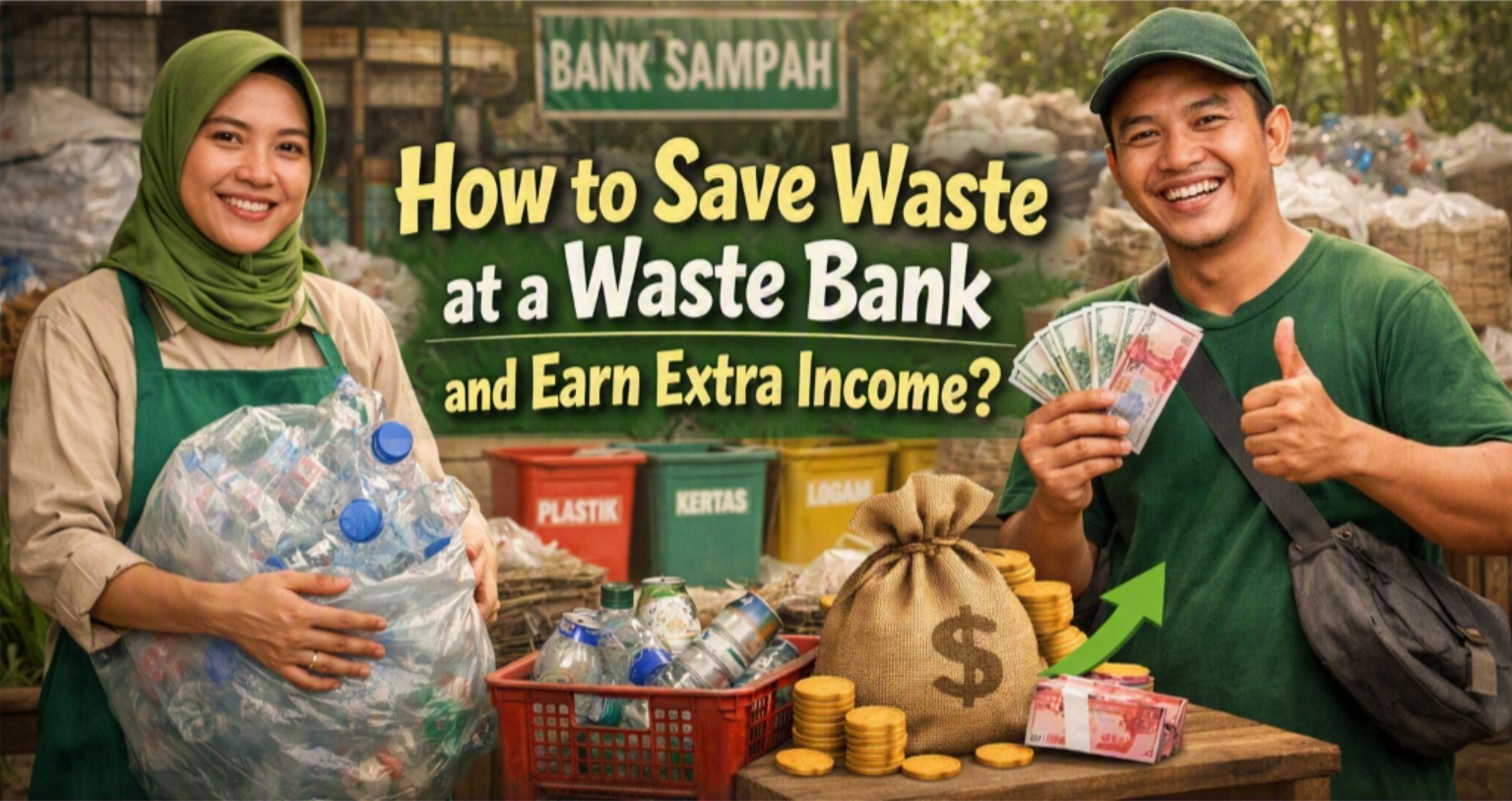
Managing household waste is not only about keeping the environment clean. When recyclable waste is collected and delivered to a waste bank, it can also become a practical way to earn extra income. Items such as plastic bottles, cardboard, paper, cans, and other recyclable materials still have economic value when they are properly sorted. A waste bank provides a system that allows people to save recyclable materials and receive money or savings based on their value. This simple habit can support both environmental sustainability and household finances.
UNDERSTAND HOW A WASTE BANK WORKS
A waste bank is a community-based waste management system where residents collect, sort, and deposit recyclable materials. Instead of throwing everything into a regular trash bin, residents separate materials that can still be processed or sold. The deposited waste is usually weighed and recorded according to its type and condition. The value is then calculated based on the waste bank’s current purchasing price. Depending on its system, the value may be recorded as savings that can later be withdrawn or used for other purposes.
Each waste bank may have different rules regarding accepted materials, minimum deposits, prices, and withdrawal procedures. Therefore, residents should ask about these rules before making their first deposit. Clean and properly sorted waste is generally easier to manage and has better recycling potential. Understanding the system helps people avoid bringing materials that the waste bank does not accept.
SORT HOUSEHOLD WASTE BEFORE SAVING IT
The first practical step is to separate recyclable waste from other household waste. Plastic bottles, cardboard, newspapers, office paper, metal cans, and certain other recyclable materials can often be collected separately. Food scraps, dirty packaging, hazardous materials, and non-recyclable waste should not simply be mixed with recyclable items. Sorting at home makes the collection process easier and reduces contamination.
Before depositing materials, remove leftover food or liquid whenever appropriate and keep the materials relatively dry. Bottles and containers can be emptied and cleaned according to the waste bank’s requirements. Cardboard and paper should preferably be kept dry because moisture can reduce their quality. Good sorting habits can make recyclable materials easier for the waste bank to process and may improve their economic value.
SAVE RECYCLABLE WASTE CONSISTENTLY
Saving waste becomes more effective when it is treated as a regular household habit rather than an occasional activity. Set aside a specific container or storage area for recyclable materials so they do not become mixed with general waste. Families can create separate containers for plastic, paper, cardboard, and metal based on the materials accepted by their local waste bank. This simple system can make daily waste management much more organized.
Consistency is also important because small amounts can accumulate over time. Instead of waiting until the storage area is completely full, residents can follow the waste bank’s recommended deposit schedule. Regular deposits also make it easier to track how much recyclable waste a household produces. Over time, this habit can reduce the amount of waste sent to disposal facilities while creating an additional source of household savings.
HOW TO EARN EXTRA INCOME FROM A WASTE BANK?
The basic earning process is straightforward: collect recyclable materials, sort them, bring them to the waste bank, and have them weighed and recorded. The value of recyclable waste depends on factors such as material type, quality, cleanliness, market conditions, and the waste bank’s current purchasing price. Higher-value materials may contribute more to savings than materials with lower market value. However, prices can change, so residents should not assume that every deposit will generate the same amount of money.
It is important to view waste-bank income as additional savings, rather than a guaranteed replacement for regular income. The financial benefit may be relatively small for one household, especially when only a limited amount of recyclable material is generated. However, consistent collection and participation can make the results more meaningful over time. The greatest benefit comes from combining financial value with the environmental advantages of proper waste management.
CHOOSE THE RIGHT STORAGE METHOD
Proper storage can help maintain the condition of recyclable materials before they are deposited. Use separate bags, boxes, or containers for different categories of waste whenever possible. Keep recyclable materials away from rain, excessive moisture, and substances that can contaminate them. Sharp or potentially dangerous materials should be handled carefully and should only be stored if the waste bank accepts them.
A clean storage area also prevents unpleasant odors and makes sorting easier. Do not store hazardous household waste together with ordinary recyclables. Materials such as batteries, chemicals, electronic waste, or other potentially hazardous items may require special handling and should follow local disposal guidance. Safe storage protects both household members and waste-bank workers.
TRACK YOUR WASTE SAVINGS
Keeping a simple record can help households understand how much value they receive from their recyclable waste. Record the date, type of waste, weight, and amount saved after each deposit when this information is available. This allows families to compare their results over several months. The record can also encourage children and other family members to participate in waste separation.
Tracking savings provides another important benefit: it turns waste management into a measurable household habit. Families can set realistic targets, such as increasing the amount of recyclable material separated each month. The goal should not only be to earn more money but also to reduce household waste. A small financial return combined with better environmental habits can create a meaningful long-term benefit.
INVOLVE THE WHOLE FAMILY AND COMMUNITY
Waste management becomes easier when everyone in the household understands what should be separated and saved. Parents can teach children to identify recyclable materials and place them in the correct containers. Simple household rules can prevent recyclable items from being thrown away accidentally. Family participation also makes waste sorting less dependent on one person.
Community involvement can make the impact even greater. Neighbors can share information about collection schedules, accepted materials, and waste-bank programs. Local communities can also organize educational activities to encourage more residents to participate. When more households save recyclable waste, the waste bank can receive a more consistent supply of materials and support a stronger community recycling system.
CONCLUSION
Saving recyclable waste at a waste bank is a simple activity that can provide both environmental and financial benefits. The key is to sort waste correctly, keep materials clean and dry, deposit them regularly, and understand the waste bank’s rules. The income generated may not be large at first, but consistent participation can turn small amounts into useful savings. More importantly, the habit can reduce the amount of recyclable material that ends up in landfills or mixed waste streams.
A successful waste-bank habit starts at home. By treating recyclable materials as resources instead of useless rubbish, households can contribute to a more responsible waste management system. Extra income, cleaner surroundings, and greater environmental awareness can become connected through one simple routine. With consistency and community support, a waste bank can become a practical part of everyday sustainable living.
Tentang Penulis
Gusti Ayu Tita P
Penulis — Universitas STEKOM
Penulis aktif yang berfokus pada isu-isu akademik, teknologi pendidikan, dan pengembangan sumber daya manusia di lingkungan kampus.