How to Start a Waste Bank in Your Home and Community?
Gusti Ayu Tita P
20 Agustus 2026
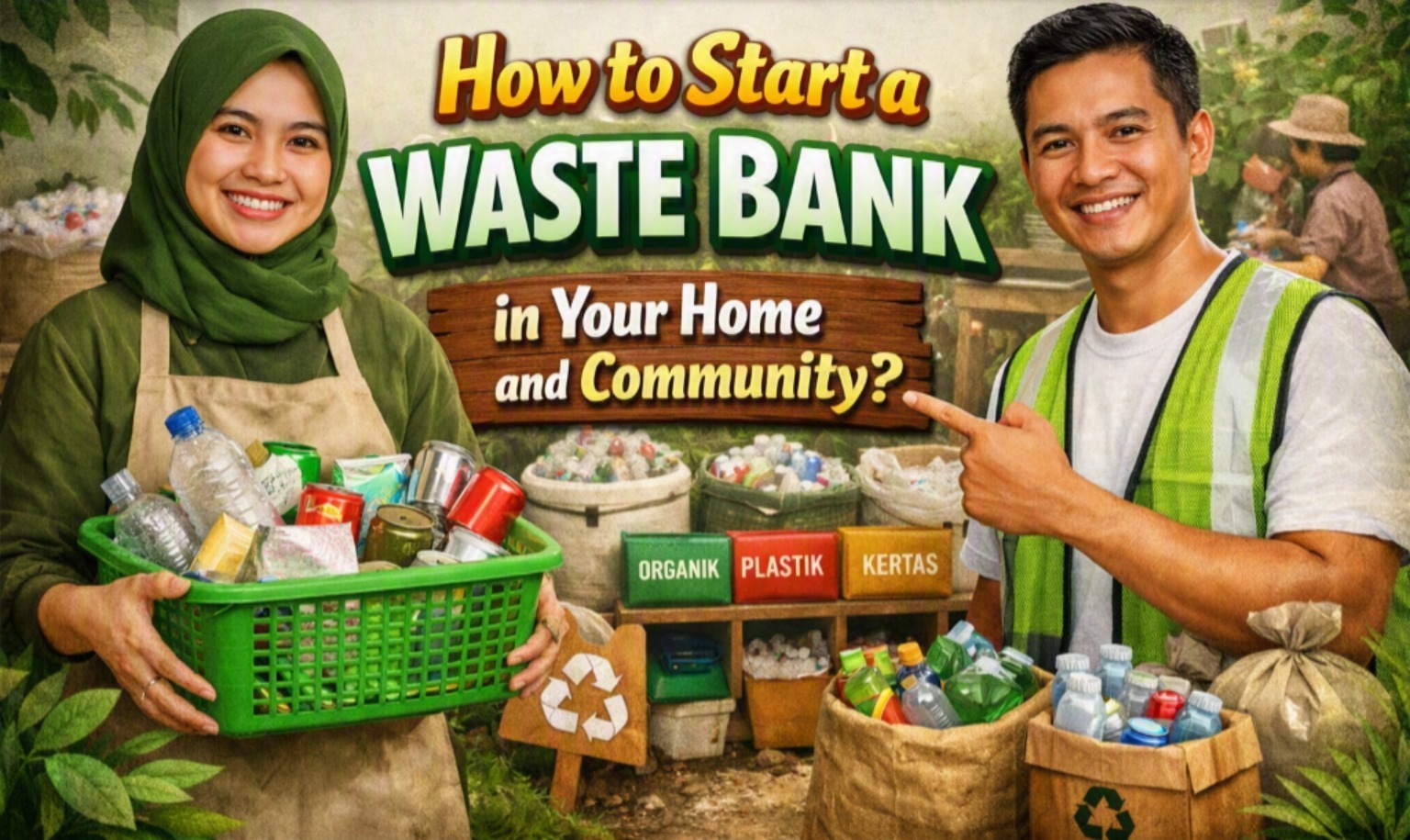
Waste management can start with simple actions at home and grow into a useful community program. One practical approach is to establish a waste bank, where residents sort recyclable waste, collect it, and exchange or sell it through an organized system. A waste bank can help reduce the amount of waste sent to landfills while creating economic value from recyclable materials. It can also encourage people to develop better waste-sorting habits. With proper planning, a waste bank can begin on a small household scale and gradually involve neighbors and the wider community.
UNDERSTAND HOW A WASTE BANK WORKS
A waste bank is a community-based waste management system that collects and sorts recyclable materials such as plastic bottles, cardboard, paper, metal cans, and other reusable materials. Instead of throwing everything into one bin, residents separate valuable recyclable waste from organic and non-recyclable waste. The collected materials are then weighed, recorded, stored, and eventually sold to recycling collectors or recycling businesses. In some systems, residents receive money, savings records, or other agreed benefits based on the value of the materials they deposit.
The main purpose is not simply to collect waste but to build a regular and organized waste management habit. A successful waste bank needs clear rules, responsible managers, suitable storage, accurate records, and reliable buyers. It should also prioritize cleanliness and safety so that recyclable materials do not become a source of odors, pests, or other environmental problems. Understanding this basic system will make it easier to design a waste bank that works for both households and the community.
START WITH WASTE MANAGEMENT AT HOME
Before involving many people, start by practicing waste separation at home. Prepare separate containers for recyclable materials, organic waste, and residual waste. Clean and dry recyclable items whenever necessary because contaminated materials may have lower value and can create unpleasant conditions during storage. Families should also identify which materials are commonly generated in their homes so they can estimate the amount of recyclable waste available each week.
A simple household system can become a model for neighbors. Keep a basic record of the type and approximate amount of recyclable waste collected each week. This information can help determine whether the program is ready to expand. Starting small also makes it easier to identify problems before the system involves more households.
INVOLVE YOUR NEIGHBORS AND COMMUNITY
Once the household system is working, introduce the idea to neighbors, community groups, schools, or local organizations. Explain the benefits clearly, including cleaner surroundings, reduced waste, better recycling habits, and possible financial returns from recyclable materials. Avoid making participation complicated because people are more likely to join when the process is simple and transparent. A short community meeting can be used to discuss the proposed system, responsibilities, collection schedules, and expected benefits.
Community participation is essential because a waste bank depends on consistent cooperation from its members. Start with a manageable number of households rather than trying to involve everyone immediately. Assign clear responsibilities for collection, weighing, recording, storage, and communication. As participation grows, the management system can be improved according to the community's needs.
PREPARE THE BASIC EQUIPMENT
A small waste bank does not require expensive equipment at the beginning. The basic supplies may include separate collection containers, sacks, weighing scales, gloves, masks, labels, storage shelves, and record books. A simple digital spreadsheet can also be used to record deposits and transactions if the managers have access to suitable devices. The storage area should be dry, clean, protected from rain, and arranged so different materials can be identified easily.
Safety equipment is also important, particularly when volunteers handle waste regularly. Members should avoid direct contact with sharp, hazardous, contaminated, or unknown materials. The waste bank should focus on safe recyclable materials and establish clear rules about items that cannot be accepted. Good equipment and clear procedures can make daily operations more efficient and safer.
CREATE SIMPLE RULES AND RECORDS
A waste bank needs clear rules so every participant understands how the system operates. Decide which materials are accepted, when waste can be deposited, how materials are weighed, how prices are determined, and how payments or savings are recorded. The rules should be communicated to all members before the program begins. Written procedures can reduce misunderstandings and make the system easier to manage.
Accurate records are equally important for building trust. Each deposit should be recorded with information such as the member's name, material type, weight, and applicable value. The management team should maintain separate records for member deposits, recyclable material sales, operating expenses, and available funds. Transparent bookkeeping helps the community understand how the waste bank performs and reduces the risk of disputes.
FIND RELIABLE RECYCLING BUYERS
Before collecting large amounts of recyclable waste, identify recycling collectors, waste traders, recycling businesses, or other legitimate buyers in the local area. Ask about the materials they accept, minimum quantities, collection arrangements, and current purchasing practices. Prices for recyclable materials can change, so the waste bank should avoid promising a fixed value without confirming the current market situation. Having more than one potential buyer can also provide flexibility when prices or collection arrangements change.
The goal is to establish a reliable recycling channel rather than simply accumulating waste. Materials should be sorted according to the buyer's requirements whenever practical. Clean, dry, and properly separated materials may be easier to handle and market. The management team should regularly review its buyers and operating arrangements to ensure that the system remains practical.
BUILD A REGULAR COLLECTION SYSTEM
A consistent schedule makes the waste bank easier for members to follow. The community can choose weekly, biweekly, or another practical collection schedule depending on the volume of waste and available volunteers. Collection points should be clearly identified and kept clean. If possible, members should bring sorted materials directly to the collection point according to the agreed schedule.
The management team should monitor how much waste is collected and whether the schedule is working. If the volume becomes too large, the community may need additional storage space, volunteers, or more frequent collection. If participation is low, managers can identify the reasons and improve communication. Consistency is more important than starting with a large program.
EDUCATE MEMBERS ABOUT WASTE SORTING
Education is one of the most important parts of a successful waste bank. Members need to understand why waste must be separated and how to prepare recyclable materials correctly. Simple demonstrations can show how to distinguish recyclable materials from organic and residual waste. Posters, community announcements, social media groups, and short educational sessions can help reinforce the information.
Education should continue after the waste bank is established. New members may need additional guidance, while existing members may forget sorting rules over time. Regular reminders can improve the quality of collected materials and reduce contamination. When people understand the environmental and economic benefits, they are more likely to maintain the habit.
KEEP THE PROGRAM TRANSPARENT AND SUSTAINABLE
Long-term success depends on trust, transparency, and consistent management. Community members should be able to understand how their deposits are recorded and how recyclable materials are sold. Financial information should be managed responsibly and reported according to the rules agreed by the community. Problems should be discussed openly so they can be resolved before they affect participation.
The waste bank should also evaluate its environmental impact. Managers can track the amount of recyclable material collected over time and identify opportunities to reduce residual waste. As the program develops, it may expand into activities such as recycling education, composting, reuse campaigns, or partnerships with local institutions. The most sustainable waste bank is one that provides practical environmental benefits while remaining manageable for the people who operate it.
GROW THE WASTE BANK GRADUALLY
A waste bank does not have to become a large organization immediately. Starting with a few households and a simple operating system can provide valuable experience before expansion. After the system becomes stable, the community can add more members, collection points, educational activities, or partnerships. Growth should be based on the program's actual capacity rather than simply increasing the number of participants.
Community support can make expansion easier. Local leaders, schools, businesses, environmental groups, and other organizations may contribute facilities, education, equipment, or networking opportunities. Depending on local regulations and circumstances, organizers should also check with the relevant local authorities about registration, waste-management requirements, and other applicable rules. Careful expansion can help the waste bank remain organized and beneficial over the long term.
CONCLUSION
Starting a waste bank at home can be a practical first step toward better waste management and stronger community participation. The process begins with separating recyclable materials, preparing basic equipment, creating simple rules, and finding reliable recycling buyers. Community involvement then helps turn individual habits into an organized local program. Accurate records, safe handling, regular education, and transparent management are essential for maintaining trust. With consistent effort, a small household initiative can develop into a sustainable community waste bank that helps reduce waste, support recycling, and create useful economic opportunities.
Tentang Penulis
Gusti Ayu Tita P
Penulis — Universitas STEKOM
Penulis aktif yang berfokus pada isu-isu akademik, teknologi pendidikan, dan pengembangan sumber daya manusia di lingkungan kampus.