
How to Verify a Land Certificate and Avoid Duplicate Certificates?
Gusti Ayu Tita P
28 Agustus 2026
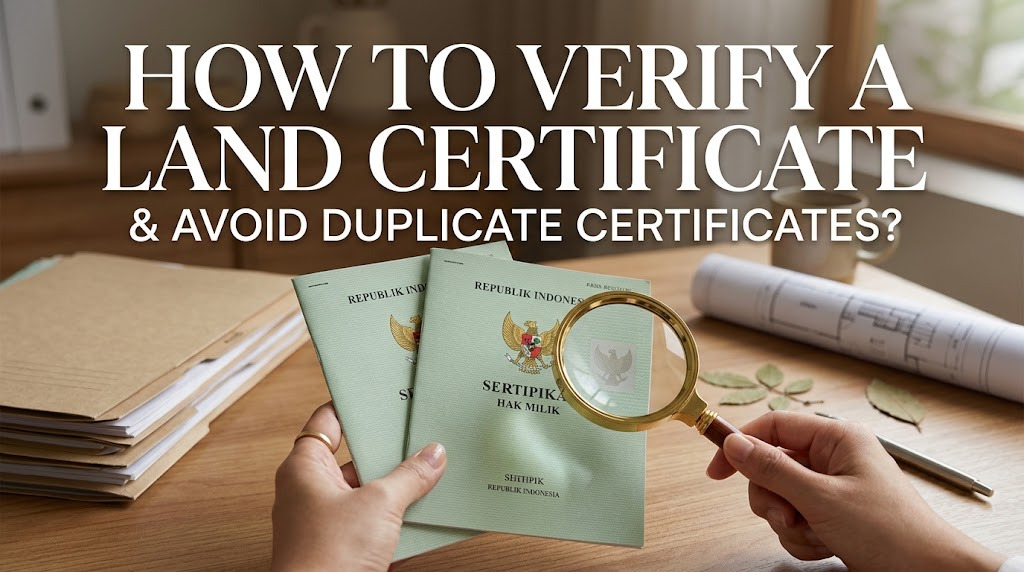
Verifying a land certificate before completing a property transaction is an important step to avoid duplicate certificates and ownership disputes. A certificate may appear genuine, but its information still needs to be checked against official land records. Careful verification can help buyers and landowners identify possible inconsistencies before they create bigger problems.
The verification process should examine the certificate, land records, ownership history, and physical condition of the property. Buyers should not rely only on information provided by the seller. A thorough check provides a stronger basis for making a safe and informed decision.
CHECK THE ORIGINAL CERTIFICATE
The first step is to examine the original land certificate rather than relying only on a photocopy. Check the registered owner's name, certificate number, land area, location, survey information, and boundaries. These details should correspond with the land being offered or owned. Any difference should be clarified before proceeding with a transaction.
It is also important to check whether the document is consistent with supporting ownership records. Ask about how the land was acquired and whether there have been previous transfers. A certificate's physical appearance alone cannot establish its legal status. Official verification is still necessary to determine whether the document corresponds with the registered land data.
VERIFY OFFICIAL LAND RECORDS
The next step is to request official certificate verification through the relevant Land Office. This process can compare the information stated on the certificate with the physical and legal data recorded by the land authority. It may help identify overlapping boundaries or inconsistencies in the registered information. The requirements and procedures should be confirmed directly with the relevant Land Office.
Official verification is important because duplicate registration may not always be visible from the physical document. Information about the land parcel, registered rights holder, survey records, and other relevant data may need to be examined. If an inconsistency is found, further clarification should be obtained before any transaction is completed. Buyers should prioritize legal certainty over speed.
COMPARE PHYSICAL AND LEGAL DATA
The land should be inspected to determine whether its location, area, and boundaries match the certificate. Compare visible boundaries with the information stated in the relevant documents. Differences may indicate the need for additional examination. Neighboring parcels should also be considered when assessing possible boundary overlaps.
Physical inspection alone, however, is not enough to determine ownership. The buyer or landowner must also consider official legal and registration data. If the physical boundaries are unclear, professional assistance may be useful. Any unresolved discrepancy should be addressed before the land is purchased or transferred.
CHECK THE OWNERSHIP HISTORY
Understanding the history of ownership can help identify potential duplicate certificate problems. Determine whether the land was acquired through a sale, inheritance, gift, or another legal transfer. Supporting documents should be examined according to the type of transfer involved. A clear history makes it easier to understand how the current ownership was established.
The buyer should also confirm that the seller is legally authorized to transfer the land. Special attention may be required when the property involves inheritance, joint ownership, or previous transfers. Do not rely solely on verbal explanations from the seller. Written evidence and official records provide a stronger basis for verification.
USE PROFESSIONAL ASSISTANCE
For a land purchase, involving a Land Deed Official or PPAT can help ensure that the transfer process follows the applicable requirements. A PPAT can handle certain land deeds and assist with the formal transfer process. Buyers should communicate any concerns about possible duplicate certificates before signing or completing the transaction. Professional assistance can make the process more organized.
If a duplicate certificate or serious inconsistency is discovered, the transaction should not be rushed. Gather the relevant documents and seek clarification through the appropriate land authority. For complicated disputes, consultation with a land law professional may be appropriate. Taking additional time to verify the land can prevent much greater problems later.
CONCLUSION
Verifying a land certificate involves more than checking the document's physical appearance. Buyers and landowners should examine the original certificate, verify official land records, compare physical boundaries, and review the ownership history. These steps can help identify possible duplicate certificates before they result in a serious dispute.
Using a PPAT during a land transaction can also help ensure that the required procedures are followed. If inconsistencies are discovered, the parties should obtain official clarification before proceeding. Thorough verification provides better protection against duplicate certificates and uncertain land ownership.
Tentang Penulis
Gusti Ayu Tita P
Penulis — Universitas STEKOM
Penulis aktif yang berfokus pada isu-isu akademik, teknologi pendidikan, dan pengembangan sumber daya manusia di lingkungan kampus.















