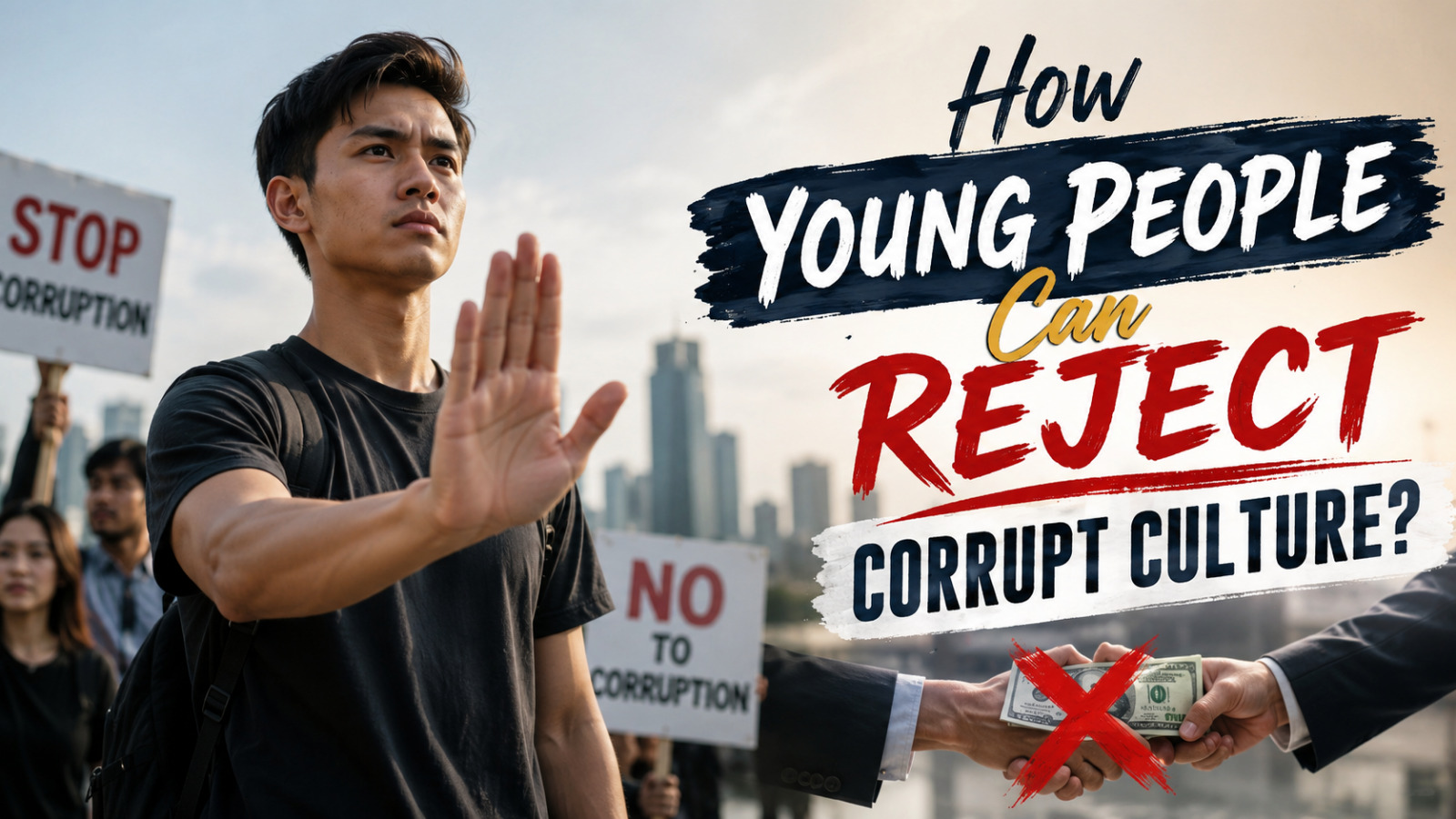
Corruption remains a major challenge in many parts of the world. It affects governments, businesses, education systems, and public services. While corruption is often associated with political leaders or powerful institutions, the fight against corrupt culture also depends on the younger generation. Young people have the power to promote honesty, integrity, and accountability in society.
In today’s digital era, youth are more connected, informed, and influential than ever before. By developing strong ethical values and rejecting dishonest behavior, young people can become important agents of change in creating a cleaner and more transparent future.
UNDERSTANDING CORRUPT CULTURE
Corrupt culture refers to situations where dishonest behavior becomes accepted or normalized within society. This can include bribery, cheating, favoritism, abuse of power, and manipulation for personal gain.
When corruption becomes part of everyday life, many people begin to see unethical actions as normal or unavoidable. This mindset is dangerous because it weakens justice, fairness, and public trust.
WHY YOUNG PEOPLE PLAY AN IMPORTANT ROLE?
Youth represent the future of society. Their attitudes and actions will influence future leadership, social systems, and public values.
1.SHAPING FUTURE GENERATIONS
Young people who practice honesty and integrity can inspire others to do the same. Positive behavior among youth can help build a stronger ethical culture in communities.
2.BEING MORE OPEN TO CHANGE
Compared to older generations, many young people are more willing to accept new ideas, promote transparency, and challenge unfair systems.
3.USING DIGITAL PLATFORMS FOR AWARENESS
Social media and digital technology allow youth to spread information quickly and encourage public discussions about corruption and accountability.
WAYS YOUNG PEOPLE CAN REJECT CORRUPT CULTURE
Rejecting corruption begins with small daily actions and personal responsibility.
1.PRACTICING HONESTY
Young people should avoid cheating, lying, plagiarism, and other dishonest behavior in schools and daily life. Integrity starts from simple actions.
2.REFUSING UNFAIR SHORTCUTS
Success achieved through unfair methods creates unhealthy habits. Youth should value hard work, discipline, and fair competition.
3.SPEAKING UP AGAINST CORRUPTION
Young people can raise awareness by discussing ethical issues, joining anti-corruption campaigns, and supporting transparent systems.
4.USING SOCIAL MEDIA RESPONSIBLY
Digital platforms can become powerful tools for education and advocacy. Sharing positive content about honesty and accountability can influence wider communities.
5.SUPPORTING TRANSPARENT LEADERSHIP
Youth should support leaders and organizations that demonstrate integrity and fairness rather than those involved in dishonest practices.
THE ROLE OF EDUCATION IN BUILDING INTEGRITY
Schools and universities play an important role in teaching ethical values.
Educational institutions should encourage honesty, discipline, and critical thinking. Lessons about integrity and social responsibility can help students understand the harmful effects of corruption on society.
Teachers and educators also need to become positive role models for students.
CHALLENGES FACED BY YOUNG PEOPLE
Although many young people want positive change, they still face several obstacles.
1.SOCIAL PRESSURE
Some environments normalize dishonest behavior, making it difficult for youth to maintain integrity.
2.LACK OF ROLE MODELS
When public figures or leaders are involved in corruption, young people may lose trust in institutions.
3.FEAR OF SPEAKING OUT
Criticizing corruption can sometimes lead to social pressure or fear of negative consequences.
Despite these challenges, young people still have the ability to influence society through education, awareness, and collective action.
BUILDING A CULTURE OF HONESTY
Creating an honest society requires cooperation between families, schools, governments, and communities.
Parents should teach ethical behavior at home, schools should promote integrity, and governments should create transparent systems that discourage corruption.
When honesty becomes a shared value, corrupt culture can gradually be replaced with a culture of accountability and fairness.
CONCLUSION
Young people have an important role in rejecting corrupt culture and promoting integrity in society. Through honesty, education, responsible digital engagement, and ethical leadership, youth can become powerful drivers of positive change.
Fighting corruption is not only the responsibility of governments or institutions. It begins with individual choices and daily actions. By choosing integrity over dishonesty, young generations can help create a fairer, cleaner, and more trustworthy future.
Tentang Penulis
Gusti Ayu Tita P
Penulis — Universitas STEKOM
Penulis aktif yang berfokus pada isu-isu akademik, teknologi pendidikan, dan pengembangan sumber daya manusia di lingkungan kampus.