Important Facts About Nuclear Power Plants You Should Know
Gusti Ayu Tita P
1 September 2026
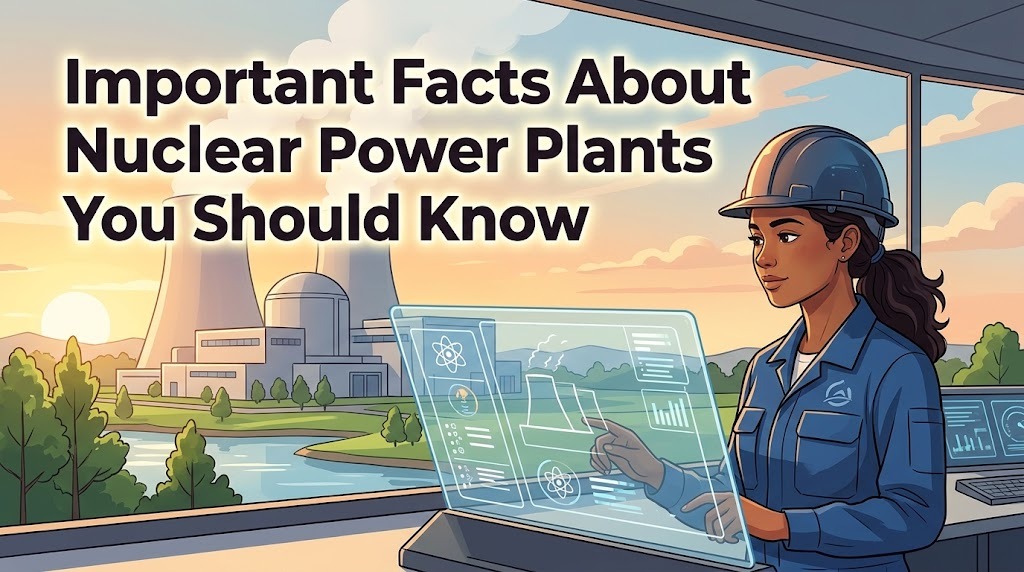
Nuclear power plants are large facilities that generate electricity by using heat from controlled nuclear reactions. Unlike coal or gas power plants, nuclear plants do not burn fossil fuels to produce heat. Instead, they usually rely on nuclear fission, in which the nucleus of a heavy atom such as uranium is split to release energy. Understanding the basic facts about nuclear power plants can help people better understand their benefits, risks, environmental impact, and role in modern energy systems.
NUCLEAR FISSION IS THE MAIN ENERGY SOURCE
Most commercial nuclear power plants generate heat through a process called nuclear fission. During fission, a neutron interacts with the nucleus of a heavy atom, such as uranium, causing it to split into smaller nuclei. This process releases heat and additional neutrons that can continue the reaction. The reaction is carefully controlled inside the reactor to maintain a stable energy output.
The heat produced by fission is not converted directly into electricity. Instead, it is used to heat a coolant and produce steam in many reactor designs. The steam turns a turbine, and the turbine drives a generator to produce electricity. In this way, the basic electricity-generation process is similar to other thermal power plants, although the source of heat is different.
NUCLEAR PLANTS CAN PRODUCE LARGE AMOUNTS OF ELECTRICITY
A single nuclear reactor can generate a substantial amount of electricity from a relatively small quantity of nuclear fuel. Nuclear plants are designed for high-capacity electricity generation and can operate for long periods between planned maintenance and refueling outages. This makes them suitable for supplying a steady portion of electricity demand. Their ability to produce electricity continuously can be particularly valuable for power systems that require reliable generation.
However, nuclear power plants require significant investment and complex infrastructure. Construction, licensing, safety systems, fuel management, and maintenance all require careful long-term planning. The economic performance of a nuclear project can also depend heavily on construction time and financing costs. Therefore, the suitability of nuclear power depends on the energy needs and circumstances of each country.
NUCLEAR POWER HAS LOW OPERATIONAL CARBON EMISSIONS
Nuclear power plants do not burn coal, oil, or natural gas during electricity generation. As a result, they do not produce carbon dioxide from fossil fuel combustion during normal operation. Nuclear power is therefore considered a low-carbon source of electricity when emissions are evaluated across its life cycle. Emissions can still occur during uranium mining, fuel processing, construction, transportation, and plant decommissioning.
Low carbon emissions do not mean that nuclear power has no environmental impact. Nuclear facilities require land, cooling systems, fuel resources, and specialized waste management. The environmental effects of uranium mining and the use of water for cooling also need to be considered. A complete assessment should therefore examine the entire nuclear fuel and plant life cycle.
SAFETY IS A CORE PART OF NUCLEAR DESIGN
Safety is one of the most important aspects of nuclear power plant design and operation. Nuclear facilities use multiple layers of protection to control the reactor, remove heat, contain radioactive materials, and respond to abnormal conditions. These layers can include reactor shutdown systems, emergency cooling systems, containment structures, monitoring equipment, and backup systems. The purpose is to prevent accidents and limit their consequences if an unexpected event occurs.
Safety does not depend only on technology. Highly trained operators, maintenance programs, emergency procedures, inspections, and regulatory oversight are also essential. Nuclear plants must follow strict operating requirements and undergo regular assessments. A strong safety culture is therefore an important part of responsible nuclear power operation.
RADIOACTIVE WASTE REQUIRES SPECIAL MANAGEMENT
Nuclear power plants produce radioactive waste that must be carefully managed. The waste can have different levels of radioactivity and can come from sources such as used fuel, contaminated equipment, and operational materials. Used nuclear fuel contains radioactive materials that require controlled handling and storage. It cannot simply be disposed of together with ordinary household or industrial waste.
Different countries use different strategies for managing nuclear waste. Used fuel may initially be stored in specially designed pools or dry storage systems. Some countries also consider or use reprocessing as part of their fuel-cycle strategy, while others plan for direct disposal in deep geological repositories. Regardless of the approach, waste management requires long-term planning, technical controls, and regulatory oversight.
NUCLEAR POWER PLANTS USE DIFFERENT REACTOR TYPES
Not all nuclear reactors work in exactly the same way. Pressurized Water Reactors and Boiling Water Reactors are among the most widely used commercial designs. Other technologies include Pressurized Heavy Water Reactors, gas-cooled reactors, and fast reactors. Newer concepts, including Small Modular Reactors, are also being developed.
These reactor types differ in their fuel, coolant, moderator, reactor configuration, and safety systems. Some technologies have decades of commercial operating experience, while others remain under development or demonstration. The choice of reactor technology depends on factors such as safety requirements, infrastructure, fuel availability, regulation, and economic conditions. This variety allows nuclear technology to continue evolving.
NUCLEAR POWER CAN SUPPORT ENERGY SECURITY
Nuclear power can contribute to energy security by providing a stable source of electricity for extended periods. Nuclear fuel contains a high amount of energy per unit of mass, and fuel can be stored in advance for planned reactor operations. This can reduce dependence on continuous deliveries of large volumes of fossil fuels. Nuclear generation can therefore form part of a country's broader strategy for maintaining reliable electricity supplies.
However, energy security also depends on the nuclear fuel supply chain and the availability of specialized technology and expertise. Countries need systems for fuel procurement, reactor maintenance, waste management, and regulatory oversight. A nuclear program therefore requires long-term institutional and technical planning. When these elements are properly developed, nuclear power can complement other electricity sources.
CONCLUSION
Nuclear power plants generate electricity by using heat from controlled nuclear fission reactions. They can provide large amounts of reliable electricity while producing low greenhouse gas emissions during operation. At the same time, nuclear energy requires strict safety systems, specialized expertise, radioactive waste management, and significant long-term investment.
Understanding these facts provides a more balanced view of nuclear power. Its potential benefits and challenges should be considered together when evaluating its role in a country's future energy system.
Tentang Penulis
Gusti Ayu Tita P
Penulis — Universitas STEKOM
Penulis aktif yang berfokus pada isu-isu akademik, teknologi pendidikan, dan pengembangan sumber daya manusia di lingkungan kampus.