IN THE MIDDLE OF ENDLESS NOTIFICATIONS, DOES THE DIGITAL ERA MAKE SNBT STUDY STRATEGIES SMARTER OR MORE EXHAUSTING?
Gusti Ayu Tita P
12 Juni 2026
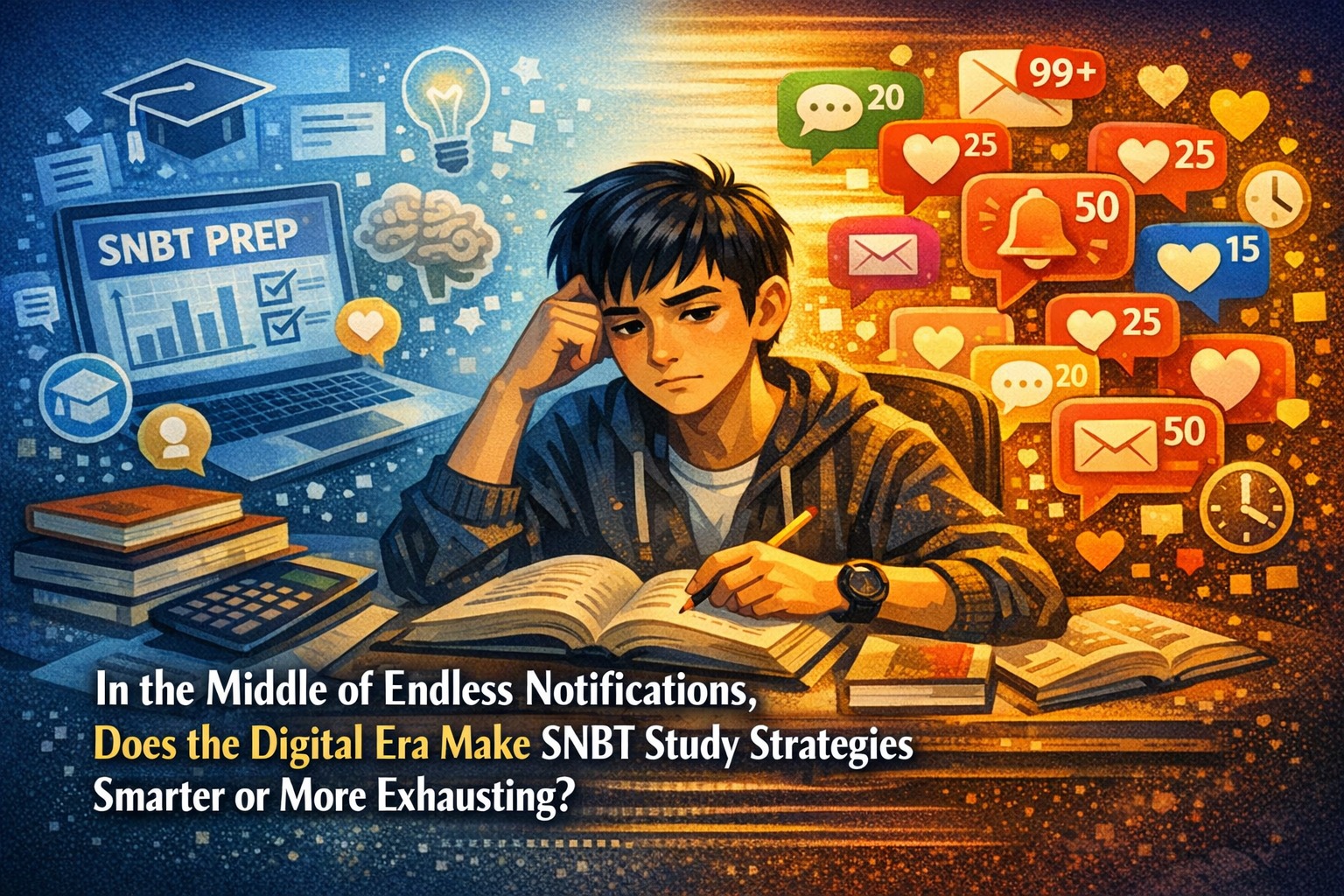
Preparing for SNBT (Seleksi Nasional Berdasarkan Tes) in the digital era is very different from how students studied in the past. Today, almost every student relies on smartphones, laptops, online platforms, and social media to support their learning process. Study materials are easier to access, practice questions are available anytime, and educational videos can explain difficult concepts within minutes. Technology has made academic preparation faster, broader, and more flexible.
However, behind this convenience lies another reality that many students quietly struggle with: endless notifications. Messages from friends, social media updates, trending videos, online games, and constant digital alerts compete for attention every single day. Students often open their phones to study but end up spending hours on unrelated content. What begins as productive learning can quickly turn into mental exhaustion.
This creates an important question for students preparing for SNBT: does the digital era actually make study strategies smarter, or does it make learning more tiring and overwhelming?
The answer depends not only on the technology itself, but also on how students manage their focus, habits, and emotional energy. Technology can become either a bridge to academic success or a trap of constant distraction.
Understanding this balance is essential because SNBT preparation is not only about knowledge, but also about concentration, discipline, and sustainable study habits.
THE RISE OF DIGITAL STUDY HABITS
The way students study has changed dramatically over the last decade. Traditional methods such as printed books, handwritten notes, and face-to-face tutoring are now often combined with digital platforms.
Students use YouTube for concept explanations, Telegram groups for question discussions, Google Drive for shared materials, and online tryout platforms for exam simulations. This learning system feels faster and more practical because information is available instantly.
Digital study habits also allow students to personalize their preparation. They can choose their own study schedule, repeat lessons as needed, and focus more on weak subjects without waiting for classroom sessions.
This flexibility is one of the strongest advantages of modern learning. Students no longer depend entirely on physical learning spaces.
Yet flexibility without discipline can become chaos. Without structure, students may confuse activity with progress. Watching many educational videos does not automatically mean real understanding.
Technology improves access, but it does not replace serious effort.
WHY NOTIFICATIONS BECOME A HIDDEN ENEMY
Notifications may look harmless, but they are one of the strongest enemies of deep focus.
Every message, pop-up, and alert interrupts concentration. Even if students do not immediately respond, the brain still notices the interruption. This creates what psychologists call attention residue, where part of the mind remains attached to the distraction.
For students solving complex reasoning questions or reading long explanations, this interruption can be highly damaging. It takes time to rebuild concentration after each distraction.
The problem becomes worse because notifications are unpredictable. Students remain mentally alert, waiting for the next interruption, even when none appears. This weakens the quality of focused study sessions.
Many students underestimate this issue because checking a phone only takes a few seconds. But repeated interruptions across hours can destroy productivity completely.
Focus is not lost in one big moment. It disappears through many small interruptions.
HOW TECHNOLOGY MAKES STUDY STRATEGIES SMARTER
Despite the distractions, digital tools provide major academic advantages for SNBT preparation.
First, students gain access to unlimited learning resources. Difficult topics such as quantitative reasoning, literacy analysis, and logical thinking can be studied from multiple sources with different teaching styles.
Second, online mock tests help students practice under realistic exam conditions. Time-based simulations improve speed, confidence, and familiarity with question patterns.
Third, data-based learning helps students study more efficiently. Many platforms analyze performance and show which subjects need the most improvement. This prevents wasted time on topics that are already mastered.
Fourth, collaborative learning becomes easier. Students can join online discussion groups, exchange notes, and solve problems together even when they live in different cities.
This creates a smarter study strategy because preparation becomes more targeted and flexible.
Technology can reduce inefficiency when students use it with purpose.
WHEN SMART LEARNING BECOMES MENTAL FATIGUE
The same tools that improve productivity can also create burnout.
Students often feel pressure to use every available resource. They join too many study groups, follow too many educational accounts, and save too many learning materials. Instead of clarity, they experience information overload.
The belief that they must always be productive creates constant anxiety. Rest begins to feel like guilt. Every break feels like lost time.
This leads to mental fatigue, where students are physically present but mentally exhausted. They continue studying, but understanding becomes shallow and motivation drops.
Digital learning can also blur the boundary between study time and personal time. Since the phone is always present, the brain never fully relaxes. Students remain connected to academic pressure even late at night.
Exhaustion is not always caused by hard work. Sometimes it comes from never feeling mentally finished.
THE SOCIAL MEDIA COMPARISON TRAP
One of the most emotionally exhausting parts of digital learning is comparison.
Students often see others posting productive study routines, high practice scores, acceptance announcements, or motivational success stories. While this can inspire some people, it can also create silent pressure.
Many students begin questioning themselves. They feel behind, slower, or less prepared. Instead of focusing on their own progress, they measure their worth against someone else’s highlight reel.
This comparison increases anxiety and reduces self-confidence. Students may start studying from fear rather than genuine academic purpose.
Social media rarely shows the full reality. It highlights results, not the messy process behind them.
Healthy preparation requires remembering that progress is personal. SNBT is not won by comparing journeys, but by consistently improving one’s own.
BUILDING FOCUS IN A DISTRACTION-FILLED WORLD
Focus must be trained intentionally.
Students cannot rely only on motivation because motivation changes daily. Strong focus is built through systems and routines.
Creating phone-free study sessions is one effective method. Even thirty minutes of uninterrupted concentration is often more valuable than three distracted hours.
Using separate devices for studying and entertainment can also help. If this is not possible, students should remove unnecessary applications during study hours.
A clear study plan reduces random decision-making. Knowing exactly what to study prevents wasted energy and helps students avoid emotional resistance.
Physical study environments matter too. A clean desk, enough sleep, and regular breaks improve mental performance more than many students realize.
Focus is not about working longer. It is about protecting attention.
THE IMPORTANCE OF DIGITAL SELF-CONTROL
In the modern academic world, self-control has become as important as intelligence.
Students preparing for SNBT need the ability to delay short-term pleasure for long-term goals. This means choosing revision over endless scrolling and consistency over temporary comfort.
Digital self-control does not mean rejecting technology. It means using technology intentionally instead of emotionally.
Students should ask themselves simple questions: Why am I opening this app? Is this helping my preparation? Am I learning or avoiding discomfort?
These small moments of awareness create stronger habits over time.
Self-control also includes knowing when to rest. Healthy recovery improves performance, while guilty procrastination only increases stress.
Discipline is not punishment. It is protection for future goals.
THE ROLE OF PARENTS AND TEACHERS
Students need support systems, not just personal motivation.
Parents often worry that smartphones only create distraction, but technology can also become a valuable academic partner. The key is guidance, not absolute restriction.
Parents can help by encouraging structured routines, emotional balance, and open communication about academic stress. Pressure without understanding often creates resistance instead of responsibility.
Teachers also play a critical role. They can recommend reliable learning platforms, realistic study strategies, and healthier approaches to exam preparation.
Schools should teach digital literacy, not only subject knowledge. Students must learn how to manage information, protect focus, and use online resources critically.
Strong support reduces unnecessary mental burden and helps students study with more confidence.
FINDING A HEALTHY BALANCE FOR SNBT SUCCESS
The goal is not to escape the digital era, but to manage it wisely.
Technology is now part of education, and it will continue shaping how students learn. The challenge is not whether students should use digital tools, but whether they can use them without losing control of their attention and energy.
Smart study strategies require balance. Students need both access to resources and boundaries from distractions. They need productivity without burnout, motivation without unhealthy comparison, and discipline without emotional exhaustion.
SNBT preparation should be sustainable, not destructive.
In the middle of endless notifications, success belongs not to the student who studies the longest, but to the one who protects focus the best.
Technology can make study strategies smarter, but only when students remain the ones controlling the screen—not the other way around.
In the end, academic success is not determined by how many applications are installed, but by how well students manage their mind, time, and attention.
Tentang Penulis
Gusti Ayu Tita P
Penulis — Universitas STEKOM
Penulis aktif yang berfokus pada isu-isu akademik, teknologi pendidikan, dan pengembangan sumber daya manusia di lingkungan kampus.