Inside Indonesian Royal Palaces and Their Historical Significance
Gusti Ayu Tita P
4 September 2026
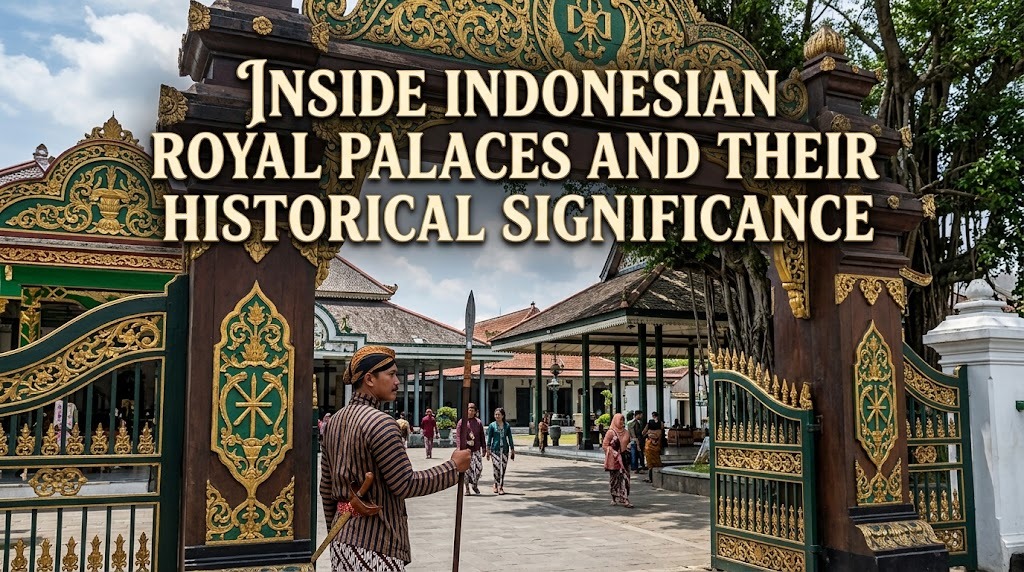
Indonesian royal palaces are more than beautiful historical buildings. They are important cultural spaces that preserve stories, traditions, architecture, art, and social values from generations of Indonesian history. Across Java and other regions, royal palaces continue to attract visitors who want to understand how traditional societies developed and how cultural heritage is maintained today. Exploring these places provides a deeper look into the relationship between history, royal traditions, and Indonesian cultural identity.
THE HISTORICAL ROLE OF INDONESIAN ROYAL PALACES
Indonesian royal palaces developed as important centers of government, culture, and social life. In Java, palaces were closely connected with kingdoms and sultanates that influenced politics, religion, art, and local traditions. Their development was shaped by historical changes, including the arrival of Islam, interactions with European powers, and the transformation of traditional kingdoms during the colonial period. Because of this long history, each palace has its own character and historical significance.
Palaces also served purposes beyond royal residences. They became places where traditional knowledge and cultural practices were passed from one generation to another. Music, dance, literature, ceremonies, etiquette, and traditional crafts were often connected with palace life. Today, surviving palaces provide valuable evidence of how Indonesian communities understood leadership, society, spirituality, and artistic expression.
FAMOUS ROYAL PALACES IN JAVA
Java is home to several well-known royal palaces with significant historical and cultural backgrounds. The Keraton Yogyakarta remains one of the most prominent examples and continues to function as a cultural institution as well as a royal residence. The Kasunanan Surakarta Palace in Central Java is another important center of Javanese cultural heritage, with collections, ceremonies, and traditional arts connected to its history. Other royal sites across Java also demonstrate the diversity of political and cultural traditions that developed in the region.
Each palace offers a different experience for visitors. Some are known for their architecture, while others are especially important for their ceremonies, collections, or performing arts. Visitors can see traditional buildings, royal objects, musical instruments, clothing, and other cultural materials. Exploring these places helps people understand that Javanese royal heritage is diverse rather than being represented by a single palace or tradition.
ARCHITECTURE AND CULTURAL SYMBOLISM
Palace architecture often reflects the values and worldview of the society that created it. Traditional Javanese palace complexes may contain reception halls, courtyards, royal residences, gardens, and spaces used for ceremonies. The arrangement of buildings can represent ideas about order, hierarchy, balance, and relationships between humans and their environment. Architectural details therefore have cultural meanings that go beyond their physical appearance.
Traditional structures such as the joglo are also strongly associated with Javanese architectural heritage. Roof shapes, entrances, open spaces, decorative elements, and the placement of buildings can communicate social and cultural ideas. In many palace environments, visitors may notice that certain spaces have specific functions and levels of access. Understanding these elements makes a visit more meaningful because the palace can be viewed not simply as an old building but as a cultural system.
TRADITIONS AND PALACE CEREMONIES
One of the most valuable aspects of Indonesian royal palaces is their connection with traditional ceremonies. Various ceremonies may involve traditional music, dance, clothing, offerings, processions, and symbolic rituals. Some practices have been maintained for generations, although their forms and frequency can change over time. These traditions demonstrate how historical cultural values continue to interact with contemporary society.
Palace ceremonies can also strengthen relationships between royal institutions and surrounding communities. People may participate as performers, cultural workers, visitors, or members of local communities. Traditional arts such as gamelan music and Javanese dance can become important parts of cultural events associated with palace traditions. Through continued practice, these activities help prevent important cultural knowledge from disappearing.
ROYAL PALACES AS CULTURAL HERITAGE
Royal palaces play an important role in preserving Indonesia's cultural heritage because they maintain both physical and intangible heritage. Physical heritage includes buildings, historical objects, traditional clothing, manuscripts, and artistic collections. Intangible heritage includes ceremonies, performing arts, language, etiquette, stories, and knowledge passed through generations. Protecting both forms of heritage is important for understanding Indonesia's complex historical development.
Modern cultural preservation also involves museums, educational programs, cultural performances, documentation, and responsible tourism. These efforts can introduce younger generations to traditions that might otherwise become less familiar. At the same time, preservation requires careful attention so that cultural practices are not reduced to simple tourist attractions. Respect for historical context and local communities is essential when presenting royal heritage to the public.
THE IMPORTANCE OF ROYAL PALACES FOR FUTURE GENERATIONS
Indonesian royal palaces remain valuable because they connect the present with the country's historical past. They allow people to learn about political changes, traditional lifestyles, architecture, arts, and cultural beliefs through tangible historical places. For students and researchers, palaces can provide opportunities to study history, anthropology, architecture, and cultural heritage. For tourists, they offer a chance to experience Indonesian culture in a setting shaped by centuries of history.
Preserving these places is therefore a shared responsibility. Government institutions, palace communities, cultural organizations, researchers, local residents, and visitors all have roles in protecting heritage. Responsible tourism can support preservation when visitors respect rules, traditions, historical objects, and cultural spaces. By maintaining royal palaces and the traditions connected to them, Indonesia can ensure that future generations continue to understand and appreciate its cultural identity.
CONCLUSION
Indonesian royal palaces are important historical and cultural landmarks that preserve much more than royal architecture. They contain stories about politics, traditions, art, architecture, ceremonies, and community life that developed across generations. Palaces in Java, including Yogyakarta and Surakarta, demonstrate the richness of Javanese cultural heritage while reflecting broader aspects of Indonesian history. Their continued preservation can help ensure that valuable traditions remain meaningful in the modern era.
Tentang Penulis
Gusti Ayu Tita P
Penulis — Universitas STEKOM
Penulis aktif yang berfokus pada isu-isu akademik, teknologi pendidikan, dan pengembangan sumber daya manusia di lingkungan kampus.