
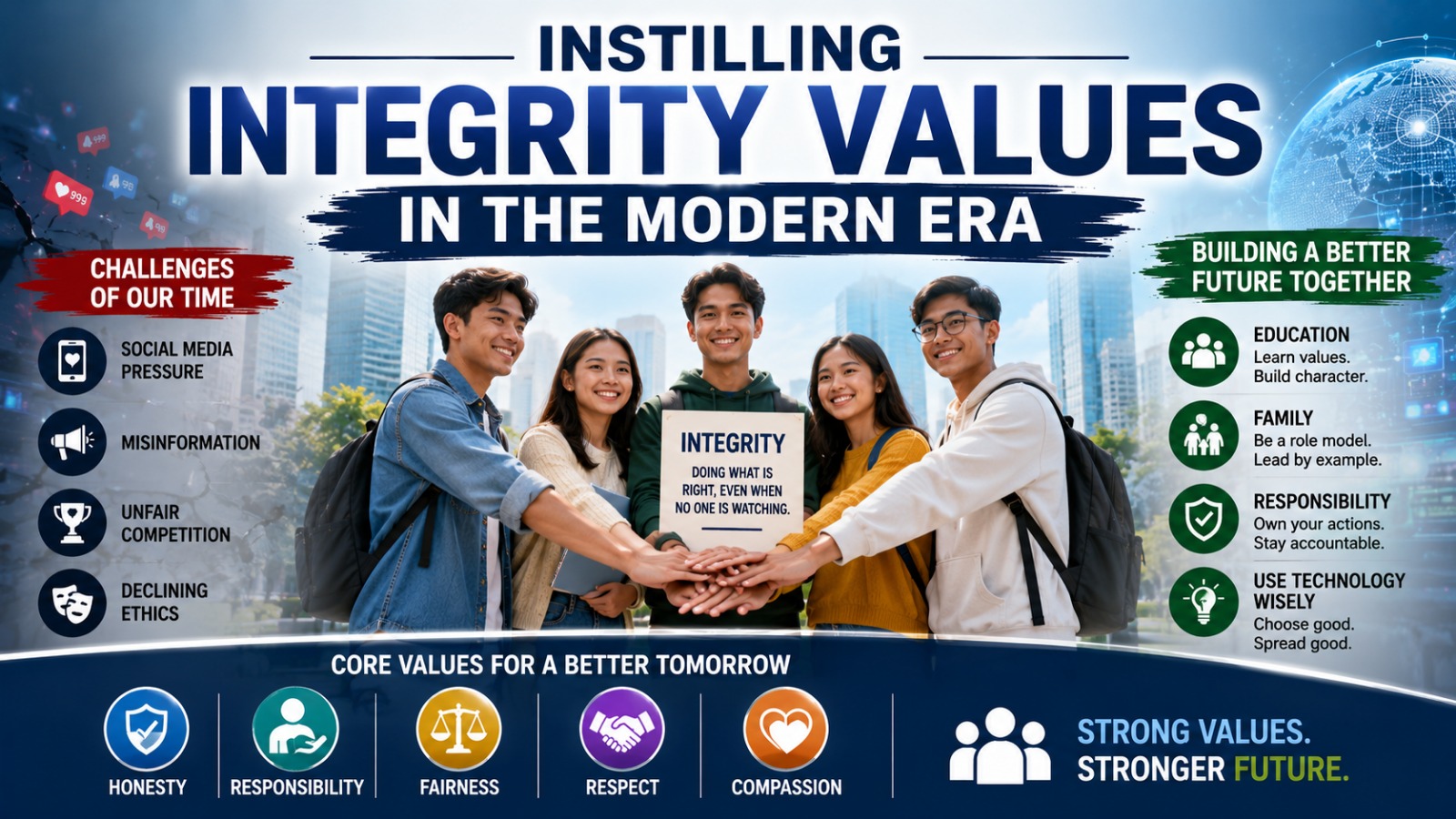
In today’s fast-changing world, integrity has become one of the most important values for individuals and society. Technological advancement, social media influence, and global competition have created many opportunities, but they have also increased ethical challenges. Dishonesty, corruption, misinformation, and irresponsible behavior can spread quickly if integrity is not strongly maintained.
Instilling integrity values in the modern era is essential for building responsible individuals, trustworthy institutions, and healthy communities. Integrity encourages honesty, accountability, fairness, and consistency between words and actions. These values are important not only in professional environments but also in everyday life.
UNDERSTANDING INTEGRITY
Integrity refers to the quality of being honest, ethical, and morally consistent. A person with integrity acts according to strong principles even when facing pressure or temptation.
Integrity is closely connected to values such as honesty, responsibility, discipline, fairness, and respect for others. In modern society, integrity has become a key factor in maintaining trust and credibility.
WHY INTEGRITY IS IMPORTANT IN THE MODERN ERA?
The digital age has changed how people communicate, work, and interact. While technology provides many benefits, it also creates challenges that require strong ethical awareness.
1.BUILDING TRUST
Integrity helps create trust in personal relationships, workplaces, businesses, and governments. Trust is essential for cooperation and long-term success.
2.PREVENTING CORRUPTION
Strong integrity values reduce the risk of corruption, fraud, and abuse of power. Ethical individuals are more likely to reject dishonest behavior.
3.ENCOURAGING RESPONSIBILITY
People with integrity are willing to take responsibility for their actions and decisions. This attitude improves professionalism and accountability.
4.CREATING POSITIVE SOCIAL ENVIRONMENTS
Communities that value integrity tend to be more fair, peaceful, and respectful toward others.
THE ROLE OF EDUCATION IN TEACHING INTEGRITY
Education plays an important role in shaping ethical behavior from an early age.
1.TEACHING MORAL VALUES
Schools should integrate lessons about honesty, discipline, respect, and responsibility into learning activities.
2.ENCOURAGING ETHICAL BEHAVIOR
Teachers can help students understand the importance of integrity through fair rules, positive examples, and open discussions.
3.DEVELOPING CRITICAL THINKING
Students should be encouraged to think critically about ethical issues, digital behavior, and social responsibility.
THE ROLE OF FAMILIES IN BUILDING INTEGRITY
Families are the first environment where children learn values and behavior.
Parents can teach integrity by becoming positive role models in daily life. Simple actions such as telling the truth, keeping promises, respecting rules, and admitting mistakes can strongly influence children’s character development.
Consistent communication about ethics and responsibility also helps children understand the importance of integrity in different situations.
CHALLENGES OF MAINTAINING INTEGRITY IN THE DIGITAL ERA
Modern society presents several challenges that can weaken integrity values.
1.SOCIAL MEDIA PRESSURE
Many people feel pressure to seek popularity, attention, or validation online, sometimes leading to dishonest behavior or misinformation.
2.EASY ACCESS TO FALSE INFORMATION
Digital platforms allow false information and unethical content to spread quickly if users are not careful.
3.COMPETITIVE ENVIRONMENTS
Academic and professional competition may encourage some individuals to use unfair shortcuts to achieve success.
4.DECLINING ETHICAL AWARENESS
Rapid technological development sometimes progresses faster than public understanding of ethical responsibility.
HOW TO STRENGTHEN INTEGRITY VALUES?
Building integrity requires continuous effort from individuals, institutions, and society.
1.PROMOTING ETHICAL LEADERSHIP
Leaders should demonstrate honesty, fairness, and accountability in their actions.
2.ENCOURAGING TRANSPARENCY
Open communication and transparent systems help reduce opportunities for dishonest practices.
3.USING TECHNOLOGY RESPONSIBLY
Digital technology should be used to spread positive values, educational content, and ethical awareness.
4.SUPPORTING CHARACTER DEVELOPMENT
Schools, workplaces, and communities should prioritize character education alongside academic or professional achievement.
CONCLUSION
Instilling integrity values in the modern era is essential for creating a responsible and trustworthy society. In a world influenced by rapid technological change and social pressure, integrity helps individuals make ethical decisions and maintain honesty in everyday life.
Education, family guidance, ethical leadership, and responsible digital behavior all play important roles in strengthening integrity. By promoting honesty, accountability, and fairness, society can build a better future based on trust and mutual respect.
Tentang Penulis
Gusti Ayu Tita P
Penulis — Universitas STEKOM
Penulis aktif yang berfokus pada isu-isu akademik, teknologi pendidikan, dan pengembangan sumber daya manusia di lingkungan kampus.