
Is Four Years of College Still Worth It in the Digital Revolution
Gusti Ayu Tita P
26 Februari 2026
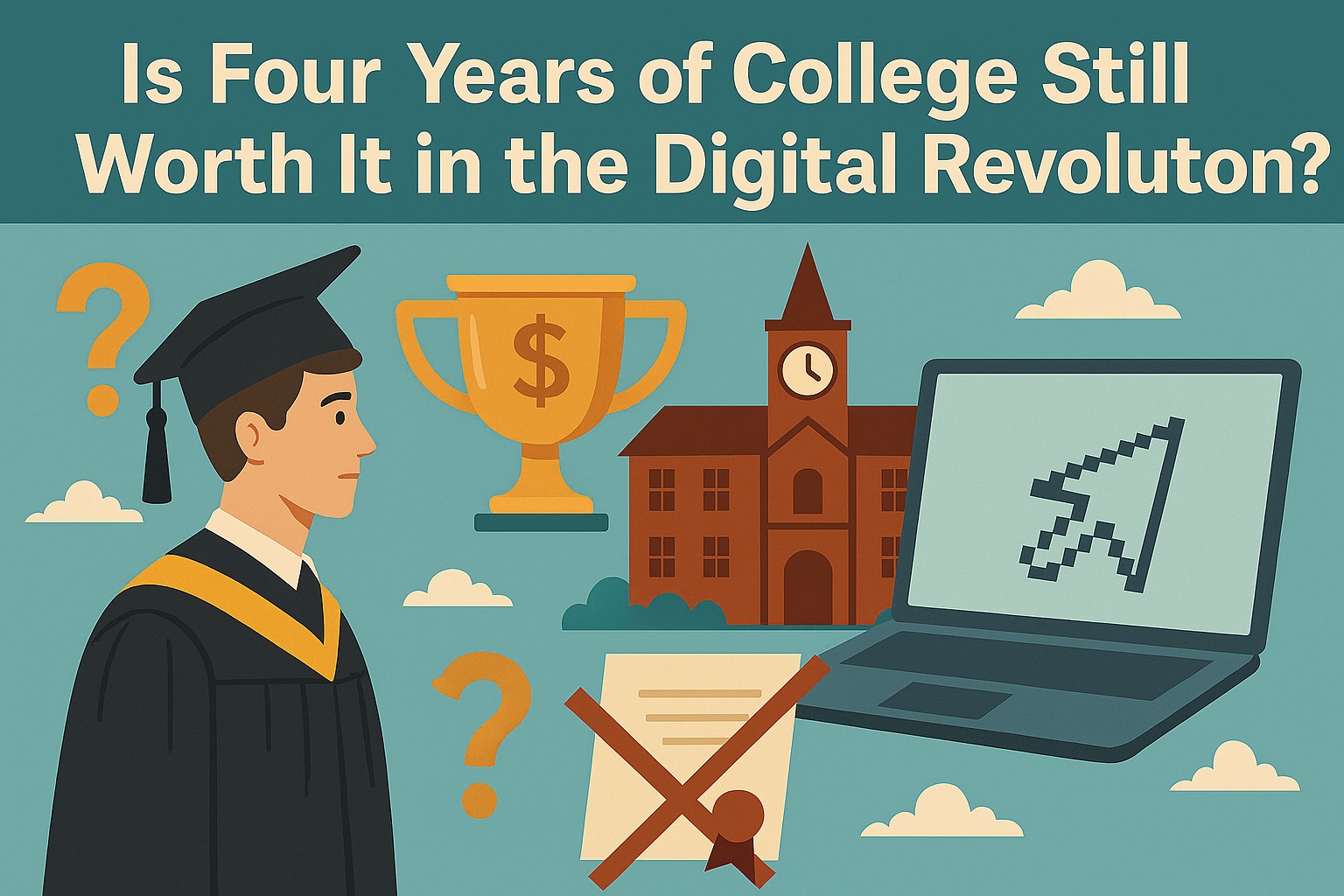
The digital revolution has transformed nearly every aspect of modern life, including education and employment. With rapid advancements in technology, online learning platforms, and alternative career pathways, many students and parents are questioning a long-standing belief: is four years of college still worth it in the digital revolution?
For decades, a traditional college degree symbolized stability, credibility, and upward mobility. Today, however, shifting industry demands and the rise of skills-based hiring have sparked a renewed debate about the return on investment of higher education.
THE IMPACT OF THE DIGITAL REVOLUTION ON CAREERS
Automation, artificial intelligence, and remote work have redefined the global job market. Companies now seek professionals who can adapt quickly, master digital tools, and solve complex problems in dynamic environments.
In technology-driven sectors, practical skills such as coding, data analysis, digital marketing, and UX design are often prioritized. Employers increasingly evaluate candidates through technical assessments, portfolios, and real-world experience rather than academic credentials alone.
This transformation has led some to believe that shorter, skill-focused programs may offer faster entry into the workforce.
THE ENDURING BENEFITS OF A FOUR-YEAR DEGREE
Despite rapid change, a four-year college education continues to offer valuable advantages. Universities provide structured curricula that build theoretical understanding, analytical thinking, and research capabilities.
College also fosters personal development through collaboration, leadership opportunities, and exposure to diverse ideas. Networking with professors, alumni, and peers can create long-term professional connections that extend beyond graduation.
In regulated professions such as medicine, law, engineering, and education, a bachelor’s degree remains essential. For these fields, formal education is not just beneficial—it is required.
COST, TIME, AND RETURN ON INVESTMENT
One of the biggest concerns about a four-year degree is cost. Tuition fees, living expenses, and opportunity costs can be significant. Students must carefully evaluate whether the potential earnings and career opportunities justify the investment.
In some industries, graduates with specialized degrees often experience higher long-term income and career advancement. In others, alternative certifications or technical training may provide quicker and more affordable entry points.
The true value of college depends on career goals, financial planning, and industry requirements.
INTEGRATING TRADITIONAL EDUCATION WITH DIGITAL SKILLS
Rather than viewing college and digital learning as opposing paths, many successful professionals combine both. A university education can provide foundational knowledge, while online courses and certifications keep skills aligned with evolving industry trends.
Continuous learning is essential in the digital age. Graduates who actively update their expertise remain competitive and adaptable in fast-changing markets.
The most effective strategy is not choosing one path exclusively, but aligning education with long-term professional objectives.
CONCLUSION
So, is four years of college still worth it in the digital revolution? The answer depends on individual aspirations and industry demands. A college degree continues to offer academic depth, credibility, and access to regulated careers. However, it is no longer the sole determinant of success.
In today’s world, career achievement is driven by adaptability, digital competence, and lifelong learning. Whether through traditional education, alternative programs, or a combination of both, those who continuously develop their skills will be best positioned to thrive.
Tentang Penulis
Gusti Ayu Tita P
Penulis — Universitas STEKOM
Penulis aktif yang berfokus pada isu-isu akademik, teknologi pendidikan, dan pengembangan sumber daya manusia di lingkungan kampus.



