
Is Offline Learning Still Superior in Building Relationships and Networking?
Gusti Ayu Tita P
26 Februari 2026
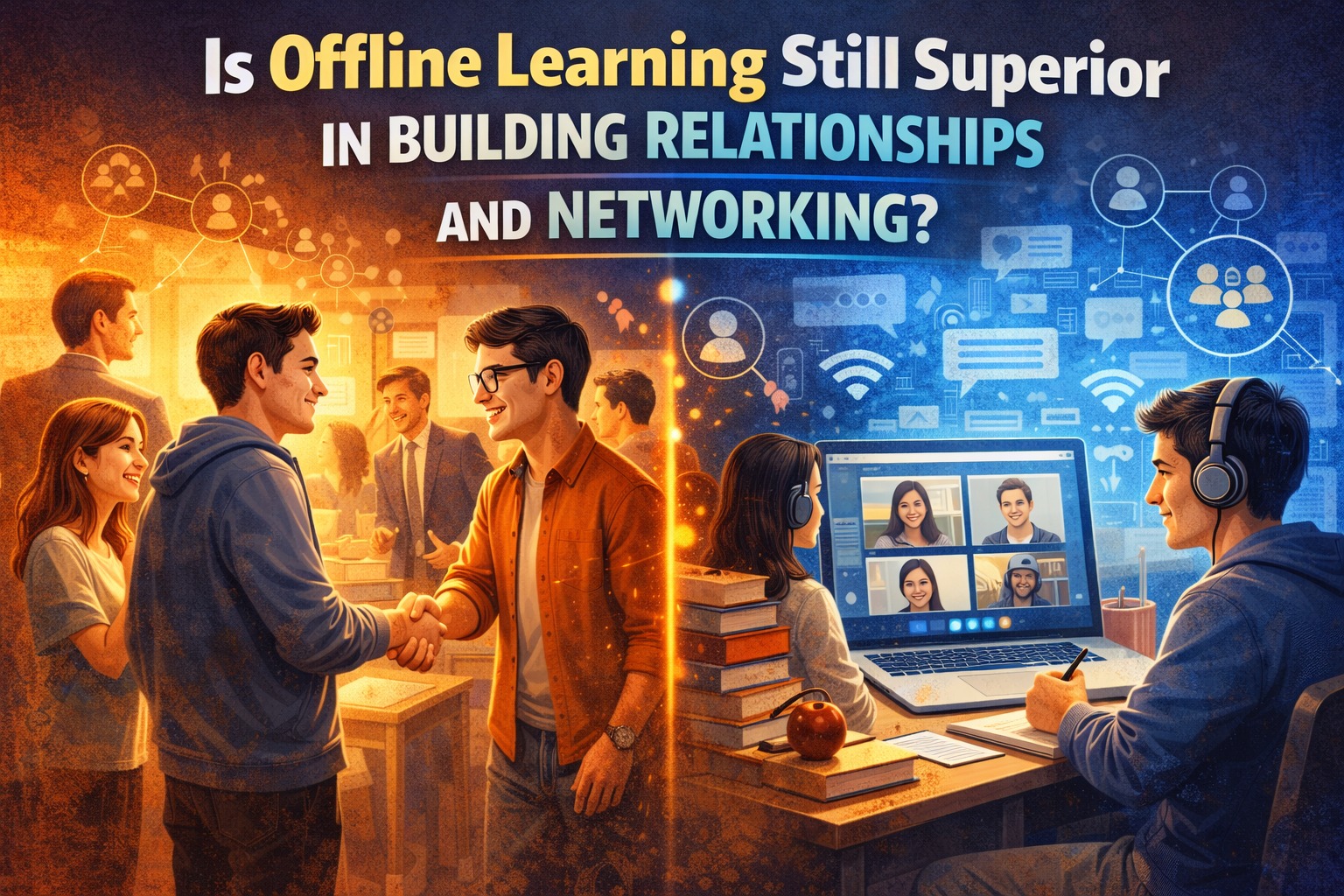
Amid the rapid development of educational technology, online learning systems have become increasingly popular and offer many conveniences. However, behind this flexibility, an important question arises: is offline learning still superior in building relationships and networking for students? This topic remains highly relevant, as relationships and professional networks often play a major role in future career development.
THE ROLE OF RELATIONSHIPS AND NETWORKING IN CAMPUS LIFE
Relationships and networking are not merely about knowing many people, but about building mutually supportive connections both academically and professionally. In the campus environment, strong relationships can open opportunities for collaboration, student organizations, internships, and future career recommendations.
The ability to build networks during university life is a valuable asset whose importance often rivals academic achievement.
THE NATURE OF INTERACTION IN OFFLINE LEARNING
Offline learning creates a more natural and spontaneous space for interaction. Face-to-face meetings in class, group discussions, and non-academic activities allow students to interact more intensely and continuously.
Through direct interaction, students can more easily build trust, read body language, and develop emotional closeness—key foundations for long-term relationships.
NETWORKING OPPORTUNITIES THROUGH CAMPUS ACTIVITIES
Offline learning supports various campus activities such as student organizations, committees, interest-based communities, and social initiatives. These activities bring together students from diverse backgrounds and naturally expand their networks.
Relationships formed through shared experiences tend to be stronger and more enduring than brief interactions in virtual spaces.
CHALLENGES OF BUILDING RELATIONSHIPS IN ONLINE LEARNING
Online learning still allows networking, but the process is generally more limited. Interactions tend to be formal, brief, and focused mainly on academic content. Many students also feel hesitant to initiate conversations in digital environments.
As a result, relationships formed online are often less deep and more likely to fade once the course ends.
SOCIAL ADVANTAGES OF OFFLINE LEARNING
Physical campus environments encourage social interaction beyond scheduled classes. Casual conversations before and after lectures, informal discussions, and shared activities help students get to know each other on a more personal level.
These social advantages make offline learning more effective in building high-quality and meaningful networking experiences.
THE ROLE OF STUDENTS’ SOCIAL SKILLS
Although offline systems provide greater opportunities, success in building relationships still depends on students’ initiative and social skills. Being open, actively participating, and consistently maintaining communication are key to developing strong networks.
Whether online or offline, students must take an active role to ensure that the relationships they build are truly beneficial.
CONCLUSION
Offline learning remains superior in building relationships and networking due to more intensive and natural face-to-face interactions. The physical campus environment supports the formation of strong, sustainable, and long-term connections. While online learning offers flexibility, combining both systems with the right approach can be the most effective strategy for students to build solid and meaningful networks.
Tentang Penulis
Gusti Ayu Tita P
Penulis — Universitas STEKOM
Penulis aktif yang berfokus pada isu-isu akademik, teknologi pendidikan, dan pengembangan sumber daya manusia di lingkungan kampus.



