Land Disputes and the Importance of Understanding Ownership Status
Gusti Ayu Tita P
2 September 2026
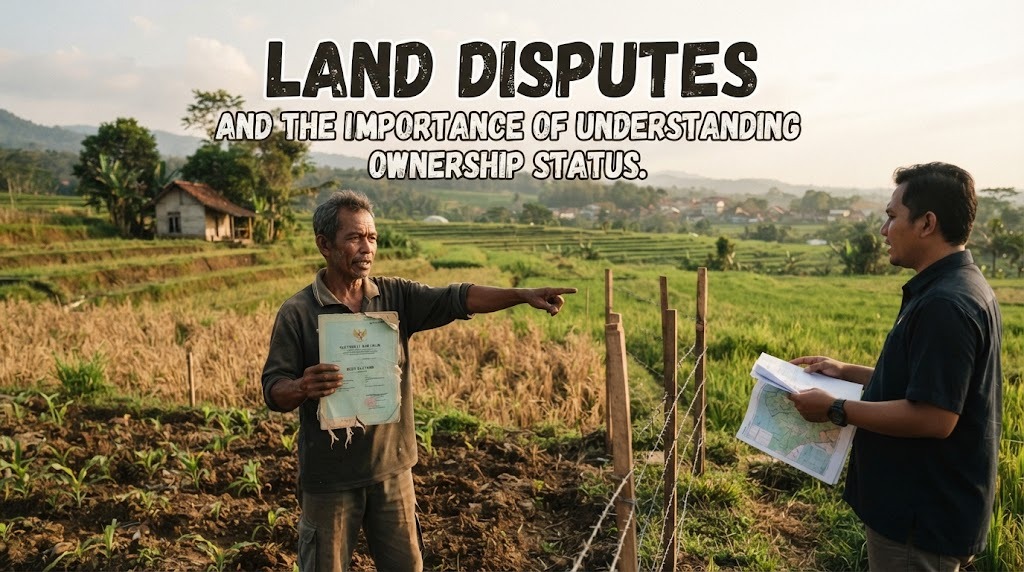
Land is a valuable asset that can be used for housing, business, investment, and other purposes. Because of its high value, land can also become the source of serious disputes when ownership is unclear. Land disputes may involve competing ownership claims, unclear boundaries, inheritance, property transactions, or inconsistent documents. Understanding ownership status is therefore an important step in protecting property rights and preventing future legal problems.
WHAT IS LAND OWNERSHIP STATUS
Land ownership status refers to the legal relationship between a person or legal entity and a particular piece of land. It provides information about who holds the relevant rights and what type of land right applies. In Indonesia, a land certificate is one of the important documents used as evidence of registered land rights. The type of right stated in the document should also be understood because different land rights have different characteristics and legal requirements.
Checking ownership status involves more than simply looking at the name on a certificate. Buyers and landowners should also consider the property's history, boundaries, physical condition, and possible legal issues. Official records should be compared with the actual condition of the land whenever possible. Proper verification can reduce the risk of future claims from other parties.
COMMON CAUSES OF LAND DISPUTES
Land disputes can arise from various circumstances involving individuals, families, communities, companies, or other parties. One common cause is overlapping claims over the same piece of land. Disagreements may also occur because property boundaries are unclear or because the physical condition does not match official documents. Improper property transactions can create additional risks.
Inheritance is another common source of land disputes. A single property may involve several heirs with different interests and expectations. If inheritance rights have not been properly clarified, disagreements can occur when someone attempts to sell or use the land. Old documents, incomplete records, and unclear transfers of ownership can also contribute to conflicts.
WHY LAND CERTIFICATES ARE IMPORTANT
A land certificate is an important document that should be carefully reviewed when determining the status of registered land rights. Buyers should check the holder's name, type of right, land area, location, and other relevant information. A copy provided by a seller should not automatically be treated as sufficient proof. Verification through the relevant land authority or official land administration services can provide greater certainty.
A certificate should also be considered together with other relevant information about the property. If the certificate contains information that does not match the actual property, the discrepancy should be investigated before a transaction continues. Buyers should avoid making substantial payments while important ownership issues remain unresolved. Careful verification can help prevent costly disputes after a transaction.
CHECK THE PROPERTY OWNERSHIP HISTORY
The ownership history can help explain how land was acquired and transferred from one party to another. Previous transactions may involve sales, gifts, inheritance, or other forms of legal transfer. Buyers should verify that previous transfers were properly documented and carried out according to applicable procedures. This becomes particularly important when a property has changed hands several times.
Older documents should not automatically be ignored simply because the current owner has a registered certificate. Problems arising from earlier transactions may sometimes become the basis of later claims. Reviewing the ownership history can also help identify possible inheritance or third-party claims. If the history is complicated, professional legal assistance can help clarify the situation.
VERIFY LAND BOUNDARIES
Ownership status should be compared with the physical condition of the property. Buyers should check the location, size, shape, and boundaries of the land against the available land documents. A direct site inspection can reveal issues such as fences extending beyond the actual boundary or neighboring parties using part of the property. Where necessary, proper land measurement can provide more accurate information.
Unclear boundaries can easily lead to disagreements between neighboring landowners. Buyers should therefore avoid relying solely on statements from the seller. Information from neighbors or people familiar with the property may provide useful background, but it should still be verified through reliable evidence. Clear boundaries can significantly reduce the possibility of future boundary disputes.
UNDERSTAND DIFFERENT LAND RIGHTS
Not all land rights provide the same legal position. In Indonesia, rights such as Hak Milik, Hak Guna Usaha, Hak Guna Bangunan, and Hak Pakai have different characteristics and legal requirements. Buyers should understand what type of right applies to the property before completing a transaction. Assuming that all land certificates provide identical rights can lead to misunderstandings.
Understanding the type of land right is especially important for investment and development purposes. The intended use of the land should be consistent with the applicable rights and regulations. If a transfer, extension, or change of rights is required, the relevant legal procedures should be followed. Understanding these matters from the beginning helps buyers make better property decisions.
HOW TO PREVENT OWNERSHIP DISPUTES
Preventing ownership disputes should begin before buying, selling, or using land. Review the original documents, identity of the rights holder, ownership history, property boundaries, and relevant legal information. For transactions requiring a PPAT deed, use the services of an authorized PPAT and follow the applicable land procedures. Avoid making substantial payments before the property's legal status has been properly verified.
All transaction documents and payment records should also be stored safely. Verbal agreements should not replace proper written documentation, particularly for high-value property transactions. If ownership issues are complicated, consulting a qualified lawyer or land professional can help identify potential risks. Early verification is generally safer and less costly than dealing with a land dispute after the transaction.
CONCLUSION
Land disputes can result from unclear ownership status, overlapping claims, boundary problems, inheritance issues, or inconsistent documentation. Understanding ownership status is therefore essential before buying, selling, or using land. Checking certificates, ownership history, land rights, and physical boundaries can help reduce the risk of legal conflicts.
Property buyers should avoid rushing into transactions simply because of an attractive price or location. Every important piece of information should be verified before a major financial commitment is made. When complex legal issues arise, professional assistance can provide additional protection. Proper due diligence can make property transactions safer and help protect land ownership rights in the future.
Tentang Penulis
Gusti Ayu Tita P
Penulis — Universitas STEKOM
Penulis aktif yang berfokus pada isu-isu akademik, teknologi pendidikan, dan pengembangan sumber daya manusia di lingkungan kampus.