Madrasah Examination Preparation Guide for Students
Gusti Ayu Tita P
29 Agustus 2026
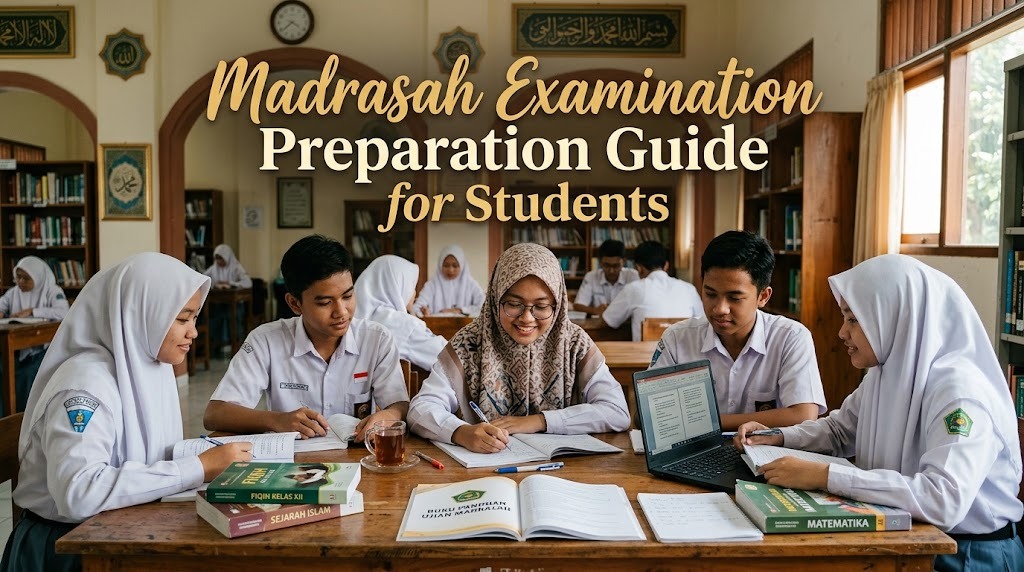
The Madrasah Examination is an important assessment for students studying at madrasahs. Good preparation can help students understand the material, manage their time, and feel more confident during the examination. Preparation should not only focus on studying but also include enough rest, healthy habits, and effective practice. With a clear plan, students can prepare for the examination without feeling overwhelmed.
UNDERSTAND THE EXAMINATION MATERIAL
The first step in Madrasah Examination preparation is understanding the subjects and materials that may be tested. Students should review information provided by teachers, including learning topics, examination schedules, and applicable rules. Textbooks, class notes, assignments, and official learning materials can be useful study references. Knowing what to study helps students avoid wasting time on topics that are not relevant.
Students should divide the material into smaller sections to make learning easier. Identify topics that are already understood and those that still require more attention. Difficult subjects can be given additional study time without ignoring other subjects. This approach helps create a more balanced and organized preparation process.
CREATE A REALISTIC STUDY SCHEDULE
A study schedule helps students organize their preparation before the examination. Set specific times for studying each subject based on its difficulty and importance. Avoid creating a schedule that is too demanding because it can be difficult to follow consistently. A simple schedule that can be followed every day is usually more useful than an unrealistic plan.
Include short breaks between study sessions to maintain concentration. Students should also make time for sleep, meals, worship, family activities, and other necessary routines. Review the schedule regularly and make adjustments when needed. Consistent study habits can gradually improve understanding without requiring excessive study sessions.
USE EFFECTIVE STUDY TECHNIQUES
Different students may learn best through different methods. Some may prefer making summaries, while others understand lessons better through practice questions, discussions, or mind maps. Students should try several techniques and identify which methods help them remember and understand information. Using active learning methods can make study sessions more productive.
One useful approach is to explain a topic using your own words after studying it. Students can also create questions from the material and try to answer them without looking at their notes. Reviewing information at different times can help strengthen memory. The main goal is to understand the material rather than simply memorize it.
PRACTICE WITH QUESTIONS REGULARLY
Practice questions are useful for checking how well students understand the material. Start by answering questions related to topics that have already been studied. After completing the questions, review incorrect answers carefully. Understanding why an answer is wrong is more valuable than simply checking the final score.
Students can gradually practice under time limits to improve their examination skills. Try to complete a set of questions without using notes or other sources. Record topics that frequently cause mistakes and review them again. Regular practice can improve accuracy, speed, and confidence before the actual examination.
JOIN A STUDY GROUP
Studying with classmates can provide additional ways to understand difficult subjects. Students can discuss topics, exchange explanations, and ask questions that may not have been considered during individual study. Explaining a lesson to another person can also strengthen personal understanding. A study group can therefore become a useful supplement to independent learning.
To remain effective, every study group should have a clear purpose. Choose specific topics to discuss and set a reasonable time limit for each session. Avoid turning the session into a general conversation that does not support examination preparation. Questions that remain unclear can be discussed with the teacher afterward.
MANAGE DIGITAL DISTRACTIONS
Phones and social media can easily interrupt study sessions. Notifications, entertainment applications, and unrelated online activities can reduce concentration. Students should silence unnecessary notifications and keep distracting applications away during focused study periods. Creating a quiet study environment can make it easier to stay focused.
Digital devices can still be useful when they support learning. Students can use educational videos, digital books, online exercises, or study applications when appropriate. The important thing is to use technology with a clear purpose. Setting specific periods for entertainment can also help prevent excessive screen time from interfering with study.
GET ENOUGH SLEEP AND REST
Sleep is an important part of examination preparation because the brain needs adequate rest to function effectively. Staying up late to study may leave students tired and less focused the next day. For this reason, students should avoid making overnight study sessions a regular habit. Studying earlier and following a consistent schedule can provide more time for proper rest.
Short breaks are also useful during study sessions. Stand up, stretch, drink water, or take a brief walk before returning to the material. Rest should not be viewed as wasted time because it can help maintain concentration. A balanced routine can make studying more sustainable throughout the preparation period.
STAY CALM BEFORE THE EXAMINATION
Feeling nervous before an examination is normal, especially when students care about their results. However, excessive worry can make it harder to concentrate and remember information. Proper preparation can reduce uncertainty and help students feel more confident. Avoid comparing your preparation progress too closely with other students.
When feeling anxious, take a moment to breathe slowly and focus on the task in front of you. Break large study goals into smaller and achievable steps. Students can also talk with parents, teachers, or trusted friends when they need support. A calm mindset can help students use their preparation more effectively.
PREPARE EVERYTHING BEFORE EXAMINATION DAY
Students should prepare their examination supplies before the examination day. Check the stationery and other items that are permitted by the madrasah. Review the examination schedule and location to avoid confusion or arriving late. Make sure all instructions from the madrasah have been understood.
Avoid intensive last minute studying on the night before the examination. Review key notes briefly and use the remaining time to rest. Prepare your clothes and examination supplies in advance if necessary. Arriving prepared and on time can help students begin the examination with a more focused mindset.
CONCLUSION
Preparing for the Madrasah Examination requires more than simply memorizing lessons. Students should understand the examination material, create a realistic study schedule, use effective learning techniques, and practice questions regularly. Managing digital distractions, getting enough sleep, and staying calm are also important parts of successful preparation. With consistent effort and proper planning, students can face the examination with greater confidence and readiness.
Tentang Penulis
Gusti Ayu Tita P
Penulis — Universitas STEKOM
Penulis aktif yang berfokus pada isu-isu akademik, teknologi pendidikan, dan pengembangan sumber daya manusia di lingkungan kampus.