Managing Emotions As A Key To Resolving Family Conflict
Gusti Ayu Tita P
8 September 2026
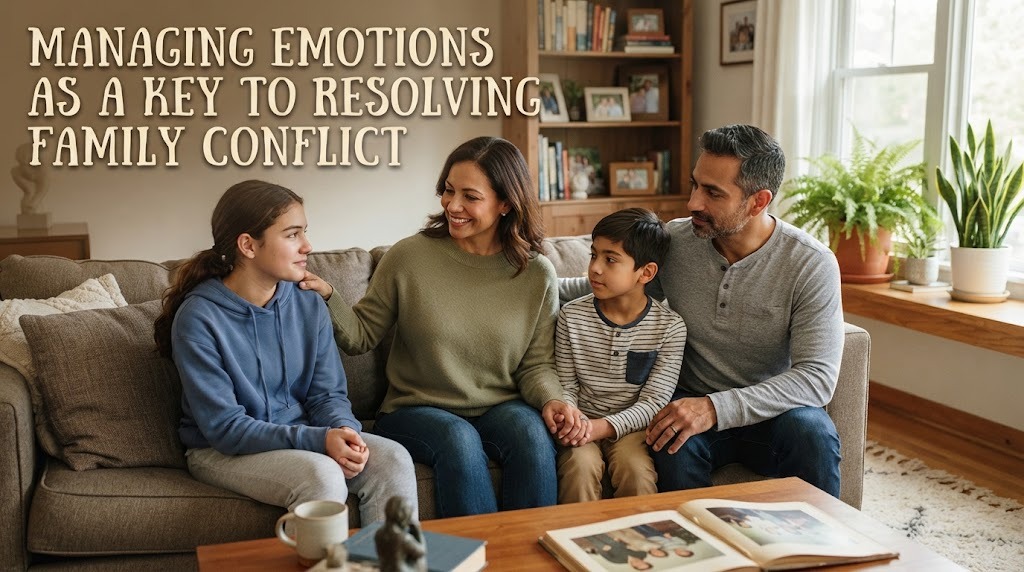
Family conflict often begins with different opinions, unmet expectations, or misunderstandings. However, the situation can become worse when strong emotions are not managed properly. Anger, disappointment, sadness, and frustration may influence the way family members speak and react to each other. Managing emotions does not mean hiding feelings or pretending that everything is fine. Instead, it means understanding emotions and choosing a healthier way to respond.
UNDERSTAND THE EMOTIONS BEHIND THE CONFLICT
The first step in resolving family conflict is recognizing the emotions involved. A person may appear angry, but the real feeling could be hurt, disappointment, fear, or frustration. Understanding these emotions can help family members identify the real reason behind an argument. It also prevents people from reacting only to what they see on the surface. When emotions are recognized clearly, communication can become more focused and productive.
Family members should give themselves time to identify what they are feeling before responding. Asking questions such as “Why am I angry?” or “What made me feel hurt?” can provide useful insight. Emotional awareness helps people understand themselves and communicate their needs more clearly.
CALM YOURSELF BEFORE RESPONDING
When emotions become intense, it can be difficult to think logically. Taking a short break before responding can prevent unnecessary words or actions that may damage the relationship. Simple techniques such as deep breathing, walking, or staying quiet for a few minutes can help reduce emotional intensity. The purpose of taking a break is not to avoid the problem, but to return to the discussion with a calmer mind. This can make difficult conversations much easier to manage.
People should also avoid continuing an argument when they feel unable to control their reactions. A calm pause can create enough space to think about the consequences of different responses. Self-control allows family members to respond thoughtfully instead of reacting impulsively.
EXPRESS FEELINGS WITHOUT ATTACKING OTHERS
Managing emotions does not mean keeping feelings inside. Family members should be able to express anger, sadness, disappointment, and concerns in a respectful way. Using statements that focus on personal feelings can be more effective than blaming another person. For example, saying “I feel ignored when my opinion is not considered” communicates a concern without directly attacking someone. This approach can reduce defensiveness and encourage a more open conversation.
Tone and word choice are also important during emotional discussions. Even a reasonable message can create another conflict if it is delivered through insults or an aggressive tone. Respectful communication allows people to discuss difficult feelings while protecting the relationship.
LISTEN BEFORE JUDGING
Resolving family conflict requires both speaking and listening. When someone is expressing strong emotions, other family members should try to listen without immediately judging or interrupting. Listening carefully can reveal concerns that may not have been obvious during the argument. It also shows that each person's feelings are being taken seriously. This can gradually create a stronger sense of trust within the family.
Listening does not mean agreeing with everything another person says. It means trying to understand their perspective before deciding how to respond. Empathy and active listening can reduce misunderstandings and make it easier to find common ground.
AVOID MAKING DECISIONS WHEN ANGRY
Anger can affect judgment and encourage people to make quick decisions. During an intense argument, someone might say hurtful words, threaten to leave, or make promises they do not truly mean. Avoiding major decisions while emotions are high can prevent temporary anger from creating long-term problems. It is usually better to wait until everyone has had time to calm down. Important family decisions should be discussed when people can think clearly.
This does not mean that serious problems should be ignored. Instead, family members can agree to continue the conversation later when everyone is more emotionally prepared. Choosing the right moment can make conflict resolution more effective.
PRACTICE EMPATHY AND MUTUAL UNDERSTANDING
Empathy means trying to understand another person's feelings and perspective. During family conflict, people often focus so strongly on their own emotions that they forget others may also be hurt. Practicing mutual understanding can help family members recognize that different experiences can lead to different reactions. This does not require anyone to completely agree with another person's viewpoint. It simply encourages everyone to approach the situation with patience and consideration.
Small changes in perspective can make a significant difference. Before responding harshly, a person can ask what the other family member might be experiencing. Empathy can reduce emotional tension and create more opportunities for meaningful communication.
LEARN TO APOLOGIZE AND FORGIVE
A sincere apology can help repair emotional damage after an argument. When someone recognizes their mistake, they should take responsibility for their actions rather than immediately making excuses. A meaningful apology should show that the person understands how their behavior affected others. Forgiveness can then help family members move forward instead of remaining trapped in resentment. However, forgiveness may take time and should not be forced.
Apologizing and forgiving do not mean ignoring serious problems. If harmful behavior continues, family members may need to establish boundaries or seek outside support. Healthy forgiveness focuses on healing while still recognizing the importance of respectful behavior.
FOCUS ON SOLVING THE PROBLEM
Once emotions have become calmer, family members can shift their attention toward solutions. Instead of repeatedly discussing who is to blame, they can ask what can be done differently in the future. For example, if poor communication caused the conflict, the family could agree to discuss important issues more openly. If responsibilities created tension, everyone could create clearer agreements about their roles. Practical solutions can turn a difficult experience into an opportunity for improvement.
A solution-focused approach also encourages cooperation. Each person can contribute ideas and consider which changes are realistic for the family. Conflict resolution becomes more effective when family members work together instead of competing to prove who is right.
BUILD HEALTHIER EMOTIONAL HABITS
Managing emotions should not only happen during major arguments. Families can develop healthier habits through regular communication, quality time, and respectful discussions. Simple habits such as checking in with each other and discussing concerns early can prevent small problems from becoming larger conflicts. Healthy emotional habits also help family members become more comfortable talking about difficult subjects. Over time, these habits can strengthen family relationships.
Parents and other adults can also serve as examples for younger family members. When children see adults managing anger calmly and apologizing after mistakes, they can learn that emotions can be handled without aggression. Positive role modeling can influence how children communicate and resolve disagreements in the future.
CONCLUSION
Managing emotions is an important key to resolving family conflict because emotions strongly influence communication and behavior. Family members can begin by recognizing their feelings and taking time to calm down before responding. Expressing emotions respectfully, listening actively, and practicing empathy can reduce misunderstandings. Apologizing, forgiving, and focusing on practical solutions can help repair damaged relationships. Healthy emotional habits should also be practiced regularly, not only when conflicts occur. With patience and mutual respect, families can turn difficult disagreements into opportunities to build stronger and healthier relationships.
Tentang Penulis
Gusti Ayu Tita P
Penulis — Universitas STEKOM
Penulis aktif yang berfokus pada isu-isu akademik, teknologi pendidikan, dan pengembangan sumber daya manusia di lingkungan kampus.