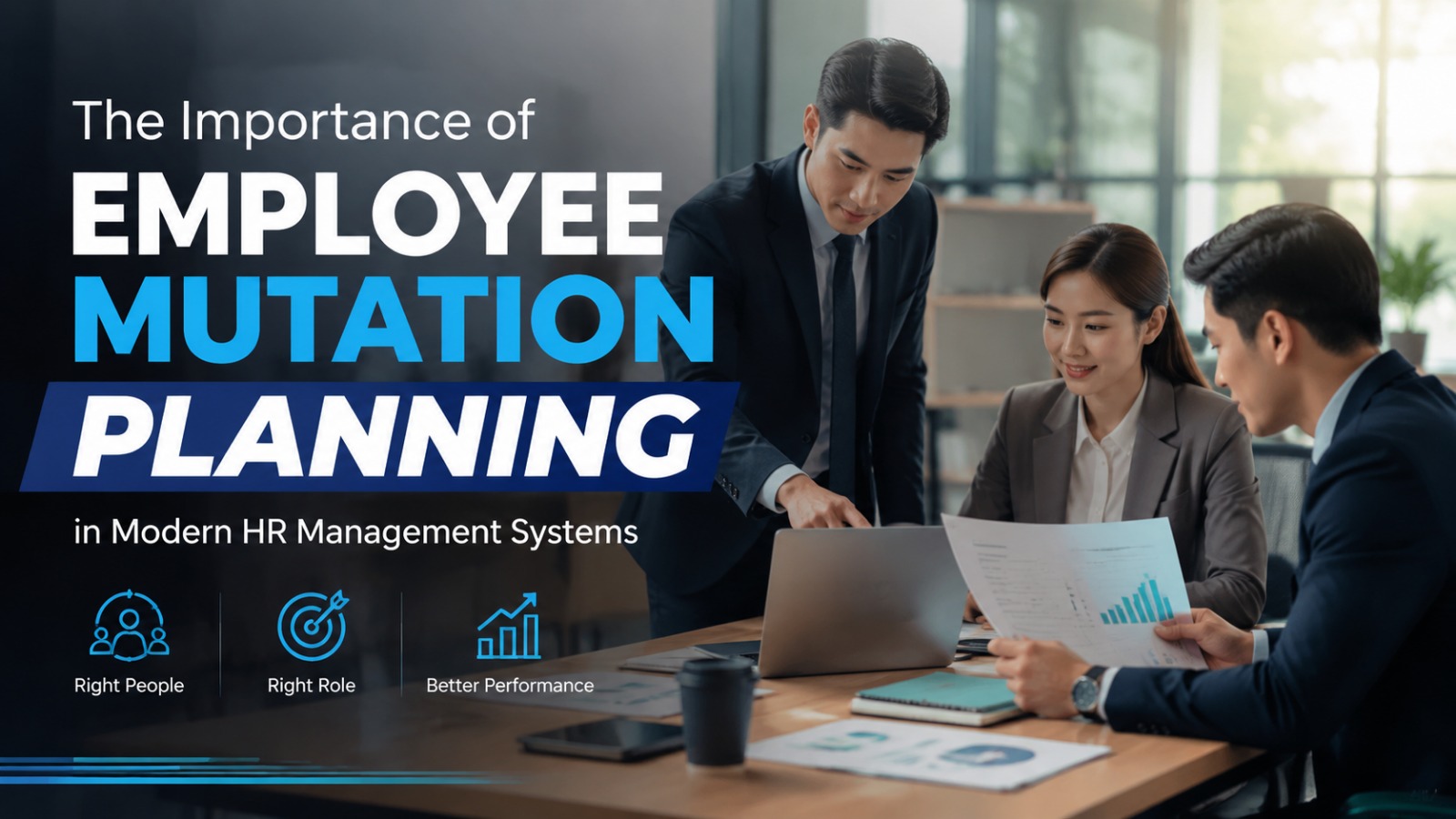
Managing Employee Mutation to Create a More Effective Work Environment
Gusti Ayu Tita P
17 Oktober 2026

Employee mutation is an essential part of Human Resource Management that helps organizations optimize talent, improve productivity, and support long-term business goals. A well-planned employee mutation process ensures that employees are placed in positions where their skills, experience, and potential can be utilized effectively. Rather than being viewed as a simple transfer, employee mutation should be considered a strategic initiative that benefits both the organization and its workforce. When managed properly, it contributes to a more efficient and collaborative work environment.
In today's competitive business landscape, organizations must respond quickly to changing operational needs. Effective employee mutation enables companies to build a flexible workforce while encouraging professional growth. It also strengthens employee engagement by providing new career opportunities and reducing workplace stagnation. As a result, businesses become more adaptable and capable of maintaining sustainable performance.
UNDERSTANDING EMPLOYEE MUTATION
Employee mutation refers to the reassignment of employees to different positions, departments, or work locations within the same organization. This process is commonly implemented to balance workloads, improve organizational efficiency, and support employee development. Every mutation should be based on objective evaluations such as competencies, performance, and business requirements rather than personal preferences. A fair process increases employee trust and organizational credibility.
Employees should also understand that mutation is often a positive career opportunity rather than a negative consequence. Working in different roles broadens knowledge, strengthens adaptability, and develops new competencies. These experiences prepare employees for greater responsibilities and future leadership positions.
BENEFITS OF EFFECTIVE EMPLOYEE MUTATION
One of the greatest advantages of employee mutation is improved workforce utilization. Employees can contribute more effectively when assigned to positions that match their strengths and professional abilities. This alignment increases productivity while reducing operational inefficiencies across departments. Organizations also gain greater flexibility in responding to changing market demands.
Employee mutation also supports career development and motivation. New assignments expose employees to different challenges, technologies, and working methods that expand their professional experience. Continuous learning keeps employees engaged and encourages long-term commitment to the organization.
PLANNING A SUCCESSFUL MUTATION PROCESS
Successful employee mutation requires careful planning and transparent decision-making. Human Resource managers should evaluate employee competencies, career goals, organizational priorities, and future workforce requirements before making transfer decisions. A structured assessment ensures that every mutation benefits both employees and the organization.
Communication is equally important throughout the planning process. Employees should receive clear explanations regarding the purpose of the transfer, expected responsibilities, and available support. Transparent communication minimizes uncertainty and creates a smoother transition into the new position.
SUPPORTING EMPLOYEES DURING THE TRANSITION
Employees often need time to adapt after moving into a new role. Organizations should provide orientation programs, mentoring, and continuous guidance to help employees understand their responsibilities more quickly. Early support reduces confusion and increases confidence during the adjustment period.
Managers should also monitor employee progress through regular feedback sessions. Constructive feedback helps identify challenges before they affect performance while allowing employees to improve continuously. A supportive workplace encourages employees to perform at their best from the beginning of their new assignment.
THE ROLE OF LEADERSHIP AND HUMAN RESOURCE MANAGEMENT
Strong leadership plays a critical role in ensuring successful employee mutation. Managers should encourage open communication, recognize employee achievements, and provide consistent coaching throughout the transition process. Employees who feel supported by their leaders are generally more motivated and committed to organizational objectives.
The Human Resource department should establish clear policies, competency assessments, and career development programs to ensure fairness. HR professionals also need to evaluate the effectiveness of employee mutations through performance indicators and employee feedback. Continuous evaluation allows organizations to improve future mutation strategies.
CREATING A MORE EFFECTIVE WORK ENVIRONMENT
A well-managed employee mutation strategy contributes to a healthier and more productive workplace. Employees become more adaptable, collaborative, and willing to share knowledge across departments. Cross-functional experience strengthens teamwork while encouraging innovation and problem-solving.
An effective work environment is built on trust, communication, and continuous learning. Organizations that successfully manage employee mutation often experience higher employee satisfaction, lower turnover rates, and stronger organizational performance. These positive outcomes support sustainable business growth in an increasingly competitive market.
BEST PRACTICES FOR LONG-TERM SUCCESS
Organizations should regularly review their employee mutation policies to ensure they remain relevant to business needs. Performance evaluations, competency mapping, and workforce planning should be integrated into every mutation decision. Using objective data improves fairness and reduces bias throughout the process.
Continuous investment in employee development is equally important. Training programs, leadership development, and career planning help employees maximize the opportunities created through mutation. Companies that prioritize both organizational goals and employee growth achieve stronger long-term success.
CONCLUSION
Managing employee mutation effectively is an important strategy for creating a more productive and efficient work environment. Through careful planning, transparent communication, leadership support, and continuous employee development, organizations can transform employee transfers into valuable career opportunities rather than organizational disruptions.
When employee mutation is implemented fairly and strategically, both employees and organizations benefit from improved performance, stronger collaboration, and sustainable growth. A well-executed mutation process ultimately creates a workplace where people can develop their full potential while contributing to long-term organizational success.
Tentang Penulis
Gusti Ayu Tita P
Penulis — Universitas STEKOM
Penulis aktif yang berfokus pada isu-isu akademik, teknologi pendidikan, dan pengembangan sumber daya manusia di lingkungan kampus.