Mass Protests and Challenges in Maintaining Public Order
Gusti Ayu Tita P
1 September 2026
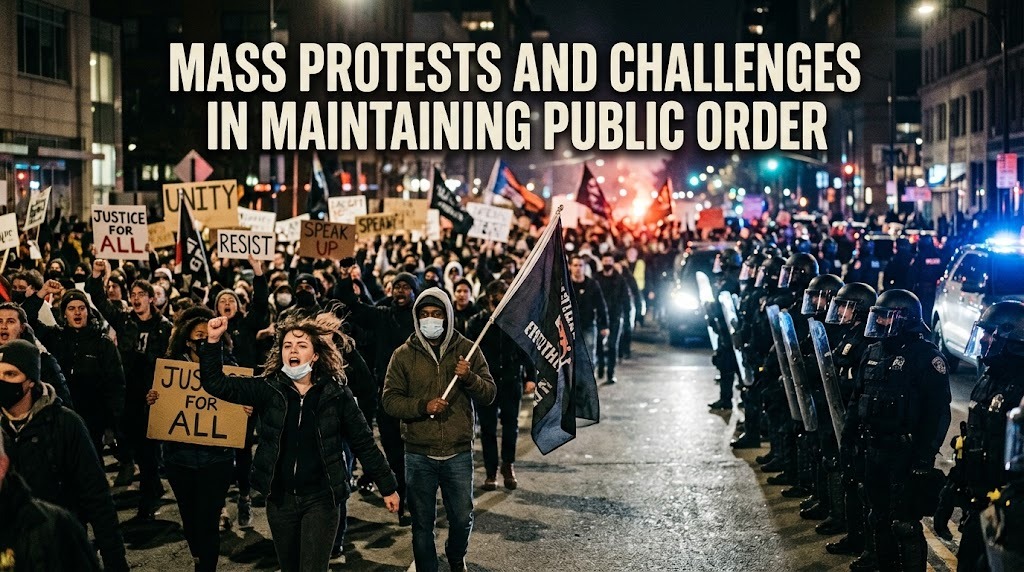
Mass protests are an important form of public participation in modern democratic societies. Through demonstrations, people can express concerns about government policies, economic conditions, social problems, or other issues affecting their lives. However, large gatherings in public spaces can also create challenges for transportation, public safety, businesses, and surrounding communities. Maintaining public order does not mean preventing people from expressing their opinions. Instead, it requires finding a responsible balance between freedom of expression, public safety, and the rights of others.
MASS PROTESTS AS PUBLIC PARTICIPATION
Mass protests provide citizens with an opportunity to communicate their concerns collectively. People who share similar interests can gather and make their demands more visible to the wider public. Demonstrations can also encourage media coverage and stimulate public discussion about important issues. Collective action can therefore become a significant part of civic participation. In democratic societies, peaceful public expression can contribute to discussions about policies and social conditions.
However, protests involve more than the people who participate. Public streets and facilities are also used by workers, residents, students, emergency services, and businesses. Large gatherings can affect their daily activities when access becomes limited. Public space is shared by many groups, so responsible protest management requires consideration of different interests. This balance becomes especially important when a demonstration involves a large number of participants.
WHY PUBLIC ORDER BECOMES A CHALLENGE?
Maintaining public order can become difficult when thousands of people gather in a limited area. Crowded streets can create traffic congestion and make movement more complicated. Emergency vehicles may also need alternative routes when certain roads become difficult to access. Crowd management is therefore an important consideration during large demonstrations. Careful planning can reduce unnecessary risks for both protesters and the surrounding community.
The situation can become more complicated when demonstrations last for many hours or move between locations. Weather conditions, limited facilities, and unexpected changes in crowd size can create additional challenges. Organizers need to communicate clearly with participants so that everyone understands the situation. Authorities also need accurate information to manage public spaces effectively. Coordination and communication are essential for maintaining safe conditions.
BALANCING PUBLIC EXPRESSION AND SAFETY
One of the central challenges is balancing the right to express opinions with the need to protect public safety. Participants may want their message to receive maximum attention, while other citizens need to continue using public spaces. Authorities have a responsibility to maintain safety while respecting lawful public expression. Public safety and freedom of expression should therefore be considered together rather than treated as opposing goals.
A balanced approach requires communication between different parties. Organizers can provide information about schedules, locations, and expected activities. Participants can help maintain peaceful conditions and respect surrounding communities. Authorities can focus on facilitating safe movement and responding to genuine safety risks. Mutual cooperation can reduce tension and help demonstrations remain orderly.
TRAFFIC AND DAILY ACTIVITIES
Large demonstrations can significantly affect transportation in busy urban areas. Road closures or slow-moving crowds can increase travel times and disrupt public transportation. Workers may have difficulty reaching their workplaces, while residents may face challenges accessing their neighborhoods. Traffic disruption is therefore one of the most visible effects of mass protests.
These problems can sometimes be reduced through advance planning. Information about alternative routes can help residents and commuters adjust their journeys. Organizers can also communicate planned gathering points and movement routes when appropriate. Authorities can provide traffic management while considering the needs of emergency services. Good preparation can minimize disruption without unnecessarily restricting public participation.
PROTECTING BUSINESSES AND PUBLIC FACILITIES
Businesses located near demonstration areas can also experience challenges. Reduced access can affect customers, employees, deliveries, and normal business operations. Public facilities may face additional pressure when large numbers of people gather nearby. Community impact should therefore be considered when planning mass demonstrations.
Participants can contribute by respecting buildings, public property, and private businesses. Organizers can communicate expectations about responsible behavior before and during an event. Authorities can also help protect important facilities when necessary. Maintaining respect for shared spaces can prevent disagreements from becoming more serious. Responsible participation benefits both protesters and the wider community.
THE IMPORTANCE OF ORGANIZER RESPONSIBILITY
Protest organizers have an important role in maintaining order within a large gathering. They can communicate the purpose of the demonstration, expected behavior, and important safety information to participants. Clear instructions can make it easier to respond when unexpected situations occur. Responsible organization can also improve communication between participants and authorities.
Organizers can establish communication channels that allow information to reach participants quickly. They may also encourage people to remain peaceful and avoid unnecessary confrontation. When participants understand the goals and arrangements of an event, confusion can be reduced. Effective coordination becomes increasingly important as the number of participants grows.
THE ROLE OF AUTHORITIES
Authorities are responsible for protecting public safety while managing demonstrations. Their approach can influence whether a protest remains peaceful or becomes more tense. Clear communication about safety measures and public-space arrangements can reduce misunderstandings. Proportionate public safety measures are important when responding to demonstrations.
Authorities also need to recognize that criticism and disagreement are normal elements of democratic life. Public safety management should focus on genuine risks rather than treating peaceful expression itself as a problem. Communication with organizers can help identify potential difficulties before they escalate. Trust between authorities and communities can make public-order management more effective.
SOCIAL MEDIA AND CROWD MANAGEMENT
Social media can help organizers communicate quickly with participants during a demonstration. Updates about locations, schedules, transportation, or changing conditions can reach large audiences within seconds. This can be useful when a situation changes unexpectedly. Digital communication can therefore support practical crowd management.
However, social media can also spread rumors and inaccurate information. Misleading claims about incidents or instructions can create confusion among participants and the wider public. Users should verify important information before sharing it. Digital literacy is especially important during situations involving large crowds and heightened emotions.
PREVENTING ESCALATION AND CONFLICT
Tension can increase when protesters, authorities, or members of the public misunderstand one another. Small disagreements can become more serious when communication breaks down. Clear instructions and respectful interaction can help prevent unnecessary escalation. Conflict prevention should therefore be an important part of managing mass demonstrations.
Participants can contribute by remaining calm and focusing on the issues being raised. Authorities can communicate clearly about safety concerns and provide reasonable instructions. Media organizations can also provide accurate context instead of amplifying unverified claims. Responsible communication can reduce the possibility that isolated incidents develop into wider conflict.
THE IMPORTANCE OF PEACEFUL PROTEST
Peaceful demonstrations create better conditions for public discussion. Participants can express criticism, demands, and disagreement without threatening the safety of others. A peaceful approach can also help keep public attention focused on the issues being raised. Peaceful protest is therefore valuable for both democratic participation and public order.
Maintaining peaceful conditions requires shared responsibility. Protesters should respect other citizens and public facilities, while authorities should protect safety and respect lawful public expression. Organizers can help by preparing participants and responding quickly to potential problems. When everyone contributes, public demonstrations can remain effective without creating unnecessary harm.
CONCLUSION
Mass protests can play an important role in democratic life by allowing citizens to express concerns and demand attention to public issues. At the same time, large gatherings can create challenges involving traffic, public safety, businesses, public facilities, misinformation, and social tension. These challenges do not make public demonstrations inherently harmful. They show why careful planning, communication, and cooperation are necessary.
Ultimately, maintaining public order during mass protests requires a balanced approach. Peaceful participation, responsible organization, proportionate safety measures, accurate information, and respect for different rights can help create safer public demonstrations. When protesters, authorities, media organizations, and communities communicate effectively, public expression and public order can coexist. This balance can strengthen both civic participation and social trust.
Tentang Penulis
Gusti Ayu Tita P
Penulis — Universitas STEKOM
Penulis aktif yang berfokus pada isu-isu akademik, teknologi pendidikan, dan pengembangan sumber daya manusia di lingkungan kampus.