Mass Protests and Public Voices Amid Social Change
Gusti Ayu Tita P
1 September 2026
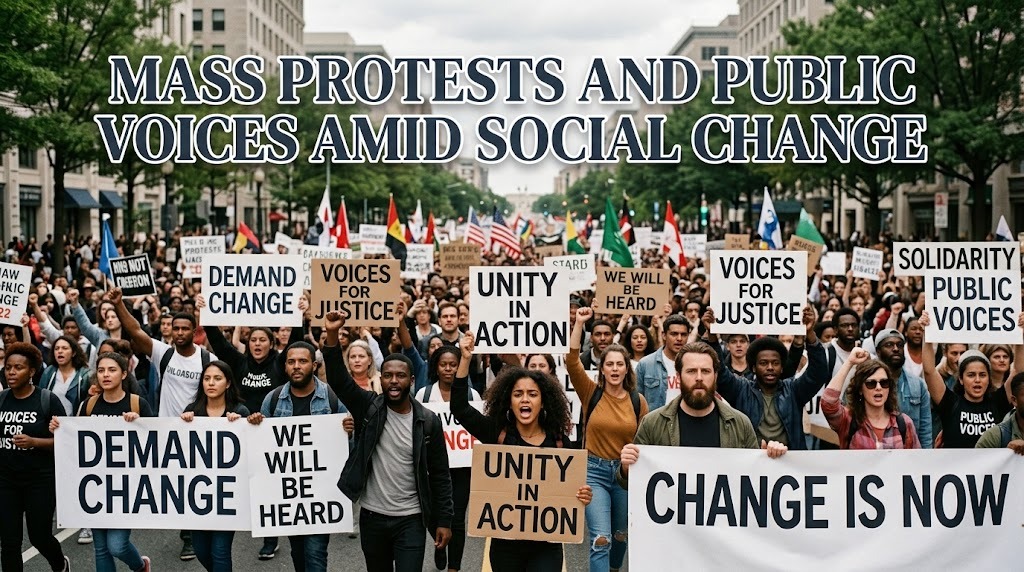
Mass protests are a visible form of public participation that allows people to express concerns, criticism, demands, and hopes about issues affecting society. They often emerge when groups of people share concerns about policies, economic conditions, social problems, or other matters of public interest. Through collective action, individual concerns can become a broader public conversation. In a changing society, mass protests can therefore provide an important channel for people to make their voices heard. Understanding these actions requires looking beyond the size of the crowd and considering the social conditions behind them.
PUBLIC VOICES IN A CHANGING SOCIETY
Public voices represent the opinions, concerns, and expectations expressed by members of society. People may use different channels to communicate their views, including community discussions, digital platforms, formal institutions, and peaceful demonstrations. Mass protests become particularly visible when many people gather around similar concerns. Their presence can attract public attention and encourage wider discussion about an issue. This makes collective action one part of the broader process of public participation.
However, a protest does not automatically represent the opinion of everyone in society. Communities contain different interests, experiences, and perspectives. Some people may support the demands of protesters, while others may disagree with them or choose not to participate. Respect for different opinions is therefore essential in a democratic society. Understanding these differences can create more constructive conversations around controversial issues.
WHY MASS PROTESTS EMERGE?
Mass protests can emerge from a combination of social, political, and economic factors. People may take to the streets when they believe a policy has created serious problems or when their concerns have not received enough attention. Economic pressure, employment issues, education, environmental concerns, and public services can also become subjects of collective action. Public dissatisfaction may become stronger when people believe existing channels have not provided satisfactory answers. In such situations, demonstrations can become a way to bring attention to unresolved concerns.
Protests usually develop through a process rather than appearing suddenly. A problem may affect a small group before becoming known to a wider community through conversations and media coverage. When people discover that others share similar experiences, a stronger sense of social solidarity can develop. This shared concern may encourage individuals and organizations to participate in collective action. The scale of a protest can therefore reflect how widely an issue has resonated within society.
SOCIAL MEDIA AMPLIFIES PUBLIC VOICES
Digital technology has changed how people organize, communicate, and follow mass protests. Social media allows information about an event to reach people far beyond the protest location. Photos, videos, statements, and live updates can be shared within minutes. Social media can therefore expand the visibility of public concerns and connect people with similar interests. Someone who is not physically present can still follow discussions and express an opinion online.
At the same time, fast information flows create challenges. A short video or isolated image may not provide enough context to explain what happened during a protest. Unverified claims can also spread quickly when people share content without checking its source. Digital literacy helps users evaluate information before accepting or distributing it. Responsible online communication can reduce misunderstandings and support a more informed public discussion.
MASS PROTESTS AND PUBLIC ATTENTION
One important effect of a large demonstration is its ability to increase public attention toward a particular issue. A concern that was previously discussed within a limited group may receive broader media coverage after a mass protest occurs. News reports and online discussions can introduce the issue to people who were previously unfamiliar with it. Public attention can encourage communities to examine the causes and consequences of the problem. It can also create pressure for relevant institutions to respond.
Greater attention does not necessarily mean universal agreement with protesters. Public reactions may include support, criticism, concern, or neutral observation. Such differences can make the issue part of a larger public debate. The quality of that debate depends on whether people have access to accurate and balanced information. Constructive discussion is more likely when opinions are supported by facts and different perspectives are considered.
THE ROLE OF MEDIA IN SOCIAL CHANGE
Traditional and digital media play an important role in explaining what happens during mass protests. Professional reporting can provide information about the background of an issue, the demands of protesters, the situation at the location, and responses from relevant authorities. Balanced reporting can help audiences understand an event from more than one perspective. This is particularly important when a protest becomes a major national issue. Reliable information allows the public to make better-informed judgments.
Media coverage can also influence how an issue develops over time. Repeated reporting may keep a particular concern in the public conversation, while new events can change the focus of discussion. Audiences should therefore avoid relying on a single source when following complex events. Critical media consumption helps people distinguish facts, analysis, opinions, and unverified claims. This approach can make public discussions more thoughtful and less vulnerable to misinformation.
PROTESTS AND SOCIAL SOLIDARITY
Mass protests can strengthen relationships among people who share similar concerns. Individuals from different backgrounds may come together because they believe a particular issue deserves attention. This creates a sense of collective identity and shared purpose. Organizations, student groups, workers, communities, and other social groups may participate for different reasons while supporting related demands. Such cooperation can make a public issue more visible.
Nevertheless, solidarity does not mean every participant has exactly the same motivation. People can join an action because of personal experiences, community concerns, or broader social values. Recognizing this diversity helps explain why mass movements can contain many different perspectives. Shared goals can connect people without eliminating their individual differences. Maintaining peaceful communication is important so that solidarity does not turn into hostility toward those who disagree.
CHALLENGES IN PUBLIC SPACES
Mass protests often take place in public areas that are also used for transportation, business, education, and everyday activities. A large gathering can affect traffic flow and access to certain locations. These effects can become more significant when demonstrations continue for a long period or involve large crowds. Public order therefore becomes an important consideration during mass protests. Participants and organizers need to consider the rights and needs of people who are not involved in the demonstration.
Authorities and protest organizers also have different responsibilities in managing public spaces. Organizers can communicate clear information and encourage participants to maintain peaceful conduct. Authorities can focus on safety and public order while respecting the right to express opinions through lawful means. Cooperation and communication can reduce unnecessary tension. A balanced approach allows public participation to take place while minimizing disruption to the wider community.
MASS PROTESTS AS PART OF SOCIAL CHANGE
Social change usually develops through a long and complex process. Mass protests can become one factor that brings attention to problems and encourages discussion about possible solutions. A demonstration alone does not automatically produce policy or social change. Dialogue, evaluation, public participation, and institutional action are often needed to turn public demands into meaningful outcomes. Protests can therefore be understood as one stage within a wider process of social change.
The role of society does not end when a demonstration finishes. Citizens can continue participating through discussions, monitoring public policies, providing feedback, and using formal channels for civic engagement. These activities can help ensure that important concerns remain part of public discussion. Sustained participation can be more effective than temporary attention because social change often requires continuous involvement. In this way, public voices can contribute to longer-term improvements.
BUILDING A RESPONSIBLE PUBLIC DIALOGUE
A healthy democracy requires space for disagreement as well as agreement. Mass protests provide one way for people to express strong opinions, but public discussion should continue beyond the streets. Citizens can communicate their concerns through evidence, respectful debate, and constructive criticism. Responsible civic participation helps protect both freedom of expression and the interests of other members of society. This balance is essential when dealing with sensitive social issues.
Technology also gives people more opportunities to participate in public discussions. However, every user has a responsibility to avoid spreading false information, harassment, or content designed to provoke unnecessary conflict. Respectful communication can help create a healthier digital and social environment. When citizens listen to different perspectives while maintaining their principles, disagreements can become opportunities for understanding. Such dialogue can support positive and sustainable social change.
CONCLUSION
Mass protests are an important expression of public voices in societies experiencing social change. They can emerge from shared concerns, economic pressure, dissatisfaction with policies, social solidarity, or demands for greater attention to public issues. Media and social media can amplify these voices and bring local concerns into broader public discussions. At the same time, misinformation, polarization, and disruption of public activities remain important challenges.
Ultimately, the impact of mass protests depends on more than the size of a crowd. Clear demands, accurate information, peaceful participation, public dialogue, and continued civic engagement can help transform public concerns into meaningful discussions. Society can benefit when different perspectives are heard without abandoning respect for others. In this way, mass protests can become part of a broader democratic process that contributes to social change.
Tentang Penulis
Gusti Ayu Tita P
Penulis — Universitas STEKOM
Penulis aktif yang berfokus pada isu-isu akademik, teknologi pendidikan, dan pengembangan sumber daya manusia di lingkungan kampus.