Modern Learning Culture in World-Class Universities
Gusti Ayu Tita P
4 September 2026
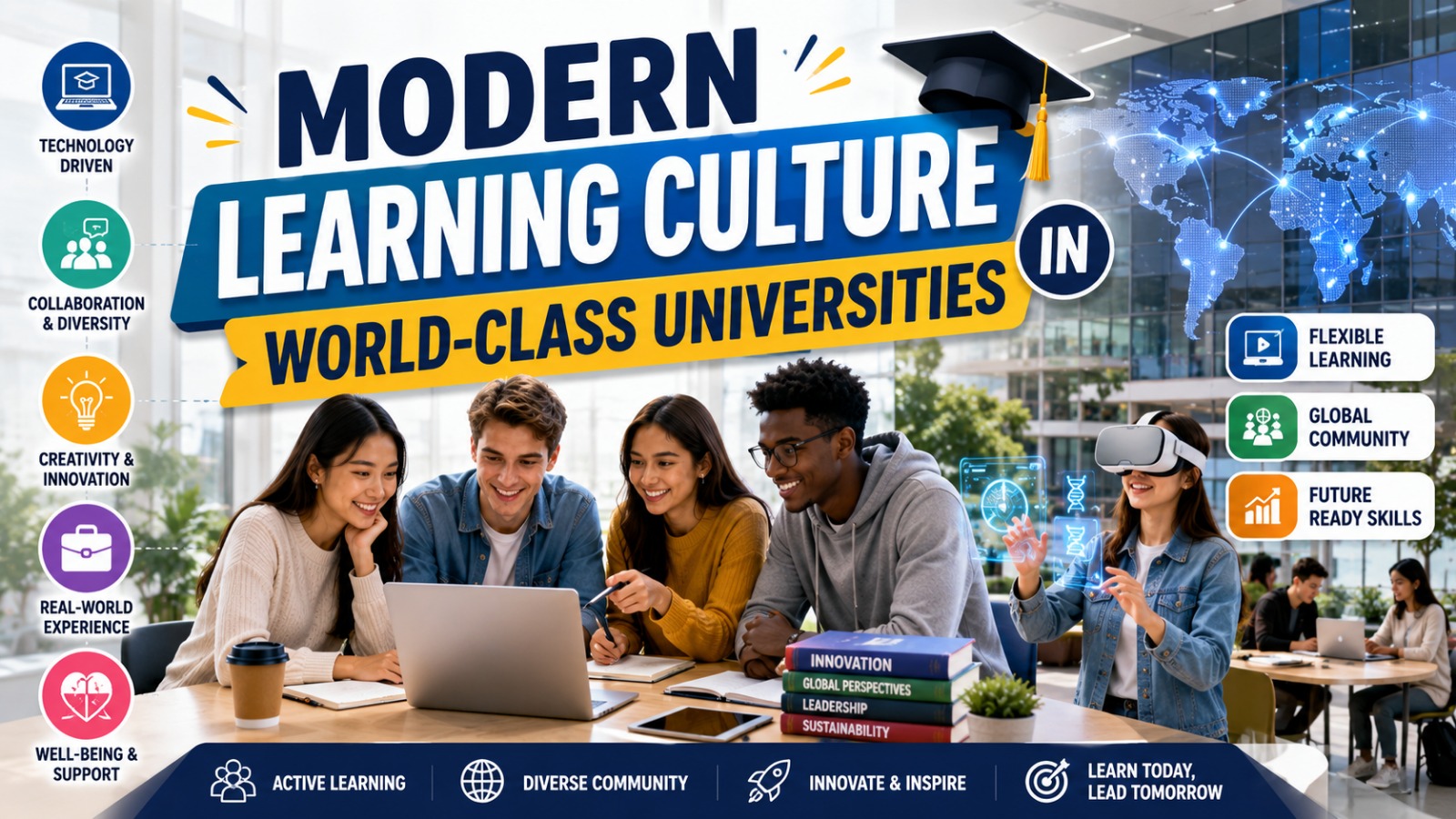
The education system in world-class universities has changed significantly over the past few years. Modern learning culture now focuses not only on academic achievement but also on creativity, collaboration, innovation, and practical experience. Universities around the world are adopting advanced teaching methods to prepare students for global challenges and future careers.
Today’s students expect flexible, interactive, and technology-based learning environments. As a result, world-class universities continue to improve their educational systems to create more effective and engaging learning experiences.
TECHNOLOGY-BASED LEARNING
Technology has become an important part of modern education. Many top universities use digital platforms, online learning systems, and smart classrooms to support academic activities.
Students can access lecture materials, join virtual discussions, submit assignments, and collaborate with classmates from different countries through online platforms. Artificial intelligence, virtual reality, and interactive applications are also increasingly used to improve understanding and engagement.
Technology-based learning allows students to study more flexibly and efficiently.
STUDENT-CENTERED EDUCATION
Modern universities focus more on student-centered education rather than traditional teacher-centered methods. In this learning culture, students are encouraged to actively participate in discussions, research projects, and problem-solving activities.
Professors act as mentors who guide students instead of only delivering lectures. This approach helps students develop critical thinking, communication, and independent learning skills.
Student-centered learning also creates a more dynamic and interactive classroom environment.
COLLABORATIVE LEARNING ENVIRONMENT
World-class universities encourage collaboration among students from different academic backgrounds and cultures. Group projects, international programs, and teamwork activities are common parts of modern education systems.
Collaborative learning helps students improve teamwork abilities and understand diverse perspectives. These experiences are valuable because many global companies seek employees who can work effectively in multicultural environments.
Students also build strong international networks during their studies.
FOCUS ON PRACTICAL EXPERIENCE
Modern learning culture emphasizes practical experience alongside theoretical knowledge. Many universities provide internships, industry partnerships, laboratory work, and real-world projects to prepare students for professional careers.
Students can gain hands-on experience while still studying on campus. This practical approach helps them understand how academic concepts apply in real industries and workplaces.
Graduates with practical experience often have better career opportunities after completing their studies.
FLEXIBLE LEARNING SYSTEMS
Flexibility has become one of the key characteristics of modern education. Many universities now offer hybrid learning systems that combine online and offline classes.
Students can choose learning schedules, online courses, and even international exchange programs that match their needs and interests. Flexible learning systems help students balance academic responsibilities with personal development activities.
This system also makes higher education more accessible to students from different regions around the world.
EMPHASIS ON CREATIVITY AND INNOVATION
World-class universities encourage students to think creatively and develop innovative ideas. Innovation centers, startup incubators, and entrepreneurship programs are becoming increasingly popular on international campuses.
Students are motivated to create solutions for social, technological, and environmental challenges. Universities often support research and innovation projects through funding and mentorship programs.
Creative thinking is considered an essential skill in today’s competitive global environment.
GLOBAL AND MULTICULTURAL EXPERIENCE
International universities usually have students from many countries and cultural backgrounds. This multicultural environment helps students improve communication skills and global understanding.
Students learn to respect different cultures, traditions, and perspectives while building friendships with people from around the world. International exposure also helps students become more adaptable and open-minded.
These experiences are important for careers in global industries and international organizations.
MENTAL HEALTH AND STUDENT WELL-BEING
Modern universities are becoming more aware of the importance of mental health and student well-being. Many campuses now provide counseling services, wellness programs, and stress management support.
Educational institutions understand that academic success is closely connected to emotional and mental health. Universities are creating healthier learning environments where students feel supported both academically and personally.
This positive atmosphere helps students perform better and enjoy their educational journey.
CHALLENGES OF MODERN LEARNING CULTURE
Although modern education offers many advantages, there are also challenges. Students may face high academic pressure, technology distractions, and difficulties adapting to independent learning systems.
Universities continue to improve support systems to help students manage these challenges effectively. Time management, discipline, and adaptability remain important skills for success in modern education.
CONCLUSION
Modern learning culture in world-class universities focuses on technology, collaboration, flexibility, creativity, and practical experience. These educational systems are designed to prepare students for global careers and rapidly changing industries.
By combining academic excellence with innovation and personal development, international universities create learning environments that help students grow both professionally and personally. Modern education is no longer only about earning degrees but also about building skills, experiences, and global perspectives for the future.
Tentang Penulis
Gusti Ayu Tita P
Penulis — Universitas STEKOM
Penulis aktif yang berfokus pada isu-isu akademik, teknologi pendidikan, dan pengembangan sumber daya manusia di lingkungan kampus.