Modern Nuclear Power Plant Technology and Its Development
Gusti Ayu Tita P
1 September 2026
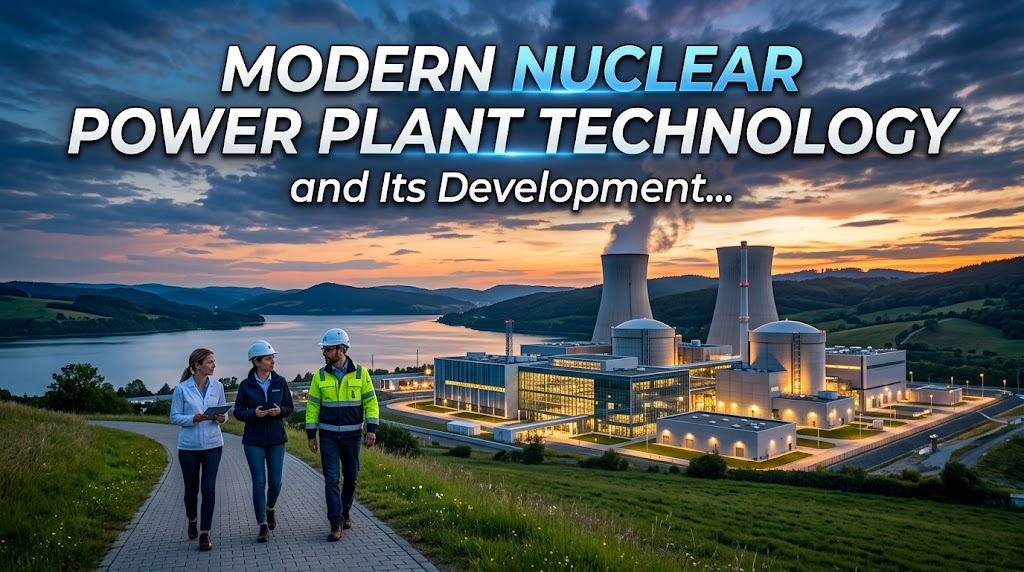
Modern nuclear power plant technology continues to evolve as countries seek reliable electricity with lower greenhouse gas emissions. New reactor designs focus not only on producing electricity but also on improving safety, efficiency, flexibility, and construction methods. Developments include advanced reactors, small modular reactors, passive safety systems, digital monitoring, and innovative nuclear fuels. These technologies are being developed at different stages, from research and testing to commercial deployment.
The development of nuclear technology is also expanding the possible uses of nuclear energy. Some modern reactor concepts are designed to provide heat for industrial processes, support hydrogen production, or supply electricity to smaller grids. However, advanced technology still requires careful testing, strong regulation, skilled workers, and long term planning before widespread adoption.
ADVANCED REACTOR TECHNOLOGY
Modern nuclear reactors are designed to improve upon the safety and performance characteristics of earlier reactor systems. Advanced reactor concepts include improved water cooled reactors as well as high temperature gas reactors, fast reactors, and molten salt reactor concepts. Each design uses different approaches to fuel, cooling, heat management, and safety. Their levels of technological maturity vary considerably, so not every advanced reactor is ready for commercial use.
One major goal of these developments is to improve safety while maintaining reliable electricity production. Designers use multiple safety barriers and systems to prevent abnormal conditions from developing into serious accidents. Some concepts also simplify certain systems and reduce the number of components that must operate during an emergency. Nevertheless, every new reactor design must undergo detailed safety assessment, testing, and regulatory review.
SMALL MODULAR REACTORS
Small Modular Reactors or SMRs are among the most widely discussed developments in modern nuclear technology. They are generally designed with smaller electrical capacities than traditional large reactors, with the International Atomic Energy Agency describing SMRs as advanced reactors with a capacity of up to 300 MW per unit. Their modular approach can allow some components to be manufactured in controlled factory environments before being transported to the construction site.
SMRs may provide greater flexibility for countries or regions that do not need a very large nuclear power plant. Some designs are intended to operate as individual units, while others can be deployed in groups as electricity demand increases. However, SMRs still face challenges involving licensing, financing, supply chains, construction experience, and economic competitiveness. Their long term commercial success will depend on whether these challenges can be addressed in real projects.
PASSIVE SAFETY SYSTEMS
Passive safety is an important feature in several modern nuclear reactor designs. These systems use natural physical processes such as gravity, natural circulation, or pressure differences to perform certain safety functions. This can reduce dependence on external power or active mechanical equipment during some accident conditions. The objective is to make the reactor more capable of maintaining safe conditions without requiring immediate human intervention for every safety function.
Passive systems do not eliminate the need for operators, active systems, or emergency procedures. Instead, they form part of a broader defense in depth approach to nuclear safety. Modern plants continue to use multiple layers of protection to prevent and mitigate accidents. The effectiveness of each passive system must be demonstrated through engineering analysis, testing, and regulatory assessment.
DIGITAL TECHNOLOGY IN NUCLEAR PLANTS
Digital technology is becoming increasingly important in the operation and maintenance of nuclear facilities. Digital sensors and monitoring systems can collect information about reactor conditions, equipment performance, temperature, pressure, and other operational parameters. Advanced data systems can help operators identify changes in plant performance more quickly. Digital tools can also support maintenance planning and improve the efficiency of some operational processes.
However, greater digitalization creates additional cybersecurity considerations. Nuclear facilities must protect digital systems against unauthorized access, manipulation, and other potential threats. Safety systems need appropriate levels of independence and protection to ensure that cybersecurity problems do not compromise essential functions. As a result, modern nuclear development increasingly considers nuclear safety and cybersecurity together.
ADVANCED NUCLEAR FUELS AND MATERIALS
Research into nuclear fuel is another important area of technological development. New fuel concepts are being studied to improve performance and enhance safety characteristics under certain operating conditions. Advanced materials are also being developed to withstand high temperatures, radiation, pressure, and demanding chemical environments. These improvements can support the operation of new reactor designs.
Some advanced reactors require fuel forms or materials that differ from those used in conventional light water reactors. Before new fuels can be widely deployed, they need extensive testing, qualification, and regulatory approval. Material performance must also be evaluated over long operating periods. This research is essential because fuel and material reliability directly affects reactor performance and safety.
NUCLEAR ENERGY BEYOND ELECTRICITY
Modern nuclear technology is increasingly being considered for applications beyond electricity generation. Some reactor designs can provide high temperature heat for industrial processes that currently rely heavily on fossil fuels. Nuclear energy can also potentially support hydrogen production and water desalination. These applications could expand the role of nuclear technology within a broader low carbon energy system.
Using nuclear heat for industrial purposes requires suitable infrastructure and careful integration with the end user's processes. Safety requirements must also be considered when a reactor is connected to industrial facilities. Economic competitiveness is another important factor because alternative low carbon technologies are also developing rapidly. Therefore, non-electric applications remain an active area of research and demonstration.
IMPROVED EFFICIENCY AND FLEXIBILITY
Modern nuclear power plants are being designed with improved operational flexibility in mind. Traditional nuclear plants have often been used primarily for steady electricity generation, but some advanced designs aim to operate more flexibly alongside variable renewable energy. This could allow nuclear generation to complement sources such as solar and wind. Flexible operation may become increasingly important as electricity systems include larger shares of variable renewable generation.
Efficiency improvements can also come from better plant design, materials, maintenance strategies, and digital monitoring. Some advanced reactor concepts operate at higher temperatures, potentially allowing more efficient conversion of heat into electricity. However, higher operating temperatures can also create additional material and engineering challenges. Each improvement therefore needs to be evaluated together with its safety, reliability, and economic implications.
CHALLENGES IN DEVELOPING MODERN NUCLEAR TECHNOLOGY
Despite rapid technological development, advanced nuclear power faces significant challenges. New reactor designs need extensive research, testing, demonstration, licensing, and regulatory approval before commercial deployment. Construction also requires specialized supply chains and a highly trained workforce. These requirements can make the development process lengthy and capital intensive.
Economic competitiveness remains another major challenge. Advanced designs are expected to benefit from standardized manufacturing, improved construction methods, or smaller project sizes, but these benefits need to be demonstrated in practice. Waste management, fuel supply, public acceptance, and long term decommissioning also remain important considerations. Successful nuclear development therefore requires progress in technology as well as finance, regulation, industry, and public communication.
THE FUTURE OF NUCLEAR POWER TECHNOLOGY
The future of nuclear power is likely to involve several technologies rather than a single reactor design. SMRs, advanced reactors, passive safety systems, digital technologies, and improved fuels are being developed for different purposes and markets. Some technologies are already moving toward deployment, while others remain at earlier stages of research and development. This means the nuclear industry is becoming more diverse in its technological approaches.
Future adoption will depend on whether these technologies can demonstrate strong safety, reliable performance, competitive costs, and effective waste management. Countries will also need to consider their electricity demand, industrial capabilities, regulatory institutions, infrastructure, and energy policies. Advanced nuclear technology may become an important component of low carbon energy systems, but its suitability will vary from one country to another.
CONCLUSION
Modern nuclear power plant technology is developing toward safer, more flexible, efficient, and potentially more scalable energy systems. Advanced reactors, small modular reactors, passive safety systems, digital technologies, and innovative fuels are among the key areas shaping the future of nuclear energy. Some technologies are already progressing toward commercial use, while others require further research and demonstration.
The development of nuclear power is not limited to electricity generation. Modern reactor concepts may also support industrial heat, hydrogen production, and desalination. However, technological progress must be accompanied by strong regulation, skilled personnel, reliable supply chains, effective waste management, and responsible financing. With careful development and oversight, modern nuclear technology could become one component of a reliable and lower carbon future energy system.
Tentang Penulis
Gusti Ayu Tita P
Penulis — Universitas STEKOM
Penulis aktif yang berfokus pada isu-isu akademik, teknologi pendidikan, dan pengembangan sumber daya manusia di lingkungan kampus.