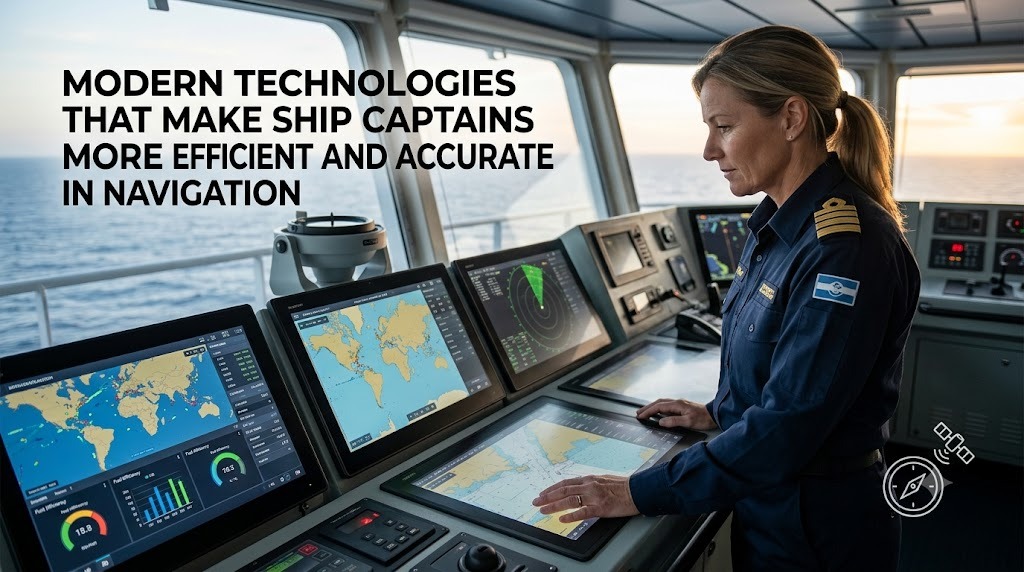
The maritime industry has experienced significant transformation through the adoption of modern technologies that improve navigation, safety, and operational efficiency. Today, ship captains no longer rely solely on traditional navigation methods, as advanced digital systems provide real-time information to support better decision-making. These innovations help reduce human error, improve route planning, and enhance communication between ships and coastal authorities. As global shipping continues to expand, modern navigation technologies have become essential tools for ensuring safe and efficient voyages.
ADVANCED NAVIGATION SYSTEMS FOR SHIP CAPTAINS
Modern vessels are equipped with advanced navigation systems that provide accurate positioning and route guidance. Technologies such as GPS, electronic charts, and radar allow ship captains to determine their exact location and navigate safely through busy waterways. These systems continuously update navigation data, helping captains avoid potential hazards and maintain the most efficient route.
Electronic navigation tools also simplify voyage planning by integrating multiple sources of information into a single display. This enables captains to monitor ship movements more effectively while reducing the risk of navigation mistakes. As a result, overall voyage safety and operational efficiency continue to improve.
REAL TIME WEATHER AND OCEAN MONITORING
Accurate weather forecasting plays a crucial role in modern maritime operations. Ship captains can access real-time weather reports, wind conditions, wave heights, and ocean current data before and during a voyage. This information allows them to adjust routes and avoid dangerous weather conditions whenever possible.
Continuous monitoring helps captains make informed decisions that protect both passengers and cargo. By selecting safer and more efficient routes, ships can reduce fuel consumption, minimize delays, and improve overall operational performance. Reliable weather information has become one of the most valuable tools in modern navigation.
AUTOMATED IDENTIFICATION AND COMMUNICATION TECHNOLOGY
The Automatic Identification System or AIS enables ships to exchange important navigation information with nearby vessels and coastal authorities. This technology displays vessel identity, position, speed, and direction, allowing captains to maintain safe distances and avoid potential collisions. AIS significantly improves situational awareness, especially in crowded shipping lanes.
Modern communication systems also provide faster coordination during routine operations and emergency situations. Captains can instantly communicate with ports, rescue services, and fleet management teams to receive guidance or report changing conditions. Effective communication strengthens maritime safety and operational reliability.
DIGITAL DECISION SUPPORT TOOLS
Many shipping companies now use digital navigation software that combines navigation charts, weather data, traffic information, and fuel analysis into one integrated platform. These systems help ship captains evaluate different route options based on safety, efficiency, and environmental conditions. The software supports faster and more accurate operational decisions.
Although advanced technology provides valuable recommendations, experienced ship captains remain responsible for making the final decisions. Professional judgment, leadership, and practical experience are still essential when responding to unexpected situations that automated systems cannot fully predict.
THE FUTURE OF SMART MARITIME NAVIGATION
The future of maritime transportation will continue to be shaped by smart technologies and digital innovation. Artificial intelligence, predictive analytics, and enhanced automation are expected to improve navigation accuracy while supporting safer and more efficient shipping operations. These advancements will help reduce operational risks and improve environmental sustainability.
Despite rapid technological progress, human expertise will remain indispensable. Ship captains who continuously develop their technical knowledge and adapt to new digital systems will be better prepared for the evolving maritime industry. Combining modern technology with professional experience will create safer and more reliable voyages for years to come.
CONCLUSION
Modern navigation technologies have transformed the way ship captains manage vessels at sea. From GPS and electronic navigation systems to AIS, weather monitoring, and digital decision support tools, these innovations significantly improve safety, efficiency, and navigation accuracy. However, technology serves as a powerful support system rather than a replacement for human expertise. By combining advanced technology with professional skills and sound judgment, ship captains can ensure safe, efficient, and successful maritime operations.
Tentang Penulis
Gusti Ayu Tita P
Penulis — Universitas STEKOM
Penulis aktif yang berfokus pada isu-isu akademik, teknologi pendidikan, dan pengembangan sumber daya manusia di lingkungan kampus.