Modern Technology for More Efficient Mining Operations
Gusti Ayu Tita P
20 Agustus 2026
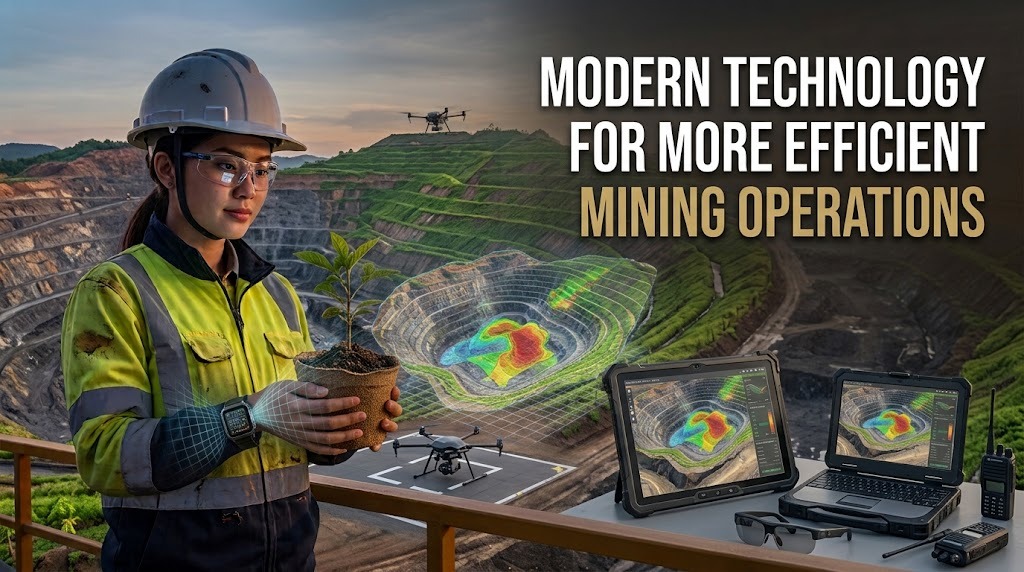
The mining industry is experiencing significant changes as modern technology becomes part of daily operations. Mining companies are using digital systems, automation, sensors, artificial intelligence, and data analysis to improve how resources are explored, extracted, transported, and processed. These innovations can help companies increase productivity while making operations more measurable and controlled.
Technology is also changing the way mining companies manage efficiency and safety. Instead of relying only on manual inspections and traditional equipment, companies can use connected systems to monitor conditions and identify potential problems earlier. When implemented properly, modern technology can reduce downtime, optimize resource use, and support more responsible mining practices.
AUTOMATION IMPROVES MINING PRODUCTIVITY
Automation is one of the most important technologies influencing modern mining operations. Automated equipment can perform specific repetitive tasks with consistent operating parameters, while remotely controlled machines can be used in locations that may present higher risks to workers. This approach can improve productivity while reducing unnecessary exposure to hazardous environments.
Automation also allows companies to coordinate equipment more effectively. Data from machines can be used to monitor operating time, fuel consumption, productivity, and maintenance needs. However, automated systems still require trained personnel to supervise operations, manage unexpected situations, and maintain the equipment properly.
ARTIFICIAL INTELLIGENCE SUPPORTS BETTER DECISIONS
Artificial intelligence can help mining companies process large amounts of operational and geological data. AI-based systems can identify patterns, support geological analysis, and assist with production planning. This can make decision-making faster, particularly when managers need to evaluate information from multiple sources.
AI can also support predictive maintenance by analyzing data collected from mining equipment. Changes in temperature, vibration, or other operating conditions may indicate that an inspection is needed. Detecting these signs early can help reduce unexpected equipment failures and unplanned downtime, although professional judgment remains essential.
SENSORS ENABLE REAL TIME MONITORING
Modern mining equipment can be equipped with sensors that continuously collect information about operating conditions. These devices can monitor factors such as machine performance, location, fuel use, temperature, and other relevant parameters. The collected information can then be sent to digital platforms for analysis.
Real time monitoring allows mining teams to respond more quickly when unusual conditions appear. For example, maintenance personnel can use equipment data to identify potential problems before they become major failures. Environmental sensors can also support monitoring of water, air quality, and other conditions around mining areas.
DIGITAL DATA OPTIMIZES RESOURCE USE
Mining operations generate large amounts of information, making data analytics increasingly valuable. Companies can analyze production records, equipment performance, fuel consumption, and operational schedules to identify inefficient processes. This information can help managers adjust workflows and use resources more effectively.
Digital data can also improve coordination between different departments. Engineering, maintenance, production, safety, and environmental teams can work with more consistent information when systems are properly integrated. Better access to reliable data can reduce delays and support faster operational decisions.
DRONES AND REMOTE SENSING SUPPORT EXPLORATION
Drones and remote sensing technologies are increasingly useful for surveying and monitoring mining areas. Aerial data can help create detailed maps of terrain and provide information about changes in mining sites. This can reduce the time needed for certain surveying activities and provide valuable information for operational planning.
Remote sensing can also support exploration by helping specialists examine geological features across large areas. However, these technologies do not eliminate the need for field investigation and professional geological assessment. Instead, they provide additional information that can make exploration and monitoring more efficient.
TECHNOLOGY STRENGTHENS MINING SAFETY
Safety remains a major priority in mining because workers may operate heavy equipment and work in complex environments. Safety technology can include proximity detection systems, equipment monitoring, communication devices, automated machinery, and digital warning systems. These tools can help identify hazards and improve communication between workers and equipment.
Technology works best when combined with proper procedures and worker training. Employees need to understand how digital safety systems operate and what actions should be taken when warnings occur. A strong safety culture is therefore still essential even when a mining operation uses advanced technology.
SUPPORTING MORE SUSTAINABLE MINING
Efficiency is closely connected to environmental responsibility. Modern technology can help companies reduce unnecessary fuel consumption, optimize equipment use, monitor water resources, and track environmental conditions. Sustainable mining therefore benefits from technologies that make resource use more precise and measurable.
However, technology alone cannot guarantee environmental sustainability. Mining companies still need effective waste management, land rehabilitation, regulatory compliance, and continuous environmental monitoring. Combining technological innovation with responsible management can help create mining operations that are more efficient while reducing avoidable environmental impacts.
BUILDING A TECHNOLOGY READY WORKFORCE
The adoption of modern technology changes the skills required in mining. Workers increasingly need to understand digital platforms, automated equipment, sensors, data interpretation, and modern safety systems. Workforce development is therefore an important part of technological transformation.
Companies can provide training and reskilling programs to help employees adapt to new systems. Educational institutions can also support the industry by preparing students with technical and digital competencies. A skilled workforce ensures that technology is not only installed but also used correctly, safely, and effectively.
Tentang Penulis
Gusti Ayu Tita P
Penulis — Universitas STEKOM
Penulis aktif yang berfokus pada isu-isu akademik, teknologi pendidikan, dan pengembangan sumber daya manusia di lingkungan kampus.