Modern Technology That Is Transforming Port Operations
Gusti Ayu Tita P
10 Agustus 2026
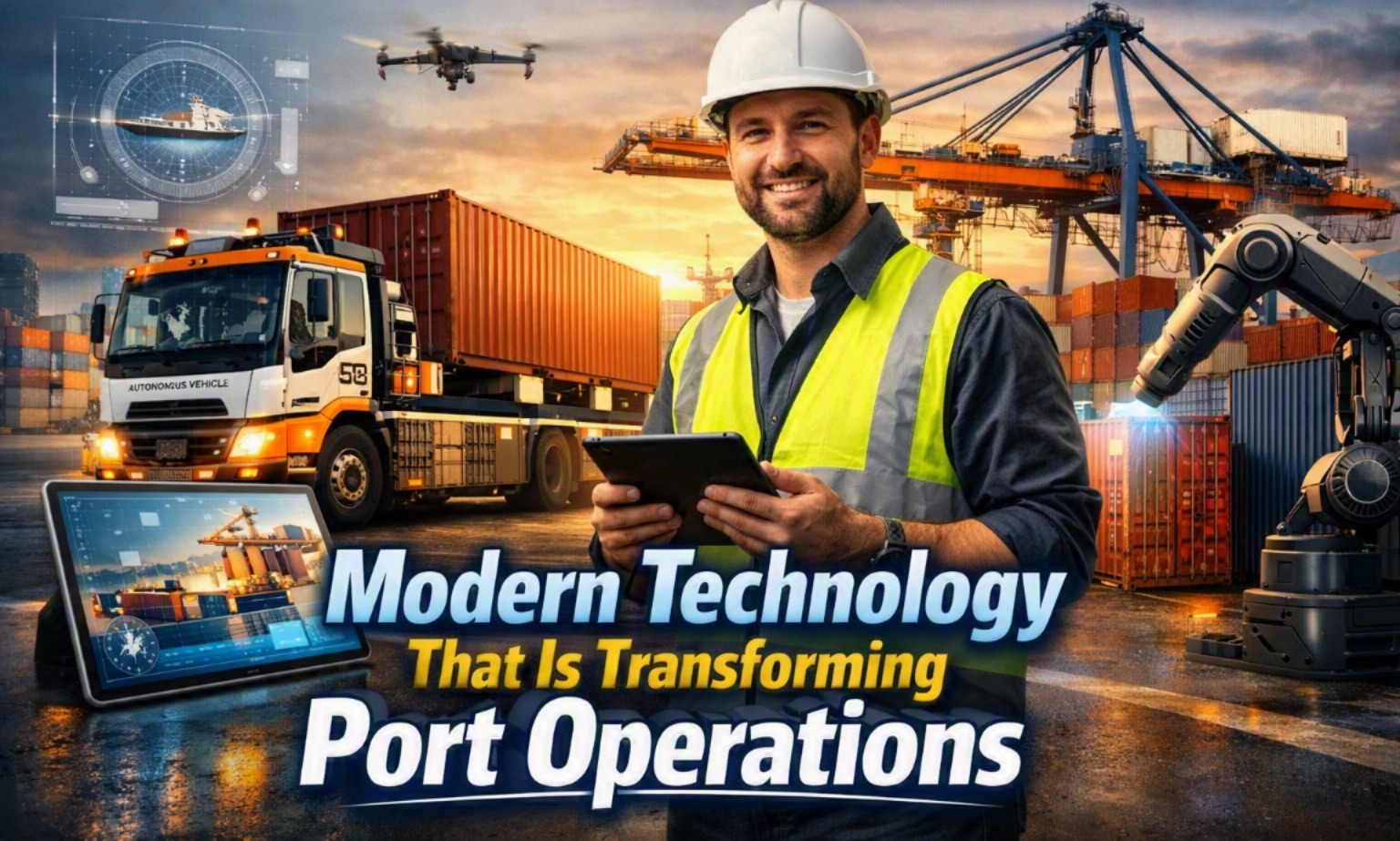
Ports are essential parts of global trade because they connect ships, cargo, transportation networks, businesses, and consumers across different regions. As international trade continues to grow, ports need faster, safer, and more efficient ways to manage increasingly complex operations. Traditional processes that depend heavily on manual work are gradually being supported or replaced by modern digital technology.
Technology is changing how ports handle cargo, manage vessels, monitor equipment, and coordinate logistics. From automation and artificial intelligence to Internet of Things devices and digital platforms, these innovations help ports improve productivity while reducing delays and operational risks. Understanding these technologies is important because efficient port operations can strengthen supply chains and support economic growth.
PORT AUTOMATION IMPROVES OPERATIONAL EFFICIENCY
Port automation is one of the most important developments in modern port operations. Automated cranes, guided vehicles, and automated stacking systems can move containers with limited direct human intervention. These systems can perform repetitive tasks consistently and help reduce unnecessary movement within terminals. As a result, ports can process cargo more efficiently and maintain more predictable operations.
Automation can also improve workplace safety by reducing the need for workers to perform certain tasks in areas where heavy machinery operates. However, automation does not necessarily eliminate the need for human workers. Instead, employees increasingly focus on supervision, system management, maintenance, planning, and other activities that require human judgment and technical skills.
ARTIFICIAL INTELLIGENCE SUPPORTS SMARTER DECISIONS
Artificial intelligence AI is becoming increasingly useful for analyzing large amounts of operational data. Port operators can use AI based systems to identify patterns, predict potential delays, optimize schedules, and support decisions about cargo movement. This allows managers to respond to operational problems more quickly and allocate resources more effectively.
AI can also contribute to predictive maintenance by analyzing equipment data and identifying signs of potential failures. Instead of waiting for a crane, vehicle, or other machine to break down, operators can schedule maintenance based on its condition and performance. This approach can reduce unexpected downtime and help extend equipment life when implemented with reliable data and proper maintenance procedures.
INTERNET OF THINGS CONNECTS PORT EQUIPMENT
The Internet of Things IoT allows physical equipment and devices to collect and exchange data through connected networks. Sensors can be installed on cranes, trucks, containers, gates, and other port infrastructure to monitor conditions such as location, movement, temperature, and equipment performance. The collected information gives operators a clearer picture of what is happening across the terminal.
Real time data can help improve cargo tracking and operational coordination. For example, connected systems can provide information about the location of containers and equipment, making it easier to plan movements and identify bottlenecks. IoT technology is particularly valuable when combined with automation and data analytics because different systems can work together more effectively.
DIGITAL PLATFORMS STREAMLINE PORT LOGISTICS
Digital platforms are helping ports reduce paperwork and improve communication between different stakeholders. Shipping companies, terminal operators, customs authorities, logistics providers, and other parties can exchange information through digital systems instead of relying entirely on physical documents or disconnected processes. This can make administrative activities faster and easier to coordinate.
A well integrated digital platform can also improve supply chain visibility. When relevant information is available to authorized users at the right time, businesses can make better decisions about transportation, inventory, and delivery schedules. Digitalization therefore helps connect port activities with the wider logistics network rather than treating the port as an isolated operation.
SMART PORTS USE REAL TIME DATA
A smart port combines connected technologies, automation, analytics, and digital communication to create more coordinated operations. Real time data can help operators monitor vessel arrivals, container movements, traffic conditions, equipment availability, and other operational factors. This information can support faster responses when unexpected situations occur.
Smart technologies can also help ports improve the use of limited resources. For example, data analysis can support better berth planning and equipment allocation. By making decisions based on current operational information, ports can reduce unnecessary waiting and improve the overall flow of goods through the terminal.
TECHNOLOGY STRENGTHENS PORT SECURITY
Modern technology is also changing the way ports manage security and risk. Surveillance cameras, access control systems, sensors, automated monitoring, and data analysis can help identify unusual activities or unauthorized access. These technologies allow security teams to monitor large and complex areas more efficiently.
Cybersecurity has become equally important as port systems become increasingly connected. A cyberattack could disrupt cargo handling, communication, scheduling, or other critical operations. Therefore, modern ports need strong cybersecurity measures, including access controls, system monitoring, employee awareness, regular updates, and appropriate response plans.
DIGITAL TECHNOLOGY SUPPORTS GREENER PORTS
Technology can contribute to more sustainable port operations by helping operators use energy and resources more efficiently. Electric equipment, smart energy management, route optimization, and data based monitoring can reduce unnecessary fuel and energy consumption. Ports can also use digital systems to measure environmental performance and identify areas that need improvement.
Technology alone cannot solve every environmental challenge faced by ports. However, better data and smarter equipment can support efforts to reduce emissions, fuel consumption, and operational waste. When digital transformation is combined with cleaner energy and responsible operational policies, ports can move toward more sustainable long term development.
THE FUTURE OF TECHNOLOGY IN PORT OPERATIONS
The future of port operations will likely involve greater integration between automation, AI, IoT, cloud platforms, robotics, and data analytics. These technologies can work together to create more connected and responsive port environments. However, successful implementation requires investment in infrastructure, skilled workers, cybersecurity, and reliable digital systems.
Ports must also ensure that technology supports practical operational goals rather than being adopted simply because it is new. A successful digital transformation should improve efficiency, safety, reliability, transparency, and service quality. By combining advanced technology with effective management and human expertise, ports can become stronger links in the global supply chain.
CONCLUSION
Modern technology is transforming port operations by making cargo handling, vessel management, security, and logistics more efficient and data driven. Automation can accelerate repetitive tasks, while AI can support forecasting and decision making. IoT devices provide real time information, and digital platforms improve communication between stakeholders.
The transformation of ports will continue as technology develops and global logistics becomes more demanding. Ports that invest in appropriate technologies while strengthening human skills and cybersecurity can improve their competitiveness and resilience. Ultimately, smart and well managed technology can help ports provide faster, safer, and more reliable services for global trade.
Tentang Penulis
Gusti Ayu Tita P
Penulis — Universitas STEKOM
Penulis aktif yang berfokus pada isu-isu akademik, teknologi pendidikan, dan pengembangan sumber daya manusia di lingkungan kampus.