Nature Destinations for Educational Family Holidays
Gusti Ayu Tita P
1 September 2026
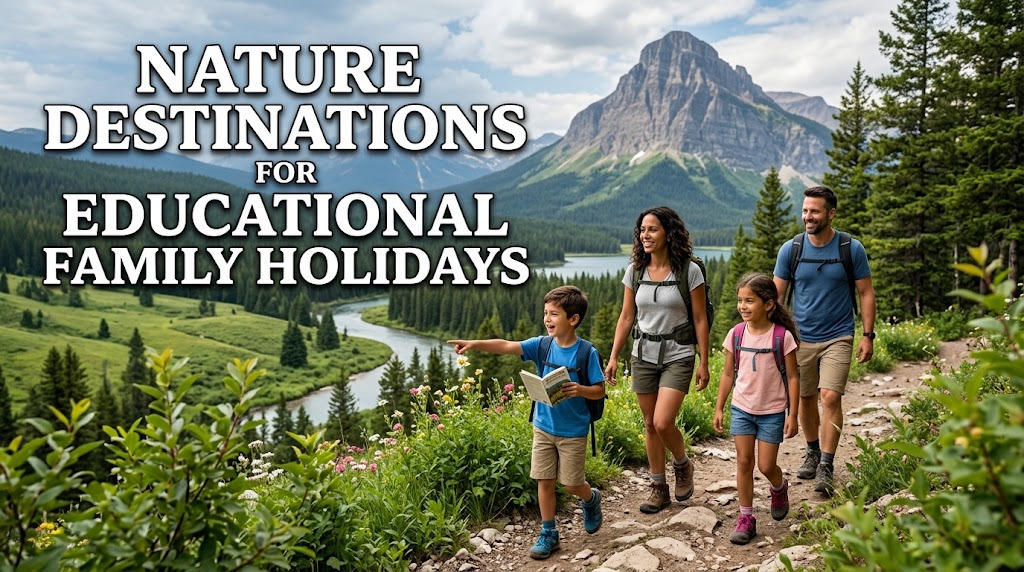
Nature destinations can provide families with opportunities to relax while learning about the environment. Children can discover plants, animals, ecosystems, and natural processes through direct observation and exploration. Unlike learning only from books, outdoor experiences allow children to see how nature works in real life. With the right preparation, a nature trip can become an enjoyable and educational family holiday.
BOTANICAL GARDENS AND NATURE PARKS
Botanical gardens and nature parks are suitable destinations for introducing children to different types of plants. Children can observe flowers, trees, leaves, seeds, and other plant features while learning about their functions and environments. Information boards can provide additional facts about the plants they see. These destinations can make basic science topics easier to understand.
Parents can encourage children to identify several plants during the visit. They should remind children not to pick flowers, damage plants, or disturb the surroundings. If educational programs or guided tours are available, families can participate according to the child's age. Exploring plant diversity can encourage curiosity and appreciation for nature.
FORESTS AND CONSERVATION AREAS
Forests and conservation areas can introduce children to biodiversity and ecosystems. Families may observe trees, insects, birds, and other wildlife from safe and designated areas. Children can learn how different organisms depend on each other and why natural habitats need protection. These experiences can help make environmental education more practical.
Parents should follow all rules provided by the conservation area. Children should keep a safe distance from wildlife and avoid feeding or touching animals unless specifically permitted. Families should also avoid leaving waste behind. Responsible exploration can teach children that enjoying nature also involves protecting it.
BEACHES AND COASTAL AREAS
Beaches can provide opportunities to learn about coastal environments. Children can observe sand, rocks, shells, coastal plants, and marine life while learning about how different elements interact. Parents can discuss topics such as tides, coastal ecosystems, and environmental protection in simple language. Educational activities can be adjusted according to the child's age.
Families should choose safe areas and follow local guidelines. Children should not disturb marine animals or remove protected natural objects. Parents can also encourage them to keep the beach clean and reduce waste. A beach visit can combine recreation with lessons about marine and coastal environments.
FARMS AND AGRICULTURAL DESTINATIONS
Farms and agricultural tourism sites can help children understand where food comes from. They can learn about planting, growing, harvesting, animal care, and food production through direct observation. Some farms offer supervised activities that allow children to participate in simple tasks. This can make agricultural education more practical.
Parents can explain the connection between farming and daily meals. Children can also learn why farmers need to care for soil, water, plants, and animals responsibly. Activities should always follow the farm's safety instructions. Agricultural experiences can teach practical knowledge while encouraging appreciation for food and farming.
RIVERS AND WATER ENVIRONMENTS
Rivers, lakes, and other water environments can introduce children to the importance of water in nature. Families can observe water flow, aquatic plants, surrounding habitats, and environmental conditions. Parents can explain why clean water is important for people, animals, and plants. These observations can encourage children to think about environmental responsibility.
Safety is especially important around water. Families should choose designated areas and follow safety instructions rather than entering unsafe locations. Children can learn about water conservation without directly interacting with potentially dangerous areas. Learning about water environments can help children understand the importance of protecting natural resources.
CONCLUSION
Nature destinations such as botanical gardens, forests, conservation areas, beaches, farms, rivers, and other water environments can provide valuable educational experiences for families. Children can learn about biodiversity, ecosystems, agriculture, and environmental protection through direct observation. Parents should choose safe locations and activities that match children's ages and abilities. With responsible exploration, a nature holiday can become a memorable experience that combines recreation and education.
Tentang Penulis
Gusti Ayu Tita P
Penulis — Universitas STEKOM
Penulis aktif yang berfokus pada isu-isu akademik, teknologi pendidikan, dan pengembangan sumber daya manusia di lingkungan kampus.