Nuclear Power Plant Safety and the Technology Behind It
Gusti Ayu Tita P
1 September 2026
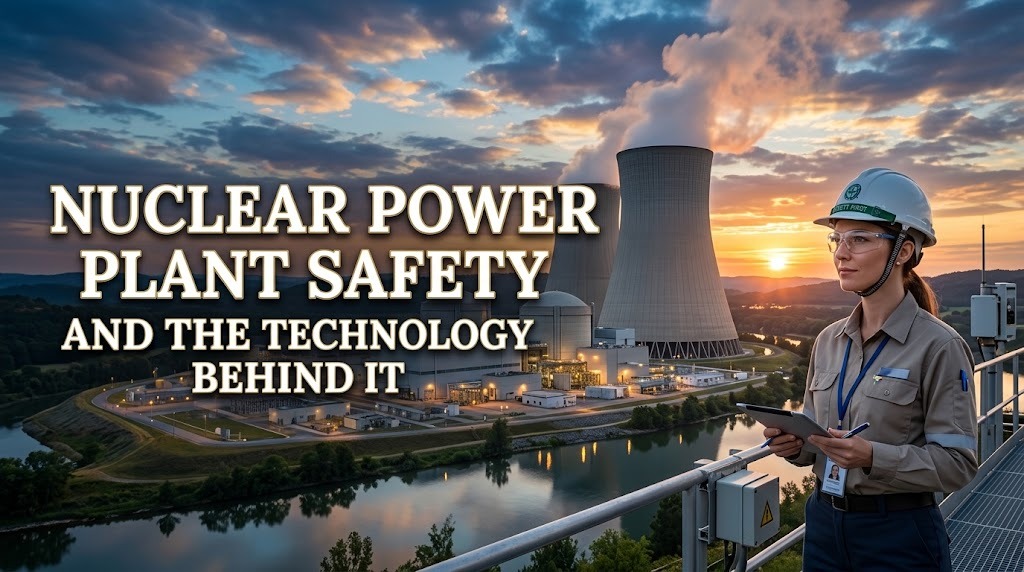
Nuclear power plant safety is one of the most important aspects of nuclear energy development. Nuclear power plants use controlled nuclear fission to produce heat, which is then converted into electricity. Because the process involves radioactive materials and complex systems, nuclear facilities require strict safety standards and continuous monitoring. Modern nuclear plants are designed with multiple layers of protection to prevent accidents and limit their possible effects.
The technology behind nuclear safety has continued to improve over several generations of reactor design. Modern systems combine automatic controls, physical barriers, emergency equipment, monitoring technology, and trained personnel. Safety also depends on strong regulation, regular maintenance, emergency planning, and a strong safety culture. Technology alone cannot guarantee safety, so all of these elements must work together.
DEFENSE IN DEPTH SAFETY PRINCIPLE
The defense in depth principle is a fundamental concept in nuclear power plant safety. It uses several independent and complementary layers of protection to prevent accidents and reduce their consequences. If one layer does not work as expected, additional layers are designed to provide protection. This approach helps reduce dependence on a single component or system.
The layers can include fuel design, reactor control systems, cooling systems, containment structures, monitoring equipment, and emergency procedures. Each layer serves a specific purpose within the overall safety strategy. The goal is to prevent abnormal conditions from developing into serious accidents and to limit radioactive releases if an accident occurs.
REACTOR CONTROL SYSTEMS
Reactor control systems regulate the nuclear fission process inside the reactor core. Control rods are commonly used to absorb neutrons and adjust the rate of the chain reaction. Operators and automated systems continuously monitor important parameters such as temperature, pressure, neutron activity, and coolant conditions. These systems help maintain the reactor within safe operating limits.
If certain conditions become unsafe, reactor protection systems can rapidly shut down the reactor. However, shutting down the fission reaction does not immediately remove all heat from the fuel. Residual heat continues to be produced after shutdown, which is why reliable cooling systems remain essential.
COOLING SYSTEMS
Cooling systems remove heat from the reactor core and transfer it to systems that can eventually produce electricity. Maintaining adequate cooling is essential because reactor fuel can remain extremely hot even after the chain reaction has been stopped. Nuclear power plants therefore use carefully designed cooling systems to control temperature and protect fuel and reactor components.
Different reactor designs use different cooling configurations. Some systems depend on pumps and other active equipment, while certain modern designs also use natural circulation, gravity, or other passive principles. Backup systems can provide additional protection if the main cooling system becomes unavailable.
PASSIVE SAFETY TECHNOLOGY
Modern reactor designs increasingly use passive safety features. These systems can perform important safety functions using natural physical forces such as gravity, pressure differences, or natural circulation. Because they can require less reliance on electrical power or immediate human action, passive systems can provide additional protection during certain abnormal conditions.
Passive systems do not eliminate the need for operators or active safety equipment. Nuclear safety relies on multiple systems working together rather than a single technology. Combining passive and active features can provide additional layers of protection and improve the overall resilience of a reactor design.
CONTAINMENT STRUCTURES
Containment is a major physical barrier designed to limit the release of radioactive materials during severe accidents. It surrounds important reactor systems and is engineered to withstand specific pressure, temperature, and environmental conditions. The exact design varies according to the reactor type and generation. Containment is an important part of the defense in depth approach.
Containment is not the only physical barrier in a nuclear facility. Nuclear fuel, fuel cladding, the reactor coolant boundary, and other structures can provide additional barriers. Together, these layers are designed to keep radioactive materials contained under normal and abnormal conditions.
MONITORING AND SENSOR TECHNOLOGY
Nuclear power plants use extensive monitoring systems to observe plant conditions. Sensors can measure temperature, pressure, radiation levels, coolant flow, water levels, and other important parameters. The collected information is processed by control and safety systems to help operators understand the condition of the plant. Continuous monitoring can help identify abnormal changes at an early stage.
Modern digital technologies can also support data analysis and plant monitoring. However, digital systems must be designed with appropriate reliability, redundancy, cybersecurity, and safety considerations. Critical safety functions require carefully engineered systems that remain dependable under demanding conditions.
EMERGENCY SAFETY SYSTEMS
Nuclear power plants have dedicated systems and procedures for responding to emergencies. These may include emergency cooling systems, backup power supplies, protective equipment, communication systems, and emergency operating procedures. Their purpose is to maintain essential safety functions and prevent an abnormal event from becoming more serious.
Emergency preparedness also depends on trained personnel. Operators regularly practice responses to different scenarios through training and simulations. Emergency plans can also involve regulators, local authorities, emergency services, and other relevant organizations. Regular exercises help identify weaknesses and improve coordination.
RADIOACTIVE WASTE MANAGEMENT
Nuclear safety also includes the responsible management of radioactive waste. Radioactive materials are classified according to their characteristics and levels of radioactivity. Different types of waste require different treatment, storage, and disposal methods. Proper management helps prevent unnecessary exposure and uncontrolled releases into the environment.
Spent nuclear fuel requires particular attention because it remains highly radioactive and produces residual heat after removal from the reactor. It is therefore stored using specially designed systems that provide cooling and radiation shielding. Long term management must be planned as part of the complete life cycle of a nuclear power plant.
REGULATION AND INDEPENDENT OVERSIGHT
Strong regulation is essential for nuclear safety. Nuclear facilities are subject to requirements covering design, construction, operation, maintenance, emergency preparedness, radiation protection, and eventual decommissioning. Regulatory bodies review compliance and can require corrective actions when necessary. Independent oversight helps ensure that safety requirements are not treated as optional.
Operators also need a strong safety culture. Workers must be encouraged to report problems, follow procedures, investigate unusual conditions, and learn from incidents. Regular inspections, maintenance, testing, and safety reviews help ensure that equipment and procedures remain effective throughout the plant's operating life.
ADVANCING NUCLEAR REACTOR TECHNOLOGY
Nuclear technology continues to develop with the goal of improving safety, efficiency, reliability, and flexibility. Newer reactor designs may incorporate stronger containment, improved cooling systems, passive safety features, and enhanced monitoring. Small Modular Reactors are another area of development, offering smaller unit sizes and modular construction concepts.
New technology still requires careful evaluation before deployment. Reactor designs must undergo safety assessments, regulatory review, testing, and licensing. A newer design is not automatically risk free, so its safety claims must be supported by evidence and appropriate oversight.
CONCLUSION
Nuclear power plant safety is based on a combination of advanced technology, multiple protective barriers, trained personnel, strong regulation, and continuous monitoring. Reactor control systems, cooling technology, passive safety features, containment structures, sensors, and emergency systems all contribute to preventing accidents and limiting their consequences. Radioactive waste management is also an essential part of the overall safety framework.
The technology behind nuclear safety continues to evolve, but effective safety requires more than advanced equipment. Proper regulation, maintenance, emergency preparedness, skilled workers, and a strong safety culture are equally important. When these elements work together, nuclear power plants can be operated with a systematic approach to managing risks and protecting workers, communities, and the environment.
Tentang Penulis
Gusti Ayu Tita P
Penulis — Universitas STEKOM
Penulis aktif yang berfokus pada isu-isu akademik, teknologi pendidikan, dan pengembangan sumber daya manusia di lingkungan kampus.