Nuclear Power Plants vs Conventional Power Plants
Gusti Ayu Tita P
1 September 2026
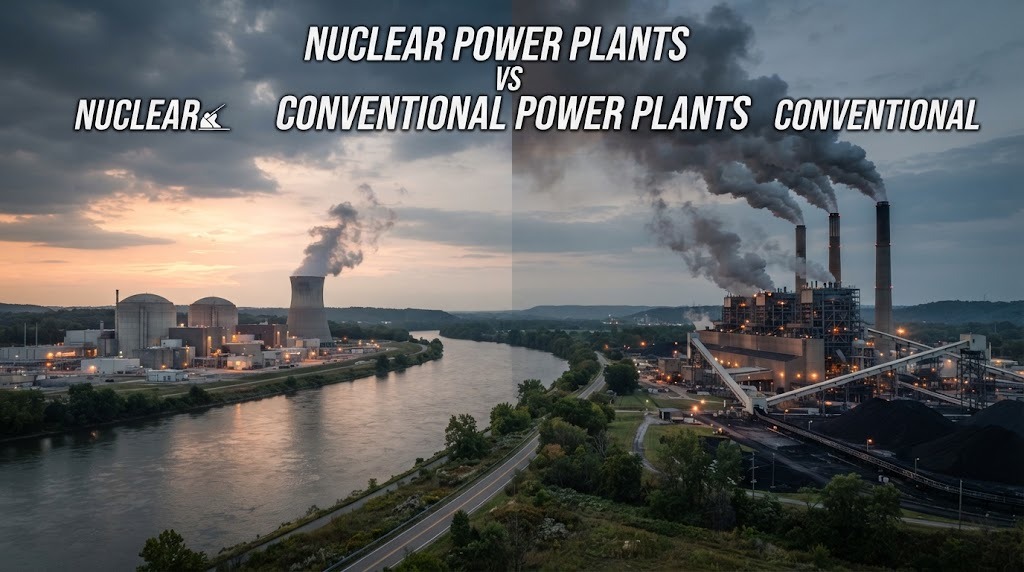
Nuclear power plants and conventional power plants both play an important role in meeting electricity demand. Although both can use heat to produce steam and turn turbines, their energy sources and operating systems are different. Nuclear power plants use controlled nuclear fission, while conventional plants commonly rely on fossil fuels such as coal and natural gas. Understanding these differences helps explain how each technology affects energy production, emissions, costs, and the environment.
The choice between different power generation technologies depends on many factors. These include electricity demand, fuel availability, construction costs, environmental targets, safety requirements, and existing infrastructure. Nuclear power can provide stable low carbon electricity, while conventional plants can offer established technologies and flexible fuel options depending on their design. Each option has advantages and challenges that need to be considered carefully.
DIFFERENCES IN ENERGY SOURCES
The most basic difference between nuclear power plants and conventional power plants is the source of energy used to produce heat. Nuclear plants generally use uranium based fuel, with energy released through controlled nuclear fission. Conventional thermal plants often burn coal, natural gas, or oil to create heat. This difference affects the entire process of electricity generation.
In a nuclear reactor, fission releases heat without combustion. In a fossil fuel plant, combustion converts the chemical energy in fuel into heat. The resulting heat is then used in different ways depending on the plant design. Understanding the energy source is important because it influences fuel requirements, emissions, waste, and operating characteristics.
DIFFERENCES IN ELECTRICITY GENERATION
Nuclear power plants and many conventional thermal plants follow a similar basic principle after heat is produced. Heat is transferred to water or another working fluid, creating steam that can drive a turbine. The turbine is connected to a generator, which converts mechanical energy into electricity. The main difference is how the heat needed for this process is produced.
In a nuclear plant, the reactor supplies the heat through nuclear fission. In a coal fired power plant, combustion heats water to produce steam. Some natural gas plants use a gas turbine, where hot combustion gases directly turn the turbine, while combined cycle plants use both gas and steam turbines. Therefore, conventional power plants can have several different designs.
DIFFERENCES IN CARBON EMISSIONS
Nuclear power has very low direct carbon dioxide emissions during electricity generation because it does not burn fossil fuels. This makes nuclear energy a low carbon source that can contribute to efforts to reduce emissions from the electricity sector. Nuclear plants can produce large amounts of electricity without the continuous combustion emissions associated with coal and gas plants.
Conventional fossil fuel plants generally produce carbon dioxide during operation. Coal fired plants typically have particularly high carbon emissions because they burn large quantities of coal. Natural gas plants can produce less carbon dioxide per unit of electricity than coal plants, although their total emissions depend on efficiency and methane emissions across the fuel supply chain. This difference is one reason nuclear power is considered in many low carbon energy strategies.
DIFFERENCES IN FUEL REQUIREMENTS
Nuclear fuel has very high energy density. A relatively small amount of nuclear fuel can produce a large amount of energy compared with conventional fossil fuels. As a result, nuclear plants generally require much smaller physical quantities of fuel to generate electricity. This can reduce the volume of fuel that needs to be transported and stored.
However, nuclear fuel requires specialized processing and careful handling. Spent fuel also needs controlled storage and long term management because it remains radioactive. Conventional plants require continuous supplies of coal, gas, or other fuels depending on their design. Their fuel supply chains can involve mining, pipelines, shipping, rail transport, and other infrastructure.
DIFFERENCES IN WASTE
Nuclear power plants produce radioactive waste that requires specialized management. The amount and characteristics of the waste depend on the reactor and fuel cycle. Spent nuclear fuel requires particular attention because it remains radioactive and generates heat after removal from the reactor. Appropriate storage and long term management are therefore essential.
Conventional power plants also produce waste and environmental pollutants. Coal plants, for example, generate ash and emissions from combustion. Natural gas plants produce combustion emissions and can be associated with methane emissions during fuel production and distribution. Each technology therefore creates different types of waste and environmental challenges.
DIFFERENCES IN SAFETY REQUIREMENTS
Safety is essential for both nuclear and conventional power plants, but the types of risks are different. Nuclear facilities use multiple layers of protection to control the reactor, maintain cooling, and contain radioactive materials. They also require specialized emergency procedures, trained operators, monitoring systems, and strict regulatory oversight. These requirements are designed to prevent or limit the consequences of nuclear incidents.
Conventional plants also face significant risks, including fires, explosions, high pressure, high temperatures, and exposure to hazardous materials. Their safety systems are designed according to the specific technology and fuel being used. Workers require appropriate training and protective measures in both types of facilities. Therefore, nuclear power is not the only form of electricity generation that requires rigorous safety management.
DIFFERENCES IN OPERATING CHARACTERISTICS
Nuclear plants are generally designed to provide large amounts of steady electricity for long periods. Their output can be maintained without depending directly on sunlight or wind conditions. This makes nuclear generation potentially useful for supplying consistent power in a larger electricity system. However, nuclear plants can take significant time and investment to build.
Conventional power plants have different operating characteristics depending on their technology. Some gas fired plants can respond relatively quickly to changes in electricity demand, making them useful for flexible generation. Coal plants can provide steady generation but generally have different operational and environmental characteristics. The most suitable technology depends on how the electricity system is designed and operated.
DIFFERENCES IN COST AND CONSTRUCTION
Building a nuclear power plant usually requires substantial upfront investment. Nuclear projects also involve detailed licensing, safety assessments, specialized construction, and extensive testing. These requirements can make development take many years. However, once operational, a nuclear plant can generate electricity for a long period when properly maintained and regulated.
Conventional power plants can vary widely in construction cost and development time. Some natural gas facilities can be built relatively quickly compared with large nuclear projects. However, their operating costs can be strongly influenced by fuel prices. A fair comparison should therefore consider construction, financing, fuel, maintenance, environmental requirements, and the expected operating lifetime.
ROLE IN THE FUTURE ENERGY SYSTEM
Nuclear and conventional power plants may have different roles as countries modernize their electricity systems. Nuclear power can provide low carbon generation and complement renewable sources such as solar and wind. Conventional fossil fuel plants may continue to play a role in some systems, although climate policies can encourage lower emissions and greater use of cleaner technologies. The transition will depend on national energy resources and infrastructure.
Future electricity systems are likely to use a combination of technologies rather than rely on one source alone. Renewable energy, nuclear power, energy storage, electricity grids, hydropower, and other technologies can each contribute in different ways. The appropriate mix depends on reliability requirements, costs, environmental goals, and local conditions. Careful planning is necessary to create an energy system that is both reliable and sustainable.
CONCLUSION
Nuclear power plants and conventional power plants differ mainly in their energy sources, methods of producing heat, emissions, fuel requirements, waste, safety systems, and operating characteristics. Nuclear plants use controlled fission and generally produce electricity with very low direct carbon emissions. Conventional fossil fuel plants rely on combustion and generally release more carbon dioxide during operation.
Both technologies have advantages and challenges. Nuclear power can provide stable low carbon electricity but requires high safety standards, significant investment, and responsible radioactive waste management. Conventional plants can offer established technologies and, in some cases, flexible operation, but fossil fuel plants face greater challenges related to carbon emissions and air pollution. Understanding these differences can help governments and communities make more informed decisions about future energy systems.
Tentang Penulis
Gusti Ayu Tita P
Penulis — Universitas STEKOM
Penulis aktif yang berfokus pada isu-isu akademik, teknologi pendidikan, dan pengembangan sumber daya manusia di lingkungan kampus.