Online or Offline Business Which Is Better for College Students?
Gusti Ayu Tita P
29 September 2026
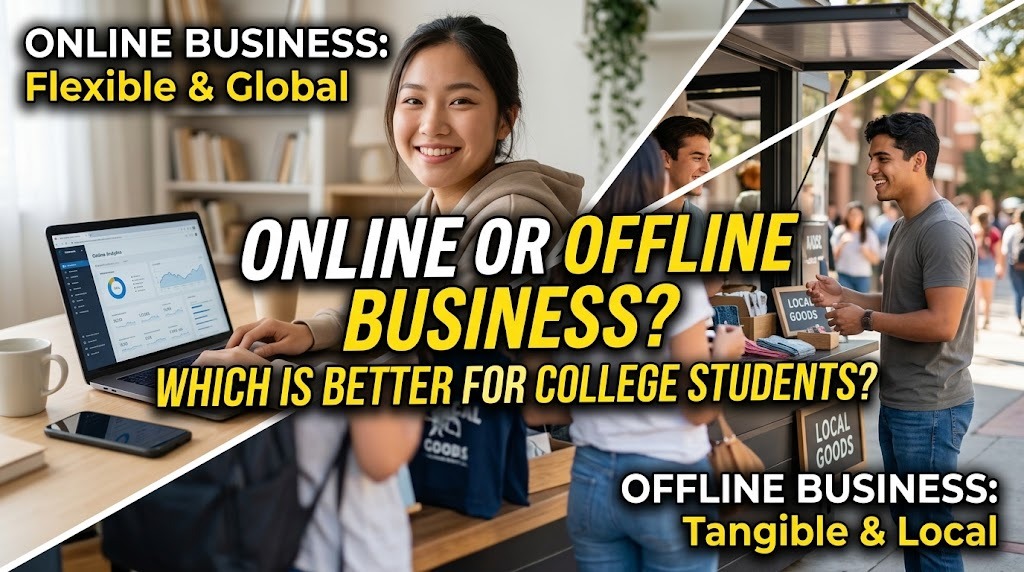
College students who want to start a business can choose between online business and offline business models. Each option has different characteristics, costs, operational requirements, and ways of reaching customers. The choice should depend on a student's skills, available time, budget, target market, and academic schedule.
An online business can use digital platforms to promote and sell products or services, while an offline business generally involves direct interaction with customers in a physical location. Neither model is automatically suitable for every student. Understanding the differences can help students choose a business model that fits their circumstances.
UNDERSTANDING ONLINE BUSINESS FOR COLLEGE STUDENTS
An online business uses digital platforms to conduct some or most business activities. Students can sell products through online marketplaces, offer freelance services, provide online tutoring, create digital products, or manage social media services.
One potential advantage is flexibility. Some online activities can be completed from home or another suitable location, allowing students to organize tasks around their college schedules. However, online businesses still require responsibilities such as customer communication, digital marketing, order management, and maintaining an online presence.
UNDERSTANDING OFFLINE BUSINESS FOR COLLEGE STUDENTS
An offline business involves direct interaction with customers in a physical environment. Examples may include selling food near campus, offering services directly to customers, participating in local events, or operating a small physical store when resources allow.
Offline businesses can provide opportunities for direct customer interaction and immediate feedback. Students can observe customer responses and communicate face-to-face. However, physical businesses may require additional considerations such as transportation, inventory, equipment, operating space, and specific local requirements.
COMPARING COSTS AND TIME REQUIREMENTS
The costs of online and offline businesses can vary significantly depending on the type of business. Online businesses may require internet access, digital tools, product inventory, platform fees, or marketing expenses. Some service-based online businesses can begin with resources a student already has.
Offline businesses may involve additional costs for physical space, transportation, equipment, packaging, or inventory. They may also require students to be present at particular times or locations. Therefore, students should calculate expected costs and consider their available time before choosing a model.
CONSIDER CUSTOMER REACH AND MARKETING
Online businesses can potentially reach customers beyond a student's local area through social media, marketplaces, websites, and other digital platforms. This can be useful for products or services that can be delivered or provided remotely.
Offline businesses can focus on customers in a specific local area, such as classmates, campus communities, neighborhoods, or event visitors. Direct interaction can make it easier to understand customer responses. The appropriate business marketing strategy depends on where the target customers are and how they prefer to purchase products or services.
CHOOSE A MODEL BASED ON PERSONAL CIRCUMSTANCES
Students should consider their skills, budget, schedule, business goals, and target customers before choosing between online and offline models. A student with digital skills and limited free time may consider a flexible online service, while another student with strong cooking skills and access to a suitable local market may consider an offline food business.
Students can also combine both approaches. For example, an offline food business can use social media for promotion and order collection. This online and offline business combination can allow students to use digital tools while maintaining direct customer interactions where appropriate.
CONCLUSION
The choice between online and offline business for college students depends on individual circumstances. Online businesses can offer digital reach and flexibility, while offline businesses can provide direct customer interaction and opportunities in local markets. Both models have different costs, responsibilities, and operational requirements.
Students can compare these factors before making a decision and begin with a manageable scale. In some cases, combining online promotion with offline activities may also be practical. The most important consideration is choosing a student business model that can be managed responsibly alongside academic commitments.
Tentang Penulis
Gusti Ayu Tita P
Penulis — Universitas STEKOM
Penulis aktif yang berfokus pada isu-isu akademik, teknologi pendidikan, dan pengembangan sumber daya manusia di lingkungan kampus.