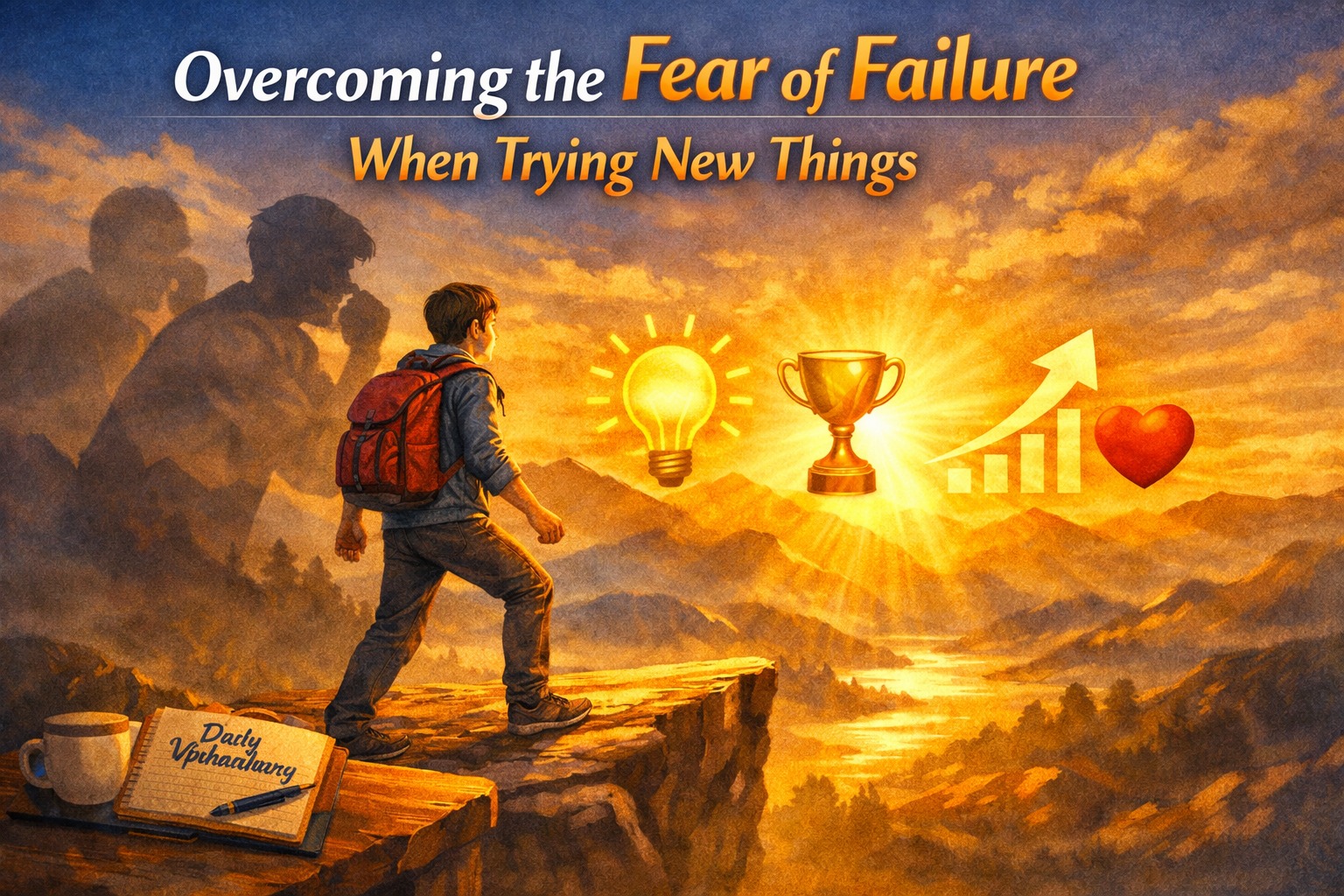
Trying something new often feels exciting and terrifying at the same time. Many people avoid opportunities simply because they are afraid of failing. This fear can quietly limit personal growth, career development, and life experiences. The good news is that fear of failure is natural and can be managed with the right mindset and strategies.
WHY FEAR OF FAILURE HAPPENS
Fear of failure usually comes from negative experiences, social pressure, or unrealistic expectations. From a young age, people are taught to value success and avoid mistakes. Over time, this creates the belief that failure equals weakness.
In reality, failure is a normal part of learning. Every successful person has experienced setbacks, rejection, and mistakes before reaching their goals. Understanding the root of this fear is the first step to overcoming it.
THE HIDDEN COST OF AVOIDING RISKS
Avoiding new challenges may feel safe, but it often leads to missed opportunities. When you stop trying new things, you stop growing. Fear keeps people stuck in comfort zones where progress becomes slow and limited.
Some common consequences of avoiding risks include:
- Lack of confidence and self-trust
- Limited career growth
- Missed learning opportunities
- Regret and self-doubt
Growth only happens when you step into unfamiliar territory.
SHIFTING YOUR MINDSET ABOUT FAILURE
The key to overcoming fear is changing how you see failure. Instead of viewing it as the end, see it as feedback. Every mistake provides valuable lessons that help you improve.
Successful people treat failure as:
- A learning experience
- A stepping stone toward success
- Proof that they are trying
- A chance to become stronger
When failure becomes a teacher instead of an enemy, fear begins to lose its power.
PRACTICAL STEPS TO BUILD COURAGE
Overcoming fear is not about eliminating it completely. It is about learning to move forward despite feeling afraid.
Here are practical steps you can start today:
1. Start With Small Challenges
Begin with low-risk activities. Small wins build confidence and reduce anxiety about bigger challenges.
2. Focus on Progress, Not Perfection
Perfection creates pressure. Progress creates motivation. Celebrate improvements, no matter how small.
3. Reframe Negative Thoughts
Replace “What if I fail?” with “What can I learn from this?” A simple shift in thinking can reduce fear significantly.
4. Accept That Discomfort Is Normal
Trying new things always feels uncomfortable at first. This discomfort is a sign of growth, not danger.
5. Surround Yourself With Supportive People
Positive environments encourage risk-taking and reduce the fear of judgment.
HOW FAILURE BUILDS CONFIDENCE
Confidence does not come from constant success. It comes from surviving challenges and realizing you can handle setbacks. Every time you try something new, you prove to yourself that you are capable of growth.
The more experiences you gain, the less power fear has over your decisions.
TURNING FEAR INTO MOTIVATION
Fear can actually become a powerful source of motivation. Instead of letting it stop you, use it as a signal that you are stepping outside your comfort zone. This is where real transformation happens.
Remember, the biggest regret in life is often not failure, but never trying at all.
CONCLUSION
Overcoming the fear of failure is a journey, not a one-time achievement. By changing your mindset, taking small steps, and embracing mistakes as learning opportunities, you can unlock new possibilities and grow into a more confident version of yourself. Trying new things may feel scary, but it is the gateway to personal success and meaningful experiences.
Tentang Penulis
Gusti Ayu Tita P
Penulis — Universitas STEKOM
Penulis aktif yang berfokus pada isu-isu akademik, teknologi pendidikan, dan pengembangan sumber daya manusia di lingkungan kampus.