
Polished Language and Displayed Laptops When Social Status Is Built Inside the Classroom
Gusti Ayu Tita P
2 Maret 2026
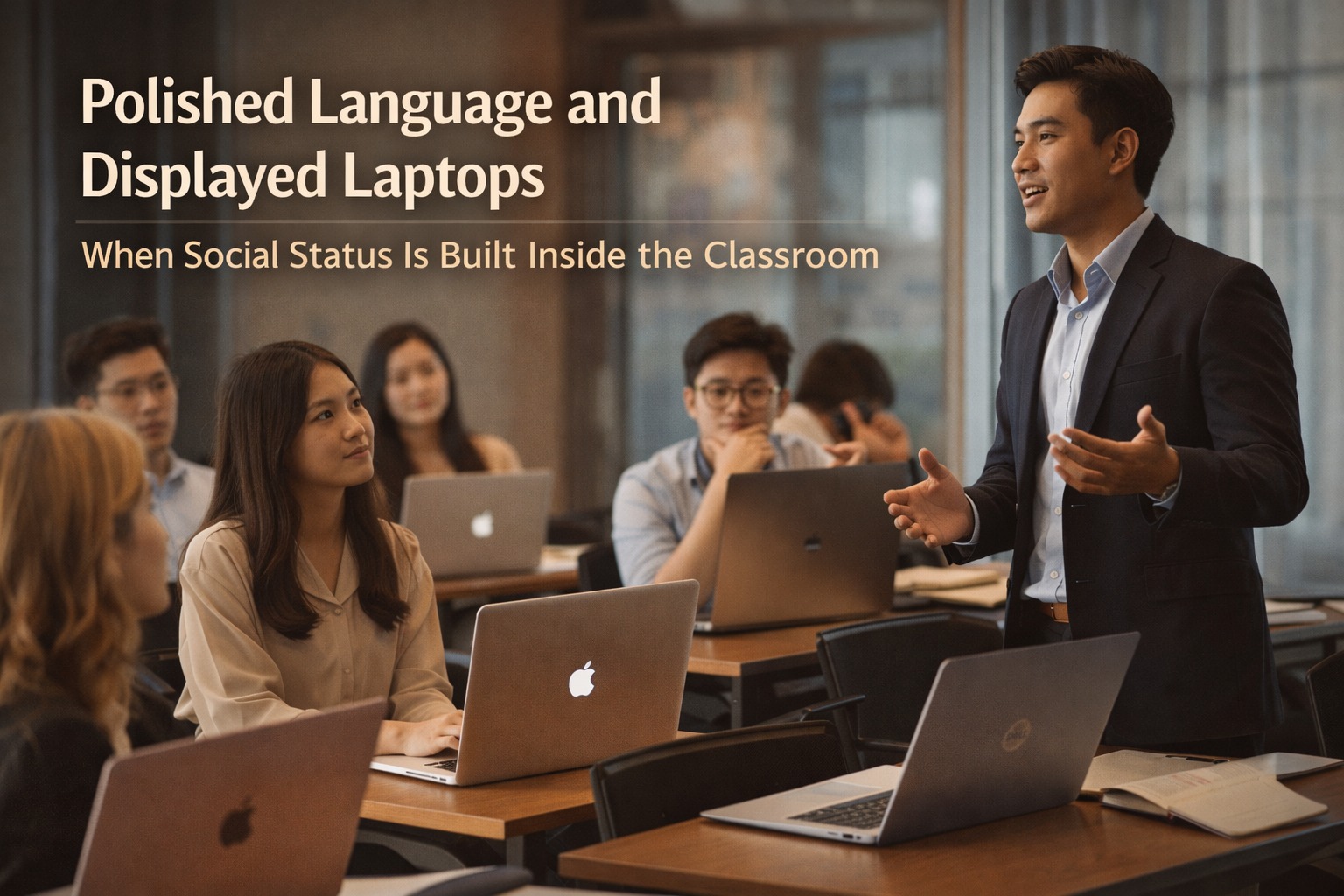
In today’s academic environment, social status is no longer shaped solely by grades or intellectual achievement. Inside the classroom, subtle signals such as polished language and displayed laptops quietly influence how students are perceived. The way someone speaks, the device they place on the desk, and the confidence they project can shape impressions long before their ideas are fully understood.
This article explores how social status in the classroom is constructed through symbolic cues, why these signals matter, and how students can balance image and substance in a healthy academic culture.
THE CLASSROOM AS A SOCIAL STAGE
A classroom is not just a place for learning; it is also a social stage. Every discussion, presentation, and group project becomes an opportunity for students to position themselves within an informal hierarchy.
From the first day of class, students observe one another. Who speaks fluently? Who uses academic vocabulary with ease? Who brings the latest laptop model? These details may seem minor, yet they quickly contribute to perceptions of competence and confidence.
In this setting, social status is not officially assigned. Instead, it is gradually constructed through repeated impressions and interactions.
POLISHED LANGUAGE AS INTELLECTUAL CAPITAL
Polished language often functions as a form of intellectual capital. Students who articulate their thoughts clearly, use structured arguments, and incorporate academic terms are frequently perceived as more capable.
Fluency in presentation can make even simple ideas sound sophisticated. On the other hand, students with strong insights may be overlooked if they struggle to express themselves confidently. This highlights an important reality: communication style can amplify or diminish how ideas are received.
In many classrooms, the ability to speak smoothly becomes almost as valuable as the content itself. As a result, language turns into a subtle tool for building social recognition.
DISPLAYED LAPTOPS AND SYMBOLIC STATUS
Technology has also become part of the social equation. A high-end laptop placed visibly on a desk can signal preparedness, productivity, or even economic privilege. While a device does not determine intelligence, it can influence perception.
Displayed laptops often serve as modern status symbols. They reflect access to resources and sometimes create assumptions about a student’s background or seriousness. Even when unintentional, these visual cues contribute to silent comparisons among peers.
This dynamic demonstrates how material objects, especially in a digital learning era, play a role in shaping classroom identity.
THE UNWRITTEN HIERARCHY AMONG STUDENTS
When polished language and symbolic objects combine, an unwritten hierarchy can emerge. Some students are more frequently listened to, invited into academic circles, or viewed as leaders in group discussions.
This hierarchy is rarely discussed openly. Yet it affects participation, confidence, and even academic opportunities. Students who do not fit the dominant image may feel less visible, despite having equal or greater intellectual capacity.
Understanding this dynamic is essential for creating a more inclusive academic culture where ideas are valued over appearances.
BALANCING IMAGE AND SUBSTANCE
It would be unrealistic to ignore the importance of communication skills and professional presentation. Clear language and appropriate tools genuinely enhance learning. However, problems arise when image overshadows substance.
Students can benefit from improving public speaking skills and presenting themselves professionally. At the same time, institutions should encourage evaluation based on critical thinking, originality, and depth of analysis rather than surface impressions.
True academic excellence emerges when polished delivery is supported by genuine competence. When language and technology serve learning instead of replacing it, the classroom becomes a space for authentic growth.
CONCLUSION
Polished language and displayed laptops reveal how social status is quietly built inside the classroom. These symbols shape perceptions, influence confidence, and contribute to informal hierarchies among students.
While presentation matters, it should not replace intellectual depth. The most meaningful recognition comes from consistent effort, thoughtful analysis, and respectful engagement with others. In the end, social status in education should reflect substance, not just surface.
Tentang Penulis
Gusti Ayu Tita P
Penulis — Universitas STEKOM
Penulis aktif yang berfokus pada isu-isu akademik, teknologi pendidikan, dan pengembangan sumber daya manusia di lingkungan kampus.















